Calls to restrict HMOs as streets 'full of cars'

 BBC
BBCResidents of a town have called for restrictions on the number of houses in multiple occupation (HMOs) over concerns of streets "full of cars".
There are about 180 licensed HMOs in Bridgwater, Somerset, more than any other town in the county, according to the most recent official data.
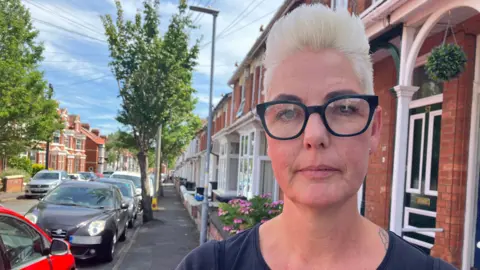
Lucy Pearce, who lives on a road with more than 10 of the properties, said "come five o'clock, the street is full with cars".
Councillor Federica Smith-Roberts from Somerset Council denied that the local authority had approved too many HMOs in the town, while a spokesperson for the National Residential Landlords Association (NRLA) said shared housing was "crucial" to supply.
Landlords in Somerset need to apply for HMO licences only for properties of five or more people from two or more families.
This means there are many smaller, unlicensed HMOs.
About ten streets in Bridgwater have at least five or more licensed HMOs, with some of the longest, such as Taunton Road, having about 20.
Pearce, who has lived on Ashleigh Avenue for 25 years, said the number of properties meant they were dealing with "car after car after car".
Neighbour Derek Palmer, who has lived on Ashleigh Avenue since 1970, said it was "crazy" that the council had recently approved the expansion of another HMO on the street.
"It changes the community spirit tremendously," he said. "Sometimes I've got to park right at the end of the road."
Meanwhile Chris Marlow, who has lived on Coronation Road in Bridgwater for 33 years, is selling his house to a company that will convert it into an HMO to sell the property quickly.
About 40% of the properties on his street are already HMOs.
"The only problem is the parking," Marlow said.
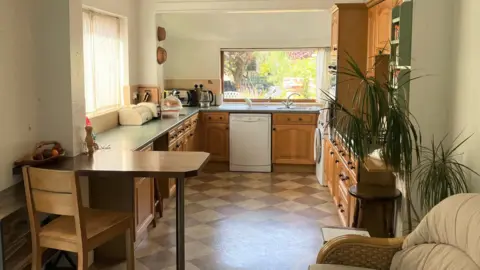
His neighbour Anne Heritage agreed, and said she'd prefer existing homes to become HMOs, rather than have new homes built on greenbelt land.
"I think, on the whole, HMOs aren't a bad idea if you're housing multiple people, as long as it's done sensitively," she said.
Demand for housing is high in Bridgwater – partly because so many workers are needed to build nearby Hinkley Point C power station.
There are 15,000 workers expected on site this year according to EDF, the firm behind the project.
Andrew Cockcroft, head of stakeholder relations and social impact at Hinkley Point C, said EDF was "very much aware of the pressure that can face local housing" as a result of the project.
He said EDF had built campuses for 2,500 workers, and created another 4,000 housing places via its accommodation fund.

"From our perspective, making sure there are mechanisms in place to appropriately manage those HMOs, particularly in Bridgwater, would be a welcome thing to have a look at," he added.
Cockcroft said EDF had also taken action on fly-parking – the issue of workers parking on residential streets near Hinkley for their shifts.
The company has a nine-person enforcement team patrolling streets to tackle the problem, with severe penalties for persistent offenders.
But he said that workers have every right to park on the housing estates where they live.
Ashley Fox, the town's Conservative MP, has backed residents' calls for Somerset Council to change its planning regulations for HMOs.
He said all HMOs, no matter how many people they would house, should have to have permission. The number of properties in individual roads or communities, he said, should also be limited.
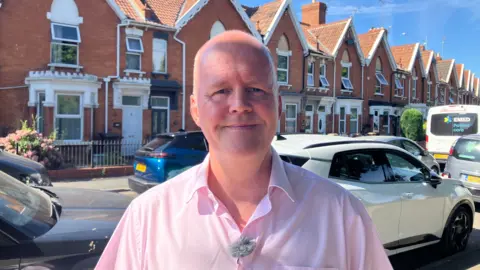
"We recognise the important contribution that Hinkley Point workers make to our local economy and the need to provide accommodation," he said.
"But that must be balanced with protecting the communities that people already call home.
"The issue is, if you've got six or more people living in one household and each of them has a car, it adds enormous pressure to parking, to traffic, and it changes the nature of some of our communities," he added.
Smith-Roberts said the local authority had not approved too many HMOs in Bridgwater.
Commenting on Fox's proposals, which include using a legal route to suspend automatic approval of smaller HMOs, she said the council "would need to look at that planning legislation and how that would work".

She added that a wider conversation was needed about housing because HMOs play their part in providing accommodation.
"It is expensive to live in Somerset, so we need to look at all different avenues that help support people, because we want housing to be available for them," she said, adding that residents concerned about parking could report issues to the council, regardless of whether the property is classed as an HMO.
In areas with parking permit schemes, only two permits are given to each HMO.
In a statement, a spokesperson for the NRLA said shared housing played "a crucial role" in the delivery of accommodation for those individuals and households for whom location is important and where flexibility in their living arrangements is sought.
"Those calling HMOs home come from every walk of life and include students, key workers, care leavers, and graduates finding their feet," they said.
They added that issues created by shared housing "should not be insurmountable if landlords and tenants take their share of responsibility", and urged landlords to engage with neighbours to resolve any tensions at an early stage.
Follow BBC Somerset on Facebook and X. Send your story ideas to us on email or via WhatsApp on 0800 313 4630.
