Wildfire warning issued as temperatures stay high

 Claire Humphrey
People in the countryside are being urged to take extra care as high temperatures increase the risk of wildfires.
Northumberland Fire and Rescue Service is asking residents and visitors to the county not to use disposable barbecues or light campfires, while smokers are requested to dispose of their cigarettes responsibly.
It warns blazes can spread quickly and cause lasting damage to landscapes, wildlife and local communities.
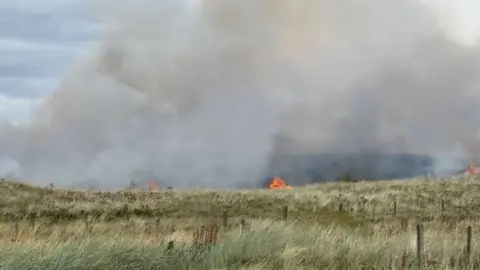
Last summer, an "out-of-control" camp fire led to sand dunes on the beach at Druridge Bay being scorched.
'Think carefully'
Rob Stacey, wildfire team leader at the brigade, said the current hot weather meant vegetation was "extremely vulnerable".
"It only takes a small spark to start a fire that can spread rapidly and become very difficult to control.
"Many of the wildfires we attend are preventable and we're asking everyone to think carefully about their actions when enjoying the outdoors.
"Simple steps, like avoiding disposable barbecues and campfires, can make a huge difference."
Northumberland County Council is also encouraging people to be mindful through a campaign called Love It Like It's Yours, according to the Local Democracy Reporting Service.
The Northumberland Wildfire Group, which brings together emergency services, landowners and other organisations, said wildfires can have a "devastating impact on our landscapes and the wildlife and livelihoods they support".
Chair Angus Collingwood-Cameron added: "Farmers and land managers see first-hand the damage these fires cause and recovery can take many years.
"We urge everyone visiting Northumberland to respect the countryside and follow the guidance - we all have a role to play in preventing wildfires."
The warning comes amid a heatwave in parts of the UK with record temperatures for June being seen in southern England.
