Rat poison found in five dead sea eagles

 RSPB/PA
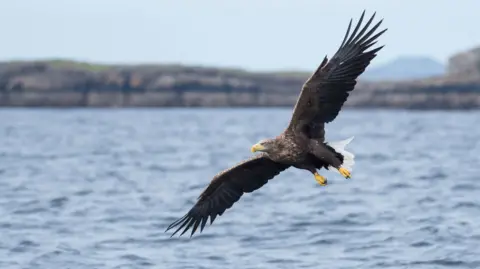
Rat poison was detected in five white-tailed eagles found dead in Dorset, Natural England has said.
It follows an investigation into 10 cases relating to the suspected poisoning of the bird species in England since the start of a reintroduction project on the Isle of Wight in 2019.
Natural England said while the concentrations had not been high enough to be identified as the primary cause of death, experts had concluded it was likely to have contributed to other factors.
A spokesperson said the findings "highlight the importance of responsible pesticide use and continued vigilance to reduce risks to wildlife".
Six of the investigated cases - five deaths and one illness - occurred within Dorset.
In January 2022, there was one unspecified death, with electrocutions then recorded in November 2024 and March 2026, starvation in May 2024, and trauma in March 2025.
Brodifacoum, a second-generation anticoagulant rodenticide, was detected in all death cases at levels above those expected from normal background exposure, Natural England said.
It said the results had warranted a further investigation into the source, which suggested brodifacoum might not have been used in accordance with legal requirements designed to protect wildlife.
Investigations remain ongoing and the outcome will be published by the Health and Safety Executive (HSE).
In October 2019, a police review found that no one person could be proved criminally responsible for the death of a white-tailed eagle found with high levels of brodifacoum.
A Natural England Spokesperson said: "Natural England is firmly committed to the protection and recovery of white-tailed sea eagles and remains confident that reintroduction projects in Dorset are contributing to this national conservation goal.
"The findings from Dorset and elsewhere highlight the importance of responsible pesticide use and continued vigilance to reduce risks to wildlife and safeguard the long-term recovery of white-tailed sea eagles."
