The SNP's manifesto pledges analysed

 PA Media
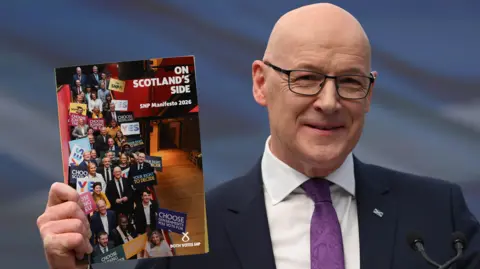
The Scottish National Party's leader, John Swinney, has launched his party's manifesto for the 2026 Holyrood election. The full document runs to 72 pages. So, what is the party promising? BBC Scotland journalists have been analysing the pledges.

Hold an independence referendum in 2028
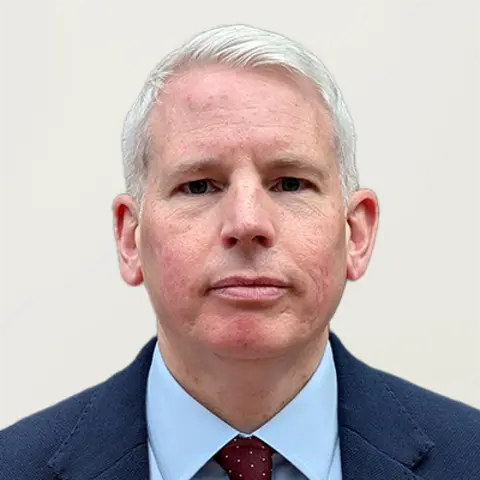
The loudest cheers at any SNP event come when independence is mentioned, and this manifesto launch was no different.
It's the whole reason for the SNP's existence and John Swinney has set out his plan for 2026.
Page thirteen of the manifesto says that a constituency vote for the party delivers an SNP government; the second, regional list vote "delivers independence" by securing a majority that "will lay the path to a referendum."
If the SNP do secure a majority, as happened in 2011, they want the same procedure - an agreement for a fresh referendum with 2028 pencilled in already.
They want to rely on that precedent.
But, of course, the next big roadblock for the party is a UK government that consistently says "no".
Swinney says the people of Scotland have a right to decide and that the UK is a "voluntary union" - saying even Labour's Anas Sarwar thinks that.
The SNP believes that a fresh refusal after securing what they see as a mandate changes the nature of the union - which they see as a fundamental affront to democracy.
Shorter NHS waiting times
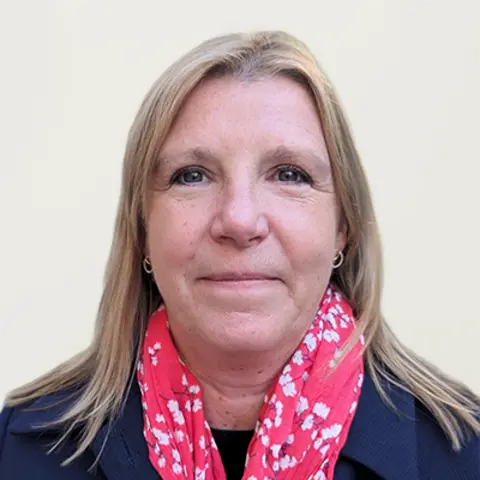
After almost two decades of SNP government, huge challenges remain for the NHS.
In the face of financial pressures, experts say politicians must be clear about what the health service can afford.
There are promises here to make it easier to see a GP.
"Walk-in" clinics might please voters, but many doctors are critical, saying it will not relieve the pressure.
One in 10 Scots are on an NHS waiting list, and a target to end long waits has not been met.
Promises to build National Treatment Centres have been scaled back in the face of financial pressures.
The SNP now says it will spend £10bn over the next decade on building health hubs and vital equipment, all to increase capacity.
But that money also has to cover existing buildings in need of essential maintenance.
Avoiding strike action by NHS workers will be seen as a win, and the manifesto sets out plans to recruit more staff.
But pay agreements are costly, and the next government will have to consider how it can afford everything.
Ban phones in classrooms
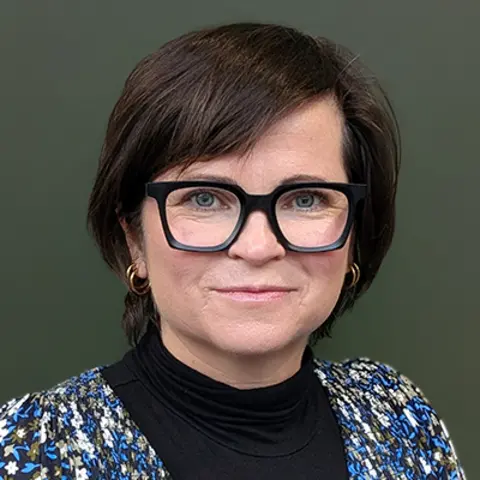
One of the SNP's key manifesto pledges on education is to ban mobile phones in schools.
It is a complete step change from their position in August 2024, when the SNP government published its review of phones in schools and concluded that it would not institute a ban.
At the time, Education Secretary Jenny Gilruth said she would support any school wanting to forbid phones but would not "dictate" what headteachers do.
That review said "used responsibly", phones and tablets can be powerful tools to enhance learning.
But since then, most of the other main parties have said a ban in the classroom is necessary.
Gilruth says she has spoken to parents and teachers and feels a ban would now be the best way forward.
Interestingly, some local authorities, including Edinburgh, have already banned phones, whilst others, such as Argyll and Bute, have concluded it is not the best way forward.
Either way, schools say it is quite difficult on a practical level to persuade pupils to stay away from their smartphones during the school day.
New council tax bands for most expensive homes
Fundamental reform to council finance can be easier said than done.
In 2007, the SNP said it would abolish what some in the party called the "hated" council tax.
Since then, the party has taken steps to modify the system so people in the most expensive properties pay more. But the council tax is still with us.
It plans to continue this trend. The manifesto confirms that there will be new bands from 2028 for homes valued at more than £1m and £2m if the SNP is re-elected.
But what about fundamental reform?
The manifesto says the future of local tax reform requires consensus, and it will seek a cross-party consensus on this.
Around 10 years ago, a detailed report commissioned by the Scottish government carefully considered alternatives to the council tax.
Ultimately, though, the lack of a consensus on the best alternative meant the tax was modified rather than replaced.
Is a consensus on a replacement going to be any easier to achieve now?
Achieve net zero by 2045
The manifesto pledges to "take the necessary action to achieve net zero by 2045" and frames it as an opportunity to create new industries and jobs.
But it also requires some difficult choices which might not be popular with voters and that's difficult to confront head-on during an election campaign.
It asserts that Scotland is "ahead of the UK as a whole in delivering long-term emissions reductions" and yet official figures contradict that claim.
The most recent year for which emissions reporting exists for both the UK and Scottish governments is 2023 - and that data says levels since 1990 fell by 51.3% north of the border and by 53% for the UK as a whole.
Add to that the optics of annual targets being scrapped along with intermediate goals for 2030 and 2040 and the SNP's once self-proclaimed title of "climate leaders" looks more difficult than ever to justify.
Basic income for artists
Like Labour, the SNP plans to pilot a minimum wage for artists.
Like the Irish scheme on which it's based, the Scottish Artists Minimum Income would offer up to two thousand practising artists and creative workers a wage for three years.
While the pledge will be welcomed by a sector still recovering from the pandemic and the cost-of-living crisis, it will not resolve the huge financial challenges they face.
Who would operate the scheme – and thus decide who and what qualifies? Would it be Creative Scotland, the country's arts agency, which the SNP has pledged to reform?
Demand for money from any funding stream has long outstripped what's available, and it's likely that any new scheme would be just as inundated.
It's the flip side of a country which is wildly proud of its cultural identity and keen to express it.
Help more disabled people into work
There's a recognition across the political spectrum that there are too many young disabled people not finding their way into sustainable employment.
That's something I have routinely heard from Disabled People's Organisations (DPOs), charities, and disabled people themselves for years now.
The SNP want to create what they're calling a "bespoke scheme" to ensure that more disabled young people get apprenticeships in the public sector.
Just over half the adults in Scotland with disabilities are in work – that's a figure that raises concern for many parties.
In all my years covering disability stories, I've heard the same mantra; as young people approach working age, they need to be given the opportunity to work as soon as possible.
Otherwise, they end up stuck in a welfare trap.
The lack of disabled people working has remained stubbornly high during the SNP's time in government, and before.
The challenge now is whether the youth strategy pays off long-term.
Fund new prisons and mental health support
Many of the SNP's manifesto commitments on justice are already in the pipeline; a continuation of what they've been doing while in power at Holyrood.
Their promise to "fund two new prisons within the next parliamentary term," for example, presumably refers to the new jail in Inverness and the replacement for Barlinnie, both of which are already under construction.
If elected, they say they will expand the use of "mental health triage cars" to reduce the workload on the police from calls involving people in distress.
Police commanders will argue that it will require a major investment to make a real difference.
There is a promise to back part of a campaign by a mother whose son died in an alleged stabbing last year.
Lisa Petrie has been distributing bleeding control kits around the capital since the death of her son, John McNab.
Each contains medical equipment for dealing with catastrophic blood loss caused by stabbings, falls or accidents.
The SNP are pledging to roll out the kits to community settings and public areas, including high schools, supermarkets, community centres and pubs.
Lisa Petrie also wants tighter security around the sale of knives.
In February, Justice Secretary Angela Constance instructed officials to examine what could be done.
There's no manifesto commitment to do anything beyond that.

