RNLI 'tombstoning' warning after summer increase

 Getty Images
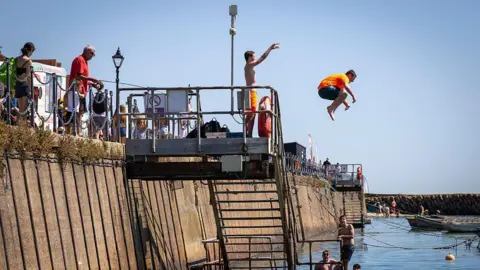
The RNLI has issued a warning about the dangers of "tombstoning" after it said it has seen an increase the act over the course of summer.
Tombstoning is the dangerous act of jumping or diving upright from a high ledge, cliff, pier or bridge into water of unknown depth, or which might have objects below the surface.
Guy Addington, regional water safety lead at the RNLI, told BBC Radio Kent that the organisation recommended not doing it but "of course, we know it goes on".
In Kent, the upper section of Folkestone Harbour Arm was recently closed after people were seen jumping and diving into the sea.
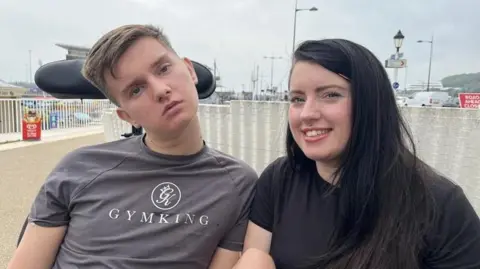
A harbour arm spokesperson said there had been a "persistent high volume" of people leaping from the structure, and urged people to read the story of Jack Dolan, a teenager who suffered brain damage after performing a flip from Stone Pier in Margate.
 Claire Starr/BBC
Addington says: "We know most incidents occur because people underestimate the risks or overestimate their own abilities.
"Some of the key risks are water depth and that can change really quickly.
"We have a wide tidal range - and around harbours something could have been thrown in, which can cause problems as you jump in," he says.
"We can keep talking to children and telling them what is safe and what isn't - but also try to introduce them to the wide range of activities they can do on the coast."
He says there are issues where people get into the tide and get swept away, so can't get back to land.
The RNLI says if anyone finds themselves in difficulty in the water, they should "float to live":
- Tilt your head back, submerging your ears
- Relax and control your breathing
- Move your hands and legs to help you stay afloat
- Remember that your legs may sink – that's OK, everyone floats differently
Follow BBC Kent on Facebook, on X, and on Instagram. Send your story ideas to southeasttoday@bbc.co.uk or WhatsApp us on 08081 002250.
