How do you move a museum (and one large lion)?
Fragile fossils, tropical fish, and a taxidermied lion called Wallace are among a trove of items being packed up by a museum before its renovation.
Sunderland Museum and Winter Gardens closes to visitors on 29 August ahead of a £13.6m upgrade, with its collection being toured and loaned across the city until the premises reopen in late 2028.
But how do you move a museum's collection of some 108,000 objects without losing anything?
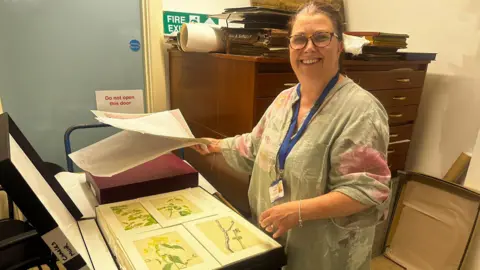
"We have to plan this really carefully," Senior manager Trina Murphy said.
The comprehensive plan for moving the entire collection currently stands at a weighty 80 pages.
Murphy estimated it could take up to four and a half months to complete.
"You can imagine the amount of packaging and bubble wrap, we've just had a delivery of crates," she said.

 Gilly Hope/BBC
The biggest items in the collection are Wallace and a Nissan car, which was the first off the production line when the Sunderland factory opened in 1986, which Murphy said was going to be a "logistical nightmare".
It currently resides in a glass case but she said they were going to be building a new temporary garage for it.
And what of Wallace the lion?
The big cat was a Victorian circus attraction well-known for mauling his tamer, Martini Maccomo, in 1868, who survived the incident but died three years later from rheumatic fever.
Wallace himself died around 1875, and was acquired by Sunderland Museum in 1879, where he has lived ever since.
"He is one of our star pieces, he is one of our most popular exhibits, and everyone said keep Wallace and make sure he's cared for," Murphy said.
She said owing to his size and weight, specialist equipment would be brought in to remove him from his case before he would be "safely wrapped" by gloved staff.
As for the museum's living creatures, Murphy said its tropical fish collection would be kept under "really good conditions" but would stay on site to "not stress them out too much".
"We don't like to say the museum's closing," she added.
"We like to say it's going for a big, long sleep, then will spring back into life."
Follow BBC North East on X, Facebook, Nextdoor and Instagram and listen to Radio Newcastle on BBC Sounds.
