Northern Ireland farm profits topped £1bn in 2025

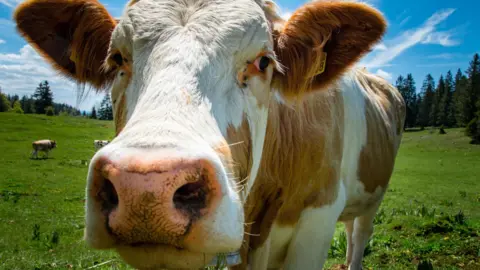 Getty Images
The Northern Ireland farming industry saw profits surge by 36% in real terms last year, reaching more than £1bn for the first time.
The profit is calculated by assessing the value of output and subsidies and subtracting the cost of production and finance.
Total output was up by 12% to £3.6bn, while input costs increased marginally to £2.2bn.
Farming profits are volatile, influenced by external factors like global markets and the weather.
High prices for beef and milk
The overall performance in 2025 was heavily influenced by developments in the beef sector which saw prices rise to record levels.
Beef farmers saw the value of their output rise by 37% to just under £900m, despite the amount of beef being produced falling slightly.
The increase in beef prices reflects longer term trends in the industry across the UK and Europe.
Farmers have been getting out of beef farming after years of low profits and tighter regulation.
That has led to fall in supply which coupled with steady consumer demand has seen prices rise.
The other strongly performing parts of Northern Ireland farming in 2025 were dairy and egg production.
Both those sectors have seen significant consolidation and investment over the past decade.
The Department of Agriculture, Environment and Rural Affairs (Daera) has forecast that at the individual farm level, profits are likely to be up by 19% in 2025/26.
Across all farm types that would mean from an average £56,390 in 2024/25 to £66,840 in 2025/26.

The Agriculture Minister, Andrew Muir, cautioned that the strong performance is unlikely to be sustained through this year.
He said: "The agriculture sector as a whole performed strongly in 2025 with high prices for most commodities particularly milk and beef.
"While these results are positive, I recognise that market prices have fallen considerably in 2026 while input costs have risen with an uncertain outlook for the period ahead."
Just under 30% of the profit in 2025 came from public subsidy to farmers.
That is low by historical standards; in lean years the majority, or even the entirety, of the sector's profits have been accounted for by subsidy.
