'I was told police could be called after home birth'

 BBC
BBCA woman who gave birth at home without a midwife present during a suspension of NHS home birth services said she was "traumatised" after being told police could be called.
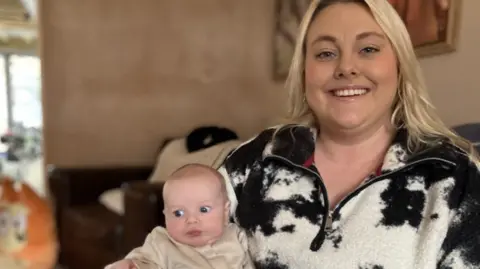
Bethany, 33, from Frampton on Severn, said paramedics also told her social services could be involved when she refused to take her newborn son to hospital following his birth in November.
South Western Ambulance Service said its clinicians did not contact the police or social services, but provided "dedicated care".
There have been seven unassisted home births recorded in Gloucestershire since the NHS suspension began in November 2025. Before then, there were none logged since records began in April 2025.
Bethany said she had planned a home birth with a midwife for her third child, Locksley, but chose to have what is described as an "unassisted" or "free" birth at home when the NHS suspended its home birth service.
She gave birth on 28 November 2025 and was supported by two doulas, who are not qualified to intervene medically but provide support and advocacy.
Bethany said her partner called an ambulance because their son did not breathe immediately after the water birth, while he was still attached to the umbilical cord.
The couple said three ambulances were sent, with the air ambulance also dispatched. The air ambulance was stood down once paramedics arrived.
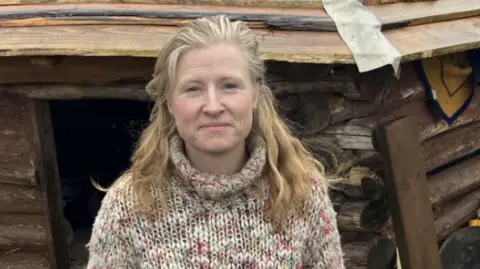
By the time emergency crews reached the property, the couple and their doula Emma Gleave said the baby appeared well and had normal oxygen saturation levels.
Despite this, following advice from paediatric services, paramedics recommended Locksley be taken to hospital for observation for up to 48 hours.
Bethany said she did not believe admission was necessary and was concerned it would disrupt early bonding and breastfeeding, often referred to as the "golden hour", a decision supported by her doula.
Bethany said paramedics warned her police and social services could be contacted if Locksley was not taken to hospital.
She said she was told Locksley had human rights and refusal to take him to hospital could lead to authorities intervening to remove him for medical checks.
She described the experience as "totally unnecessary" and said the situation had caused significant distress.
"I was there naked but under blankets with my baby," she said. "Then I am being threatened that my baby, who I have just fought to bring into the world painfully, that suddenly it's not my decision and he's going to be taken from me and the police are going to be here."
She added: "You think the worst. It was very traumatic".
Bethany, who described the paramedics as respectful and compassionate, said she then called a senior community midwife who was happy for the paramedics to leave.
Gloucestershire Hospitals NHS Foundation Trust suspended home births due to safety concerns over staffing levels in November.
Shortly afterwards, the ambulance service sent advice to frontline staff, highlighting the guidance set out by the trust for home births, including the instruction all babies born without a midwife present should be taken to hospital.
It also said: "Following birth, if a baby requires medical treatment, and it is delayed or obstructed by the family, this is a cause for concern and a safeguarding referral should be completed."
The advice also said there should be a "low threshold for escalating" such cases.
The home birth suspension was initially put in place for two weeks but was extended, with the service expected to be reinstated in the autumn.
The BBC has spoken to three of the seven women, including Bethany, who were recorded as having had unassisted births in Gloucestershire since November last year. They each said they would have preferred to have a midwife present if the service had been available.
A spokesperson for the hospital said freebirths were a choice made by a small number of people and were not always captured in NHS data.
"Recording of these births only began recently, so there is no reliable baseline for comparison," they added. "For that reason, it would be misleading to suggest that the temporary suspension of home births has caused an increase in unassisted births."
The spokesperson acknowledged the suspension of home births had been "deeply disappointing" and meant a reduction in choices for some families, but added the decision was made following safety concerns raised by staff.
"Families can continue to choose a midwife-led birth at Stroud and Gloucester, as well as obstetric-led care," they added.
It said its focus was now on "safely reinstating home births and reopening a midwife‑led service at Cheltenham Birth Centre, so families can access safe, supported choices closer to home".
A spokesperson for the ambulance service said its clinicians did not call the police or social services and added "providing dedicated care" to Bethany and her son was their "number one priority".
"Our ambulance clinicians followed the correct clinical guidance throughout their time with the family, including consulting the maternity team at Gloucestershire Royal Hospitals for additional support.
"In the best interest of patients, clinicians have a duty to explain all possible options when clinical advice is refused," they added.
Gloucestershire Hospitals Trust's director for safety Mark Pietroni said it was important people understood the risks involved in unassisted births.
"While doulas, for example, can be supportive and act as advocates, they are not trained medical professionals and therefore cannot attend a birth in the formal clinical sense which is the role of a midwife or doctor," he added.
"When things do go wrong, they can escalate rapidly and may be catastrophic. These are the key risks people need to be aware of."
Follow BBC Gloucestershire on Facebook, X and Instagram. Send your story ideas to us on email or via WhatsApp on 0800 313 4630.
