5G tech on lampposts approved despite safety fears

 BBC
BBCKit to improve internet connections can be attached to lampposts across Devon in the future.
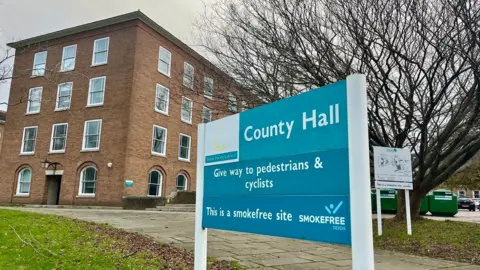
Devon County Council's cabinet approved plans to charge firms hundreds of pounds to attach 5G equipment to street lights despite safety concerns being expressed by some councillors.
The council hoped granting permission would generate income and improve connectivity, particularly in rural areas.
The leader of the Green Party group said there were too many unknowns about the safety of 5G but council officers said current evidence showed no adverse effects on health.
5G coverage in Devon is still a long way behind other areas of England according to a council report.
The national average is more than 96% coverage.
For Devon as a whole that falls to 66% and in north Devon and Torridge the figure was just over 45%.
The report said the technology would be rolled out across the county "albeit more slowly without support such as the ability to utilise council-owned assets".
It said: "Supporting the rollout of 5G has the potential to deliver significant economic benefits at both national and local levels."
The council stands to earn £300-£350 a year per street light but it could also generate £1,750-£7,000 a year on buildings and bridges.
While Devon County Council was not technically the planning authority for this type of infrastructure, regulations did allow it to rubber stamp permitted development on structures it owned.
Jacqi Hodgson, cabinet member for climate change and Green Party group leader, said she "would not want one outside my bedroom window".
She added: "There's inadequate research into the long-term and short-term impacts and lots of unknowns that could be dangerous."
She compared the potential impact of 5G to "an asbestos problem, a tobacco problem" and said "there are other ways of providing that connectivity".
The council report said more research was needed on any long-term effects on health, but added: "The current evidence supported no adverse health effect from exposure to the low-level radiofrequency fields used by 5G".
Michael Fife Cook, the Reform group leader, expressed doubt over who would benefit from increased coverage and said: "Those in the worst position always seem to stay in the worst position."
Dan Thomas, Liberal Democrat cabinet member for Highways, said the council was "not in control" of how 5G would be rolled out but added: "What we are in control of is what goes on our assets."
Follow BBC Devon on X, Facebook and Instagram. Send your story ideas to spotlight@bbc.co.uk.
