Space mystery researchers secure £4m funding

 NASA
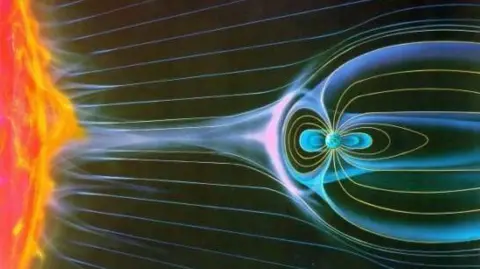
NASAResearchers have been awarded £4m to help solve "space radiation mysteries" which affect our satellites and space weather.
A Northumbria University-led team is trying to understand why the Earth's radiation belts behave so unpredictably, affecting thing such as GPS navigation, telecommunications and weather forecasting.
The radiation belt environment has remained "frustratingly unpredictable" despite Nasa missions to understand it, lead researcher Prof Clare Watt said.
Over five years, researchers will combine spacecraft data with advanced computer modelling to help improve forecasting accuracy.
The intensity and size of the Earth's radiation belts can change dramatically over just hours or days, in response to disturbances from the Sun, the university said.
Scientists currently cannot predict their behaviour.
Watt said: "This project will help us understand whether that's because we don't fully grasp the physics involved, or because parts of the system are inherently chaotic and sensitive to tiny changes in conditions."
Researchers will address two main questions: What controls how much energy from the solar wind reaches the radiation belts and whether small changes in conditions can lead to dramatically different outcomes.
The project was selected by the Science and Technology Facilities Council for one of its Large Awards, which aim to tackle scientific questions which have the potential to produce world-leading research.
