Domestic abuse victims' rapid police video response

 BBC
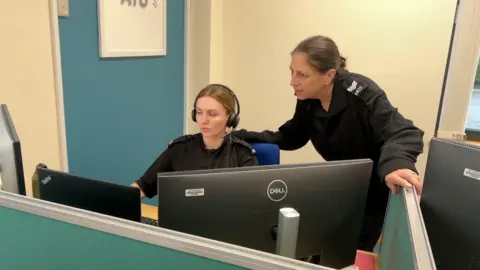
BBCThames Valley Police (TVP) has rolled out a new video service to improve support for victims of non-emergency domestic abuse.
Pilots showed that through Rapid Video Response (RVR), on average, victims were connected to an officer "more than nine times faster" compared to traditional deployment methods.
It began force-wide last week, following a successful pilot in Oxfordshire last year and subsequent introduced across Buckinghamshire, Milton Keynes, and East and West Berkshire.
TVP said that it is particularly beneficial for victims who may be unable to attend a police station, fear reprisals, or feel anxious about a physical police presence.
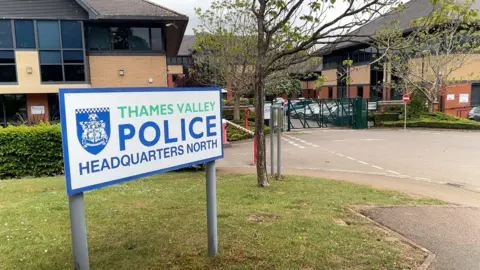
Based on a model first developed by Kent Police and supported by the College of Policing, TVP said the introduction of RVR supported its commitment to improving outcomes for victims at the first point of contact.
It has been used to respond to a wide range of incidents including assaults, sexual offences, harassment, stalking and breaches of bail or court orders.
Stg Dom Lucas, who was involved in the pilot project, said it was "not a replacement for a 999 call".
She said the specific criteria for an RVR caller was that they were confirmed safe, there was suitable communication and connection, it was not a counter-allegation and they consented the call being recorded.
"In the process of waiting the biggest barrier that we're met with is disengagement, especially with domestic abuse it is risky - it does allow perpetrators to manipulate their victims ... or the victim may trivialise what's happened.
"It's really important that we see our victims as soon as possible and by doing it, this way we can offer that service where they can see a police officer."
PC Harley Edwards, one of the specialist call handlers, having victims able to offload instantly "is really important to capturing the best evidence".
Edwards said it was "crucial" to the victim "telling us every single detail" for identifying risk.
"Having that victim able to offload instantly is really important to capturing the best evidence and including it in a statement, if that's the route we go down," she said.
"Coming from a response role, I've definitely seen a change in the engagement of the victims and how much detail they bring forward to supporting a case in the investigation."
TVP said feedback "has been overwhelmingly positive, with 90% of respondents to post-call surveys reporting they were completely or very satisfied with the service".
If you have been affected by issues raised in this report, details of organisations offering information and support about suicide and emotional distress are available via BBC Action Line.
