Will local businesses and visitors welcome a tourism tax?

 BBC
BBCVisitors staying at hotels, inns and bed and breakfasts in Suffolk and Norfolk could soon be paying more for overnight stays.
New proposals, put forward in the King's Speech last month, would see mayors given the power to apply a tourist levy to raise funds to improve holiday resorts.
The tax could be a flat rate or a percentage of the nightly fees.
Levies like this are already applied in many European resorts and also in Wales, Scotland, Manchester and Liverpool.
So what do tourism businesses in Suffolk and Norfolk think of it?
 Martin Giles/BBC
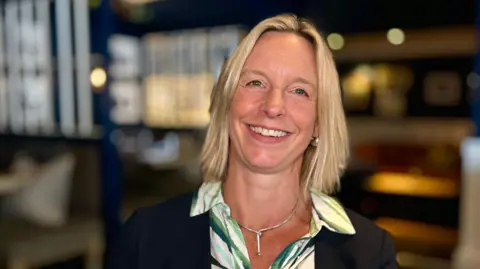
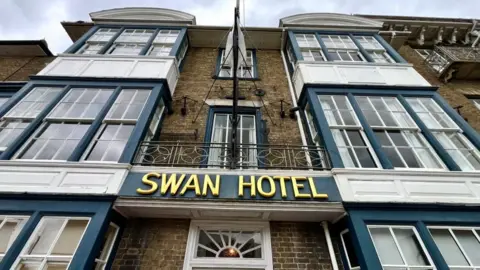
Adnams of Southwold has been operating in the town for more than 150 years. It has a brewery, hotels, a visitor centre, shops and pubs, which all play a prominent role in the tourism offer of the seaside resort.
Jenny Hanlon, who became CEO of the firm in 2024 after joining the company in 2020, is not convinced the levy would raise the funds needed to really make a difference.
According to the government, any levy applied by a mayor would be "reinvested to improve the holiday destination".
She said: "A £1.00 levy every night, 365 days a year, it is less than £15,000 a year.
"If it was a levy of 10% of the room stock, say, here in the area, in total that is £150,000. It sounds like quite a big bit of money, but actually, realistically, what are you going to do with that?"
She said rather than focusing on what a levy could do, firms needed to look at what they do best and what customers want.
She went on to clarify: "You can spend a lot of time and effort trying to second-guess what something might do or what the impact could be, rather than working on the things that are right in front of you now."
 Martin Giles/BBC
A mayor for Norfolk and Suffolk is still a long way off, as an election for the new role is not due until 2028.
For Hanlon, though, she is confident Adnams will "weather" any additional levy if it does happen in the future, as it has been around for 150 years and is "not just going to stop being Adnams".
But she does have her concerns about any additional costs for customers.
"Consumers are really feeling the pinch," she said.
"It all comes down to that fine balance of whether the consumer can afford it or not, and we will have to wait and see."
 Martin Giles/BBC
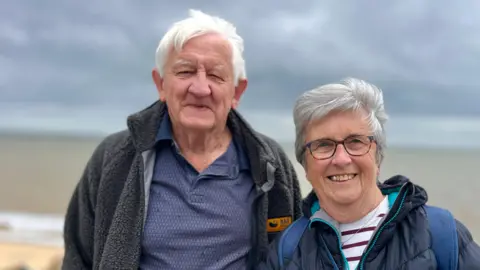
Walking along the path above the beach huts, husband and wife Malcolm and Pamela Cousins are enjoying a break away from the Wirral near Liverpool - which already has a levy.
Asked what she thought of the tax, Pamela said: "It is like car parking, isn't it? You know, putting prices on it and it's taking the tourist away."
Malcolm added: "I believe that you should encourage people to come to places, to visit, and that there shouldn't be some hidden tax behind staying in whichever resort that you go to."
 Martin Giles/BBC
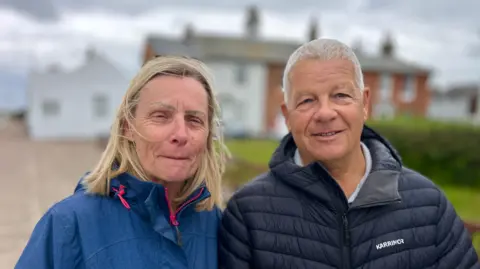
Paul and Lorraine Harrison are on a day trip from Lowestoft and don't agree with the idea of a tourist levy for an overnight stay.
Paul said: "Why should you pay more? You're putting money into places you go to. Putting money into the hotels and that. It's just a rip off, really."
Lorraine agreed and added: "You're sort of penalised for going on holiday where you live, really, in your own country."
She continued: "They're encouraging you to have staycations, but then they're penalising you with a tax, so it's not fair."
 Supplied
A recent survey of 350 tourism, leisure and hospitality businesses in the East of England by Larking Gowen found "businesses were not universally opposed to an overnight tourism levy, but support was conditional".
The conditions included knowing where the money would be spent and that any scheme would be simple to administer
David Scott is the CEO of the Hotel Folk and also a member of the board of the Local Visitor Economy Partnership (LVEP) for Norfolk and Suffolk.
He said: "A visitor levy is not an unknown principle. You would pay that if you visit hotels in certain places in Europe or in other countries."
He continued: "It depends on how that money is invested. That does seem to be the sort of general consensus from people in the hospitality and tourism area".
For Scott, the funds need to be used, not just to promote Norfolk and Suffolk as tourist destinations, but also to support the industry as a career.
He called for "more investment in terms of promoting what a great profession hospitality is to work in and helping businesses to actually improve the experience that they give to their guests".
 Martin Giles/BBC
Any mayor would have to weigh up the health of a town's economy before they made any decision about a levy.
The guidelines published so far by the government said any decision would be made in consultation with local businesses.
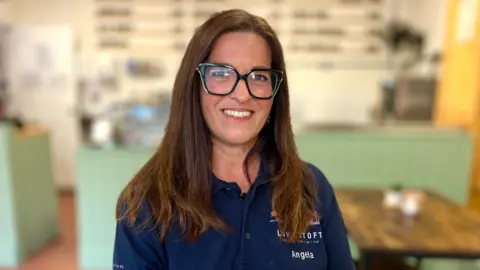
Angela Grey, manager of the Lowestoft Business Improvement District, said: "We are a coastal town, so we do rely heavily on that footfall during the summer season.
"We have a lot of holiday parks in the area and caravan parks. We have to think about what sort of impact it might have on them."
The Ministry of Housing, Communities and Local Government's (MHCLG) consultation on the plans finished in February, and they are due to publish their response in due course.
A MHCLG spokesperson said: "The visitor levy will give mayors more power to raise money and invest it in their priorities, like improving holiday destinations and growing the local economy to put more money in people's pockets."
Do you have a story suggestion for Suffolk? Contact us below.
Follow Suffolk news on BBC Sounds, Facebook, Instagram and X.
