Are you stuck in the dating app burnout cycle?

 Serenity Strull/ BBC/ Getty Images
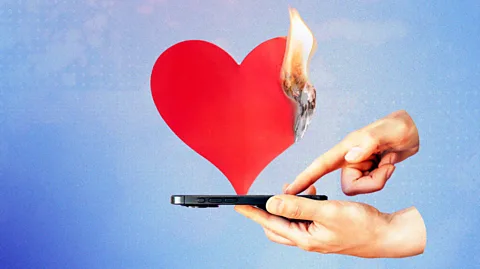
Download, burnout, delete, repeat. Science says dating app users follow a predictable and dangerous pattern. These are the signs you're falling for it – and how to escape.
Two years ago, Fernanda R deleted the dating apps and swore she was done. Then her friends started pairing off with partners they met online, everyone telling the same hopeful stories. So, a few weeks ago, the 29-year-old international affairs advisor – who asked to withhold her last name – decided to try again and re-downloaded a few dating apps. "I thought maybe things would be different this time," Fernanda says. She was wrong.
Soon she was juggling multiple conversations, obsessively checking her phone, buckling under the constant pressure to be witty and interesting. "It just feels overwhelming," says Fernanda. "There's this invisible pressure. It starts to take away from your real friendships, your work."
The algorithm flooded her with people, but nothing clicked. Fernanda couldn't stop wondering what that said about her. She felt lonelier than she had in two years of being single.
Fernanda's story is one I've heard hundreds of times, and there's a name for it: dating app burnout. Research suggests apps may produce a recognisable pattern in their users, one that looks less like dating and more like effects of an unmanageably stressful job – exhaustion, cynicism and a creeping sense that nothing you do is working, and maybe the problem is you. Left alone, it gets worse. Studies link dating apps to higher rates of depression, anxiety and loneliness, with heavier costs on people who were already struggling beforehand.
"It seems as if the goals of the apps are fundamentally incongruent with the goals of users," says Liesel Sharabi, director of the Relationships and Technology Lab at Arizona State University in the US. If people were getting great recommendations and going on incredible dates, they’d be getting off the apps for good. "But that's not what's happening. People are just constantly cycling on and off."
If summer has you back online looking for love, you might be in that loop right now. The good news is once you recognise it, there are concrete steps you can take to protect yourself.
Are you trapped in the burnout cycle?
A 2024 study followed hundreds of dating apps users over the course of three months. "We ended up finding over time, people using dating apps were experiencing burnout across the board," Sharabi says. Which makes sense. If you're stuck on the app, you haven't found what you're looking for (unless you just want hookups). But the experience was far more severe than frustration.
The word "burnout" gets thrown around so much it's started to lose its meaning, but it has a more formal, psychological definition. The classic inventory measures burnout in three categories: emotional exhaustion, cynicism (or depersonalisation) and inefficiency.
Academics first described this phenomenon in high-pressure work environments, but research has extended it to other parts of life. According to Sharabi, you can see it in online daters.
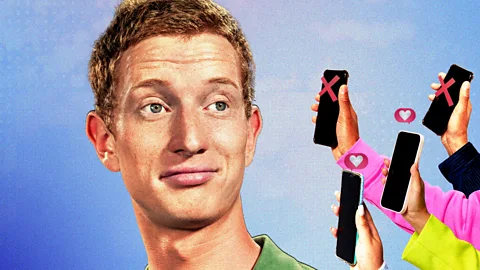
Emotional exhaustion is simple: if swiping leaves you feeling unmotivated, defeated and tired, that could be a sign of burnout. You're experiencing cynicism and depersonalisation when the profiles blend together, Sharabi says, and interactions stop feeling human. Inefficiency, in this context, is a creeping conviction that nothing you do on the app is going to work, either because you're bad at it or there's something wrong with you.
 Serenity Strull/ BBC/ Getty Images
"I started on the app feeling like I want to be respectful because at the end of the day, we're all just human beings," says Madeleine D, who works in marketing for a tech company and also requested to keep her full name off the record. "But the more time I spent, the more blind I became about it, like I didn't really care about these people. I hated that about myself, because the one thing I promised myself was that I would at least show decency and respect."
It's easy to write this off as the predictable grumbling of singles in their late 20s. Dating is hard, and bars aren't so great either. But research suggests something more serious.
Sharabi led a recent meta-analysis which aggregated 17 years' worth of studies covering about 26,000 people. The study found dating app users reported significantly worse psychological health than non-users, including depression, anxiety, emotional dysregulation, loneliness and psychological distress.
Those problems fell harder on people who join dating apps in worse shape to begin with. In theory, Sharabi says the apps are a lifeline for people who find dating hardest: those whose mental health issues make meeting partners in person more difficult. But Sharabi has found those users were the most likely to burn out, and faster. "Those people tended to be especially susceptible," Sharabi says. "It basically exacerbated some of the pre-existing difficulties they had."
The blame game
The dating app industry doesn't want its users burning out. "As society and daters’ needs continue to evolve, we remain committed to helping people make meaningful connections and turn those connections into great dates," a Hinge spokesperson tells the BBC. Hinge says the app is designed to stay in the background of your life, and the company focused on using feedback from daters to improve the experience.
"Dating has always kind of sucked, and I think it's really easy to blame the technology," Sharabi says. At the same time, she thinks the apps amplify the misery in specific ways.
One is gamification. Dating apps are built around fast, frictionless gestures and inconsistent rewards. Many complain the structure is more like a slot machine than courtship, and users can get stuck pulling the lever long after the fun wears off. "The swiping gives you a high," says Karen Cornejo, an office administrator in Los Angeles. "And then everything else just doesn't." By the time a match actually wants to meet, the rush is gone. "I'm not even interested at that point anymore," Cornejo says, and the process leaves her feeling flat.
Dallas Koelling, a writer and comedian in Brooklyn who has gone on and off a couple of apps for years, puts it more bluntly: "Getting the notification that I've gotten a like on Hinge feels like being threatened with a gun."
Keeping Tabs
Thomas Germain is a senior technology journalist at the BBC. He writes the column Keeping Tabs and co-hosts the podcast The Interface. His work uncovers the hidden systems that run your digital life, and how you can live better inside them.
Then there's the hidden labour. "If you lived in, like, Shakespeare's England, you might never even meet the amount of people who you see in one day swiping on Hinge," Koelling says. Dating apps dramatically expand the pool of potential partners. That's what makes them great, in fact, but the abundance can turn dating into work.
"It feels like a second full-time job that I have to do on my lunch break or after work," Madeleine says. "I don't want to be glued to my phone. And for social media, I've gotten a lot better at putting it down. But with dating, there's this feeling that the next person you swipe on could be the person you end up marrying. There's this endless hope that it feels like dating apps prey on."
The bottomless sea of faces also contributes to the feelings of burnout, Sharabi says, especially because a profile can only tell you so much. "You get trapped in an endless cycle of profile to dead-end conversation to dead-end date, and then you're right back where you started," she says.
On top of all that, the structural tension is hard to ignore. Dating apps really do want users to find matches. We'd all stop using them if that never happened. But they're also a business, one that makes almost all its money on subscriptions and paid features, which means they lose money if people quit. For years, dating app users have been telling me they feel manipulated, and that apps withhold the best matches and exploit their emotions to keep them tapping and swiping. (Dating app companies categorically deny this. But the algorithms that run them are a mystery.)
In 2024, a class-action lawsuit accused Match Group – the giant conglomerate that owns Tinder, Hinge and many other popular dating apps – of designing its apps to be addictive and profiting from compulsive use rather than from helping people find partners. Match Group dismissed the claims as "ridiculous". The case was later sent to arbitration. (Match Group did not respond to a request for comment).
"The vast majority of our work focuses on improving the free experience on Hinge, with less than 15% of our community using paid features," a Hinge spokesperson says. "Ultimately, our success depends on people having positive experiences on the app, meeting someone meaningful, and ultimately recommending Hinge to others.”
Four ways to break the burnout cycle
The apps are designed to keep users swiping, and when unchecked, swiping is what wears people down. But Sharabi says there are some simple steps you can follow to avoid the symptoms of burnout and keep your mental health in check.
1. First, don't make the apps your only outlet.
"I never discourage people from using them," Sharabi says. "But they shouldn't be the only way you're trying to meet people, and that takes some of the pressure off." Join a run club, ask a friend to set you up and put yourself in rooms where you might meet someone the old-fashioned way. That way a discouraging conversation on an app isn't the only thing your week is riding on.
2. Swipe with intention.
Mindless swiping can swallow hours and leave you with nothing to show for it. Sharabi recommends treating the apps the way some people now treat social media. "Say I'm going to look at the app for this amount of time, this many times a week, and I'm done," she says. Notice your mood and stop before the exhaustion sets in, so you end each session energised rather than hollowed out.
3. Lean on your friends.
Burnout thrives in isolation, and much of the swiping that produces it happens alone. Researchers who study burnout have long found that social support cushions the blow; talking through the ups and downs with people who know you can keep a bad week from becoming a bad spiral.
4. Know when to quit.
Dating can be discouraging, but if the apps are eroding your optimism, and you put down your phone feeling like you're never going to find someone, that's the signal to step away entirely. "All of those things could be a sign that maybe you should just take a total break," Sharabi says.
More like this:
There are signs the dating app business is aware of these concerns. The industry could be in trouble. Paid subscribers are dropping like flies, and there's some indication that younger people are keen to find love offline. Battered by what executives call "swipe fatigue", dating apps are working to reinvent themselves.
Bumble is abandoning the swipe altogether, joining Hinge and Tinder in a new embrace of more AI-driven matchmaking. Tinder's CEO recently announced plans to embrace in-person events in an effort to reshape the app. A Hinge spokesperson says creating a "less lonely world" is the company's core mission, and it's working to create supportive communal spaces online and off. Whether any of it works, or whether it's just a fresh way to keep people tapping, remains to be seen.
For now, people caught in the cycle are left to manage it themselves. Madeleine is staying off the apps for now, though she doesn't expect it to last. In a world where so many relationships begin online, opting out can feel like opting out of romance entirely. "I doubt this will be more than a break," she says. "But dating can be fun, when you remove how seriously some people take it." Then, after a beat: "I just wish we had a better way to do this."
--
For more technology news and insights, sign up to our Tech Decoded newsletter, while The Essential List delivers a handpicked selection of features and insights to your inbox twice a week.
