'It's the rainforest of the sea': These 1960s photos reveal Jamaica's lost underwater paradise

 Kenneth Johnson/ Natural History Museum
A trove of snapshots from a 1960s diving expedition reveals stunning glimpses of Jamaica's vibrant ecosystems of the past. This is transforming our vision of what coral reefs can be.
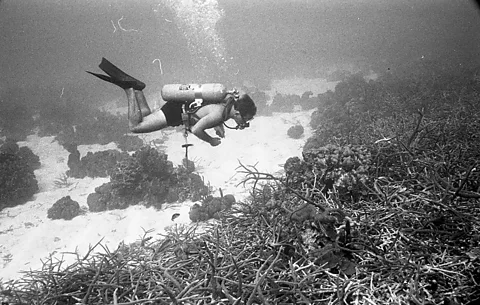
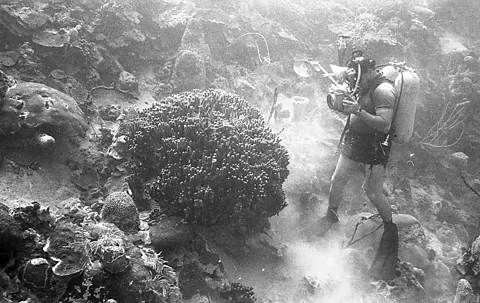
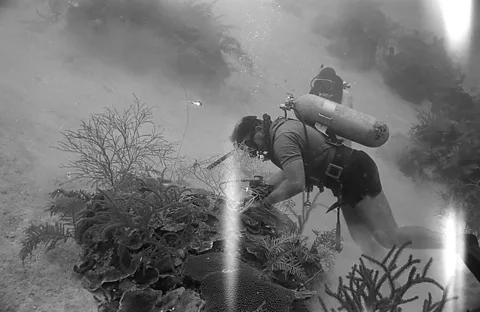
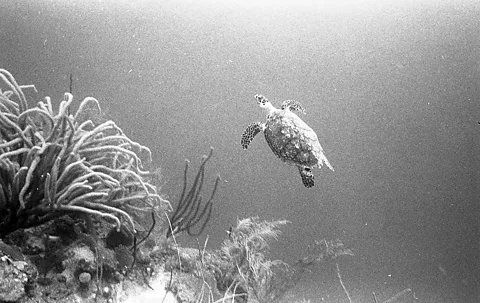
In 1966, marine scientist Eileen Graham dived into the waters along the northern coast of Jamaica to study the lush, vibrant coral reefs. Over the course of two years and long before digital cameras, she gathered a collection of over 1,000 images from Discovery Bay, Runaway Bay and Rio Bueno that capture reefs dense with coral, bright with sea fans and sponges, and alive with shoals of snappers and grouper fish.
Today, that archive of stunning photos has taken on a new significance, scientists say: after decades of declining Jamaican coral reefs, it is reminding the world what a healthy habitat looks like. Graham's images, once a snapshot of an underwater world bursting with life, have become evidence of change and loss. But the photos can also help us know what to aim for, when trying to protect and restore the reefs.
"There's a huge diversity of coral in Eileen's photos. You really see how lush these ecosystems were back then. It really feels like the rainforest of the sea," says Jelani Williams, a Jamaican marine scientist at the University of Southern California.
Once considered one of the most biodiverse regions in Jamaica, the island's reefs have suffered a series of disasters. They were devastated by Hurricane Allen in 1980, and also battered by invasive species, pollution, tourism and warmer waters due to climate change. Ever more powerful storms continue to wreak havoc on corals. And there has been a decline in mangrove forests in the Caribbean, which protect and nurture reefs.
Through old photos like Graham's, "we can learn what a thriving reef looked like before it began to be destroyed," William says.
 Kenneth Johnson/ Natural History Museum
In 2019, Ken Johnson, a principal researcher at the Natural History Museum in London, came across Graham's photos, which were donated by scientists from the Discovery Bay Marine Lab in Jamaica. Johnson was astounded by their beauty, but noticed how drastically the marine life had changed, even since his own diving days in the Caribbean back in the 1980s.
"The sea floor at Discovery Bay used to be covered in live corals at around 80-90%. Nowadays the coral cover is much lower at around 10-20%," he says.
To show the noticeable decline and support conservation efforts, Johnson began amassing a trove of photos from other diving scientists in other locations who took pictures in the pre-digital age. These old photos may help modern generations avoid what's known as the "shifting baseline" syndrome, according to Johnson: as a habitat becomes depleted, we may shift our idea of what this habitat is supposed to look like, and then no longer even realise what has been lost. Once we see the devastated habitat as a new normal, we may then feel less urgency to try and restore it.
Photos like Graham's can however fight that normalisation, Johnson says, by showing us the actual "baseline": the original, lush state of the habitat.
For example, Graham's 1960s images show an abundance of branching and wide-plate coral covering most of the sea floor, as well as shoals of snappers, groupers and parrotfish weaving through the reef. This abundance is no longer visible today.
 Kenneth Johnson/ Natural History Museum
Saving Jamaica's reefs - and beaches
The impact of the declining reefs can be seen on land, too. "When you're on vacation and enjoying the gorgeous white sands that Jamaica is known for – many are not aware that our white sand comes from coral reefs from many decades ago," says Camilo Trench, a marine biologist at the University of the West Indies in Jamaica. Research suggests that this white sand is under threat and the decline of the reefs contributes to beach erosion in the Caribbean, while healthy reefs can protect beaches.
The range of threats to the reefs is complex and interlinked, and includes a sea-urchin die-off in the 1980s. Diadema antillarum, a black, long-spined sea urchin, protects the coral reefs by grazing on and thereby controlling the growth of algae. In 1983, an unknown pathogen, possibly introduced by ballast water from ships, caused a mass sea-urchin die-off, and a decline in the reefs. That threat remains: in 2022, there was another sea urchin die-off.
Due to rising mass tourism on the island, fish such as snappers and groupers that also graze on algae are being caught in larger quantities as food for tourists, studies suggest. The algae then overgrow and compete with the corals for space and sunlight, ultimately smothering them.
 Kenneth Johnson/ Natural History Museum
Last year, another disaster struck: Hurricane Melissa, a Category 5 hurricane, brought catastrophic damage to Jamaica with intense flooding and widespread devastation to people's homes. 185-mph (295km/h) winds engulfed the shores of North and Western Jamaica, tearing roofs off homes and shattering fruit trees. It was the most powerful storm ever to hit the island. Hurricanes have been found to contribute to the decline in coral reefs in the Caribbean as they churn up the sea and break off the corals.
"I had no idea what a Category 5 hurricane looked like or what kind of devastation it would have. Jamaicans are still recovering from the effects of Hurricane Melissa, including the emotional trauma," says Williams.
The full impact of the disaster on the island's people, and its ecosystems, may only become clear with time.
Trench is on a mission to protect Jamaica's reefs through initiatives such as the Jamaica Mangroves Plus Project, which aims to preserve and restore mangrove habitats across the island. Many of the marine species that can be seen in Graham's photos would have spent their early life stages in mangrove nurseries, which play a crucial role in supporting healthy reefs. Mangroves are also important carbon sinks, storing more carbon per hectare than forests on land.
"Mangroves give me the most hope. They are tough and climate resilient," says Trench.
Williams suggests that protecting Jamaica's reefs also means understanding and preserving the microbes that help keep corals healthy. He warns that climate breakdown has created a "new normal" across Jamaica and the Caribbean, saying real resilience will require more holistic and innovative approaches than those used in the past. "You can't really have conservation efforts without understanding what the baseline microbial communities are, and also trying to preserve those things," says Williams.
More like this:
Trench and Williams both argue that protecting Jamaica's reefs will require stronger government action, from tougher environmental laws to rethinking shipping routes, hotel development and research funding. Without more drastic intervention, Trench warns that rising heat and pollution will drive further species loss, though he says a climate‑resilient future is still hopeful. "It's not impossible for Jamaica to make a turnaround to build climate resilience. It's just going to take some very hard decisions," he says.
Looking back at Graham's images from the 1960s offers a rare glimpse into a different Jamaica, one rich with marine habitat complexity and beautiful reefs, before threats from climate crisis to overtourism. Scientists are predicting that 80%-90% of the world's coral reef will die off by 2050, making archives such as Graham's, which reveal lost ecosystems, more important than ever, says Johnson.
But he stresses that "we can't only keep referring to changes that happened 50 years ago".
"We need to respond to ongoing ecological changes. Some coral reefs are responding differently to climate change and perhaps some are more resilient," he says.
"What we're now seeing today in Jamaica and the Caribbean is not normal," he adds. "More collections like Eileen's need to be documented and curated before they're all lost."
--
For essential climate news and hopeful developments to your inbox, sign up to the Future Earth newsletter, while The Essential List delivers a handpicked selection of features and insights twice a week.
