Is it worth taking probiotics after antibiotics?

 Getty Images
Taking a course of antibiotics could harm the beneficial bacteria living inside us. So should we be taking probiotics after we finish them? The answer may not be so simple.
The life inside all of us
Microbes & me is a new collaborative series between BBC Future and BBC Good Food.
In the series, we’ll be looking at recent research into the microbiome of bacteria that lives in all of us.
We’ll be exploring how it affects our health, what could be having detrimental effects on it, and recommending recipes that might help it thrive.

Probiotics have been touted as a treatment for a huge range of conditions, from obesity to mental health problems. One of their popular uses is to replenish the gut microbiome after a course of antibiotics. The logic is – antibiotics wipe out your gut bacteria along with the harmful bacteria that might be causing your infection, so a probiotic can help to restore order to your intestines.
But while it might sound like sense, there is scant solid evidence suggesting probiotics actually work if taken this way. Researchers have found that taking probiotics after antibiotics in fact delays gut health recovery.
Part of the problem when trying to figure out whether or not probiotics work is because different people can mean a variety of things with the term ‘probiotic’. To a scientist, it might be seen as a living culture of microorganisms that typically live in the healthy human gut. But the powdery substance blister packs on supermarket shelves can bear little resemblance to that definition.
Even when researchers use viable, living bacterial strains in their research, the cocktail varies from one lab to another making it tricky to compare.
“That’s the problem – there aren’t enough studies of any one particular probiotic to say this one works and this one doesn’t,” says Sydne Newberry of Rand Corporation, who carried out a large meta-analysis on the use of probiotics to treat antibiotic-induced diarrhoea in 2012.
You might also like:
Newberry’s findings, reviewing 82 studies of nearly 12,000 patients, did find a positive effect of probiotics in helping to reduce the risk of antibiotic-induced diarrhoea. But due to the variation – and sometimes lack of clarity – on which bacterial strains had been used, there was no particular probiotic or cocktail of probiotics that could be pinpointed and recommended as working.
Since that 2012 study, the evidence in support of probiotic use after antibiotics hasn’t moved on a great deal.
 Getty Images
“That’s what’s so troubling,” says Newberry. “There are a few more studies than when we did the review, but not enough to conclusively say whether probiotics work or not. And not enough to say which ones work.”
A particular concern is a lack of research on the safety of taking probiotics. While they are generally assumed to be safe in healthy people, there have been worrying case reports of probiotics causing problems – such as fungus spreading into the blood – among more vulnerable patients.
A recent study by scientists at the Weizmann Institute of Science in Israel found that even among healthy people, taking probiotics after antibiotics was not harmless. In fact, they hampered the very recovery processes that they are commonly thought to improve.
The researchers, led by Eran Elinav, gave 21 people a course of broad-spectrum antibiotics for one week. After this, they had a colonoscopy and an upper-gastrointestinal endoscopy to investigate the state of their microbiome throughout the gut.
“As expected, a lot of major changes occurred in the function of the microbes – many of which died because of the antibiotics,” says Elinav.
The volunteers were divided into three groups. The first was a wait-and-see group, with no intervention after the antibiotics. The second group was given a common probiotic for a month. The third was given perhaps the least savoury option: a faecal transplant. This group had a small sample of their own stool – taken before the antibiotic treatment – returned to their colon once the treatment was over.
The surprising finding was that the group who received the probiotic had the poorest response in terms of their microbiome. They were the slowest group to return to a healthy gut. Even at the end of the study – after five months of monitoring – this group had not yet reached their pre-antibiotic gut health.
 Getty Images
“We have found a potentially alarming adverse effect of probiotics,” says Elinav.
The good news, incidentally, is that the group who received a faecal transplant did very well indeed. Within days, this group completely reconstituted their original microbiome.
“So many people are taking antibiotics all over the world,” says Elinav. “We can aim to better understand this potentially very important adverse effect that we didn’t realise existed.”
And the evidence is mounting that taking probiotics when gut health is weak is not such a good idea. Another recent study has found that probiotics don’t do any good for young children admitted to hospital for gastroenteritis. In a randomised controlled trial in the US, 886 children with gastroenteritis aged three months to four years were given either a five-day course of probiotics or a placebo.
The rate of continued moderate to severe gastroenteritis within two weeks was slightly higher (26.1%) in the probiotic group than in the placebo group (24.7%). And there was no difference between the two groups in terms of the duration of diarrhoea or vomiting.
Despite evidence such as this, the demand for probiotics is large and growing. In 2017, the market for probiotics was more than $1.8bn, and it is predicted to reach $66bn by 2024.
“Given the very heavy involvement of the industry, clear conclusions as to whether probiotics are truly helpful to humans remain to be proven,” says Elinav. “This is the reason why regulatory authorities such as the US’s Food and Drug Administration and European regulators have yet to approve a probiotic for clinical use.”
 Getty Images
But that is not to write off probiotics completely. The problem with them may not be with the probiotics themselves, but the way we are using them. Often probiotics are bought off the shelf – consumers may not know exactly what they are getting, or even whether the culture they are buying is still alive.
Elinav and his colleagues have also carried out research on who will benefit from probiotics and who won’t. By measuring the expression of certain immune-related genes, the team was able to predict who would be receptive to probiotic bacteria colonising their gut, and for whom they would simply “pass through” without taking hold.
“This is very interesting and important as it also implies that our immune system participates in the interactions with [probiotic] bacteria,” says Elinav.
This opens the door to developing personalised probiotic treatments based on someone’s genetic profile. Such a system is “realistic and could be developed relatively soon”, says Elinav, but at this stage it remains a proof of concept. To become a reality, it will need more research on probiotic tailoring and testing more bacterial strains in larger groups of people.
This kind of personalisation may release the full potential of probiotic treatments for gut health. At the moment, the lack of consistency in the findings on probiotics comes in part because they are being treated like conventional drugs. When you take a paracetamol tablet, you can be more or less sure that the active component will do its job and work on receptors in your brain, dulling your sensation of pain. This is because most people’s pain receptors are similar enough to react in the same way to the drug.
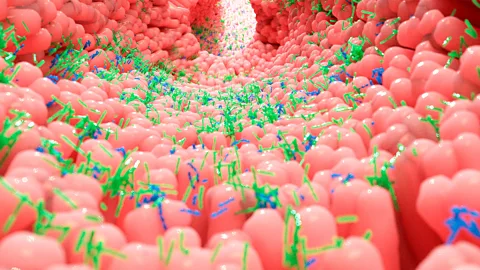
But the microbiome is not just a receptor – it is closer to an ecosystem, and sometimes likened to a rainforest in its complexity.
As a result, finding and tailoring a probiotic treatment that will work on something as intricate and individual as your own internal ecosystem is no easy task. And with that in mind, it’s not so surprising that a dried-out pack of bacteria from a supermarket shelf may well not do the trick.
--
If you liked this story, sign up for the weekly bbc.com features newsletter, called “If You Only Read 6 Things This Week”. A handpicked selection of stories from BBC Future, Culture, Capital, and Travel, delivered to your inbox every Friday.
