10 stunning summer homes that are in harmony with nature

 Alvaro Fonseca
From a sleek dream home in the Costa Rican rainforest to a stone, cliff-top retreat in the wilds of Scotland, here are 10 summer retreats that are immersed in their surroundings.
What makes the ultimate summer home? For some it may be a tiny wooden cabin deep in a verdant, shady forest, surrounded by a chorus of birds. For others it would open up from the bedroom directly onto a stretch of flaxen sand, with rippling ocean waves just metres away.
A new book, Summer Houses by Izabela Anna Moren, features beautiful holiday dwellings across the globe, from buildings on stilts in the Costa Rican jungle, to a stone cottage perched on a Scottish cliff. What unites them is not just a nod to their surroundings, but architecture shaped by the environment. Each design draws logic, materials and form directly from the landscape – sustainability crafted in response to nature.
Here’s our pick of 10 retreats that are architecturally designed in harmony with geography and offering the perfect escape from everyday life.
 Alvaro Fonseca
1. Sinfonia Verde, Costa Rica
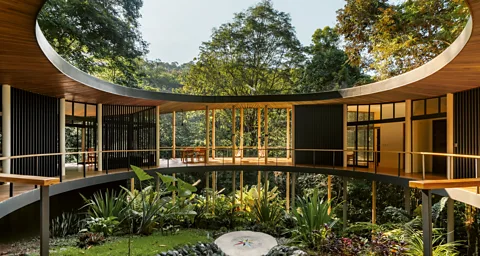
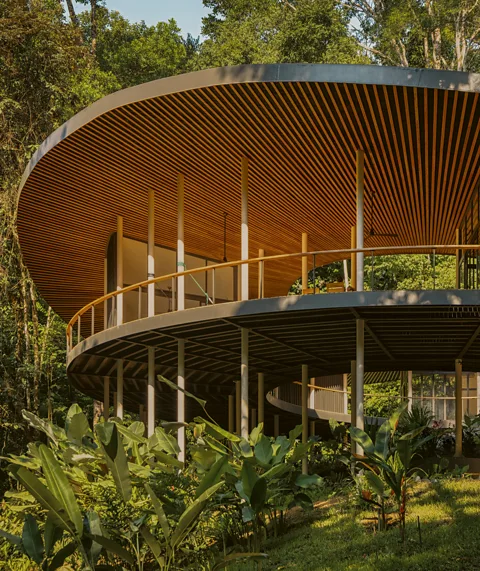
Inspired by the Osa Peninsula – a heavily forested region in southwestern Costa Rica – this house was designed as "a platform for experiencing the rainforest from the inside," architect Benjamin Saxe of Studio Saxe tells the BBC. The homeowners are keen biologists who enjoy observing nature, and the home's circular shape creates a 360-degree relationship with the surroundings, and offers stunning views of the forest canopy. Due to the sloping terrain it was partly built into the hillside, while also floating above it.
The parabolic roof manages the heavy rainfall, and is designed, "to behave like part of the ecosystem," explains Saxe. "In the rainforest, everything is interconnected, and we wanted the architecture to work in a similar way. The house is elevated to allow water, air and wildlife to continue moving naturally beneath it, minimising disruption to the terrain."
 Yigoris Kordakis
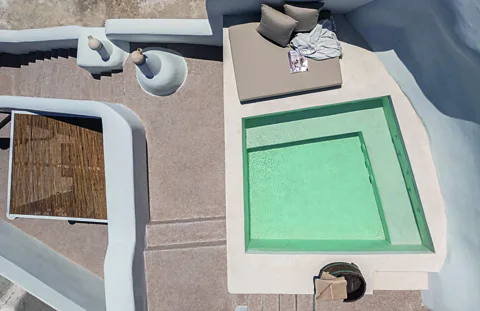
An idyllic square of aquamarine water is perfectly positioned on the roof terrace of this traditional whitewashed home. With views across the island of Santorini to the Aegean Sea, this former 200-year-old subterranean wine cellar in Greece, once built for rural production, has been transformed by Kapsimalis Architects into a contemporary summer home. Interior vaulted rooms, underground cisterns and a terrace – previously used for storing and drying produce – have been preserved and repurposed. It now provides cool, open-plan living with simple bleached walls, bridging history with modernity.
 Architectuurfotograaf/ Rob van Esch
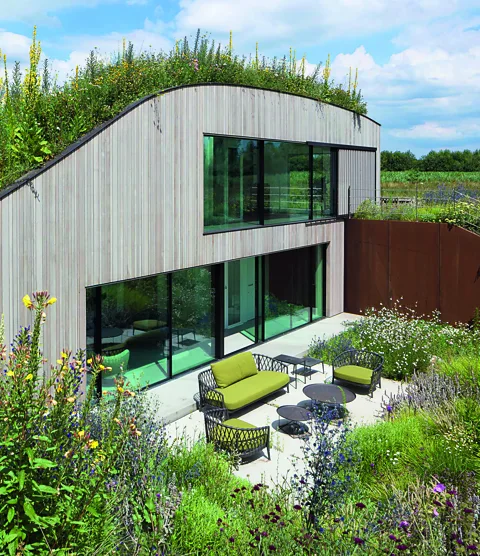
3. The House Under the Ground, Netherlands
If you were walking along the lane beside a nature reserve in rural Dutch Eindhoven, you would barely notice this building tucked inside the bucolic landscape. Previously a shelter for goats, the home was designed by architects WillemsenU, who sank two of its three floors into the ground. They then covered the exposed exterior in a wildflower hill, while on the other side the house is open, sheltered yet integral to the landscape beyond.
 Fernando Guerra
4. Canopy House, Brazil
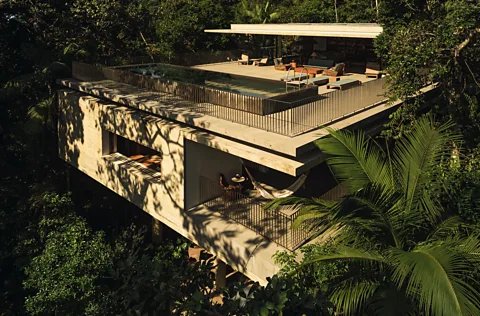
A two-hour drive from São Paulo finds you in the municipality of Guarujá, the gateway to Brazil's vast Atlantic tropical rainforest, home to sloths, parrots and the Canopy House. A multi-generational family summer home created by Studio MK27, it is built on concrete columns. On the first floor, five bedrooms and a TV room open out to a balcony with hammocks, and at the top, the main living space is half open to the elements with an expansive terrace and pool. Gardens, an exterior circular staircase and the minimal palette of pine timber, basalt and concrete connect the house to its jungle surroundings.
 Richard Gaston
5. Caochan na Creige, Scotland
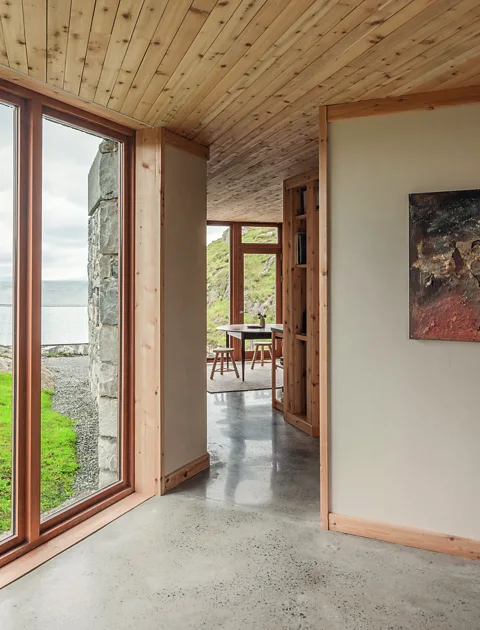
Caochann na Creige is built on the island of Harris in the Outer Hebrides, a beautiful and remote archipelago off the northwest coast of Scotland. "I believe architecture should grow from its place," architect Eilidh Izat of Izat Arundell tells the BBC. "In the Hebrides, there's a tradition of buildings shaped by climate, materials and necessity. I wanted to explore that in a contemporary way." The new build is perched on the cliffs of the rugged Bays of Harris – a landscape, says Izat, that is dominated by some of the oldest rock in the world. The house is "embedded in the environment rather than imposed upon it". The building wraps around a natural rock outcrop, uses Lewisian Gneiss stone from a quarry three miles away, and has a flat roof so that it sits low in the wider landscape.
 Fisher Studios
6. Copper Bottom, Oxford, England
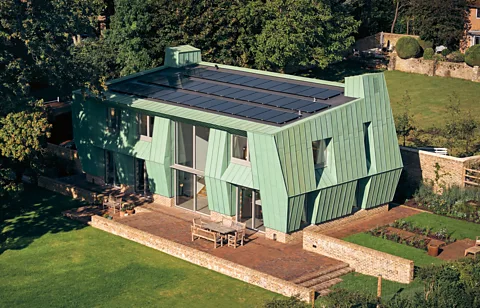
Architect Adiran James tells the BBC that this Oxford house was designed to, "read as a sculptural object in the landscape, a model which acts as a focus in vistas like a pavilion in an 18th-Century garden." It is clad almost entirely in an "origami-esque copper carapace", topped with solar panels, triple-glazed and has a very low carbon footprint. James describes the views it offers "of Oxford with the spires rising above the mist in the water meadows – it's life on a different plane".
 Bálint Jaksa
7. Summer House, Lake Balaton, Hungary
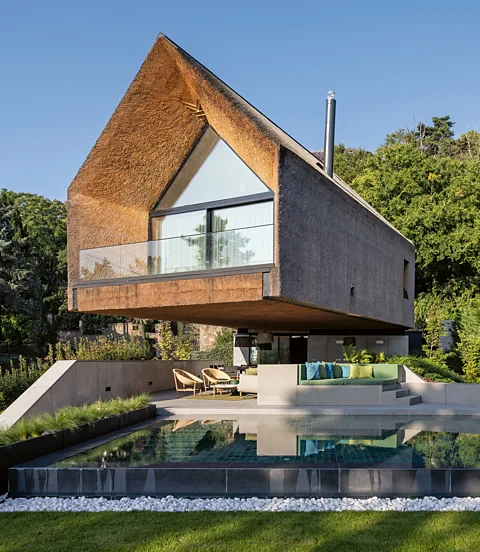
Located on the shores of Lake Balaton, the largest freshwater lake in Central Europe, this house in the village of Tihany is rooted in the landscape. Reed has been the defining material of the local architectural culture for centuries, and was the "sustainable and cultural material choice" for the house, architect Adam Reisz of RAPA tells the BBC. A hand-laid stone base, 13-metre cantilever and thatched roof made from reeds harvested from the lake "prove that traditional and contemporary can strengthen one another". Inside, a sauna, bathing pool and terrace sit in the middle, while the soaring, double-height living space on top offers an airy retreat.
 Tolu Sanusi
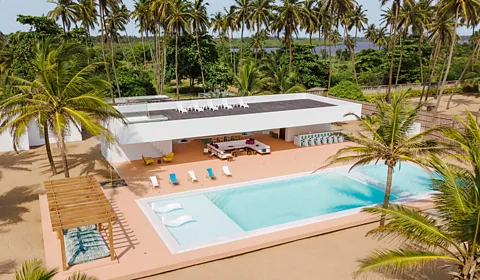
8. Coral Pavillion, Nigeria
In West Africa the coastal plains are flat, and on the serene Ilashe Peninsula – which can only be accessed by boat from Lagos – a design emerged from a moment of clarity for architect Tosin Oshinowo. "I saw a herdsman calmly walking past with his cattle," he tells the BBC. "Behind, ships were waiting at the port in the distance, and it became clear the project should be framing views of the Atlantic."
More like this:
Named after the colour of the sand, the Coral Pavillion is defined by its simple lines, open-plan design and whitewashed wall. The strategic over-hanging ceilings, and openings, capture shade and ocean breeze, while the pink terrace contrasts with a turquoise pool.
 Maria Missagli
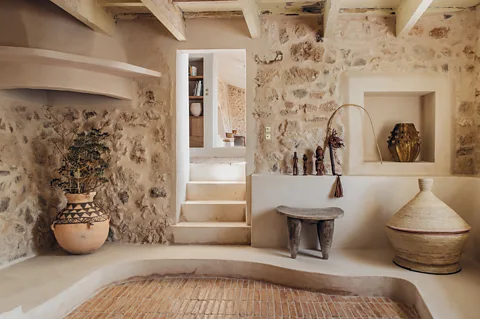
9. Estancia San José, Spain
Rustic walls were deliberately kept inside this renovated holiday home on the Spanish island of Menorca, adapted by Atelier du Pont. Designed for a mother and daughter to spend more time together, the original textures of the previously dilapidated farm buildings were intwined into the modern design. Terracotta floors, handmade ceramic tiles and rope-woven furniture add to the pastoral elements. Outside, the pool terrace throngs with wild olive trees.
 Kkrom Services
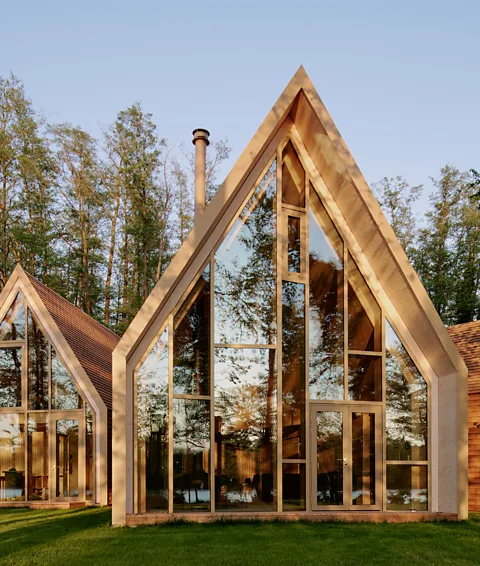
10. The Lake House, Germany
Just outside Berlin and evoking the silhouette of boathouses, the Lake House employs timber pitched roofs and large wood framed window facades to make the most of the panoramic lake and forest views of the Brandenburg region. A modern take on a treehouse, designed by Sigurd Larsen, its open-plan, vaulted design has a glass façade that reflects the lush forest around it.
Summer Housesis published by Phaidon.
--
If you liked this story, sign up for The Essential List newsletter– a handpicked selection of features, videos and can't-miss news, delivered to your inbox twice a week.
