'I believe Mr Nixon knew all along': The tragic story of Martha Mitchell - the Watergate whistleblower who was ridiculed

 Getty Images
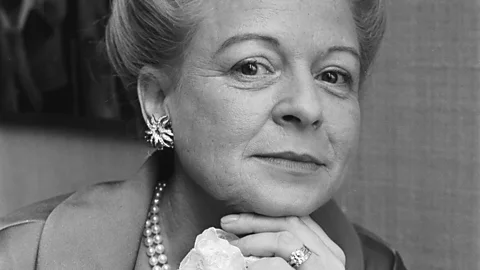
Martha Mitchell was a flamboyant Washington DC socialite whose husband was embroiled in the Watergate scandal. Her shocking claims of a violent abduction and a "dirty business" were ridiculed as delusional – until they turned out to be true.
Martha Mitchell was a character; everyone agreed on that. Born in Pine Bluff, Arkansas in 1918, she emerged as a flamboyant, charismatic Washington socialite after the appointment of her second husband, John Mitchell, to the Nixon White House.
She liked a drink, and sometimes liked to follow those drinks with gossipy late-night phone calls to reporters. Her outsized personality and presence earned her the nickname "Washington's Other Martha". Her candidness saw her nicknamed "the Mouth of the South".
Warning: This article contains language that some may find offensive.
But in 1972, as her husband was embroiled in the Watergate scandal and she became, in the words of the reporters Bob Woodward and Carl Bernstein, "the Greek chorus of the […] drama, sounding her warnings to all who would hear", Martha's eccentricities were turned against her.
She was dismissed as a drunk, a fantasist and a self-publicist, even as the broad truth of her claims of a "dirty business" became clear.
Her more specific and lurid accusations – of a violent abduction by Nixon associates, of being held hostage and drugged – only enhanced her status as a seemingly unreliable witness. "The whole thing is incredible," she acknowledged to David Frost in a September 1974 BBC TV interview. "It's like reading a James Bond novel. You can't believe it. I can't believe what's happened to me."
Years after her death, Harvard psychologist Brendan Maher used her name to describe a psychological phenomenon: the Martha Mitchell effect, wherein a patient's outlandish but real experiences are misdiagnosed as delusions. But it wasn't until recently that the significance of her Watergate interventions, erratic and self-interested though they sometimes were, started to be properly acknowledged.
In 1977, Richard Nixon had told David Frost that "if it hadn't been for Martha Mitchell, there'd have been no Watergate". He meant that her unpredictable behaviour had caused his close ally John Mitchell to take his eye off the ball. In reality, she came close to exposing the entire criminal enterprise before a cover up could even begin.
A dramatic phonecall
Martha Beall grew up in a small town, the only child of well-to-do parents. A one-time aspiring actress, she was known as talkative and headstrong. She studied at the University of Arkansas and later at the University of Miami. Upon graduation, after a short stint as a schoolteacher, she got a job as receptionist to the general of the Pine Bluff Arsenal, transferred with him to Washington DC, and there met and married an Army captain.
After Martha's husband's discharge, the couple moved to New York where they eventually divorced after 11 years of marriage. A few months later, Martha married again, this time to wealthy Manhattan lawyer John Mitchell. And 11 years after that she found herself back in DC, a resident of the exclusive Watergate apartment complex as the wife of the Attorney General of the United States.
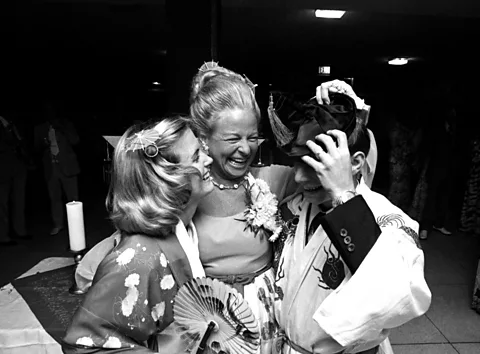
In Washington, Martha established herself as a gregarious and enthusiastic partygoer with a distinctive sense of style, "the most colourful" of the Nixon cabinet wives, according to a contemporary New York Times report. She soon became known as the most outspoken and indiscreet, too, telling a TV reporter in November 1969 that anti-Vietnam war protests reminded her husband of the Russian Revolution and earning national notoriety in the process.
 Getty Images
Around the same time, she caused a more localised kerfuffle by making a series of phone calls to Washington wives and senatorial staff, lobbying them hard (some said threatening them) to throw their influence behind one of her husband's favoured Supreme Court candidates, the pro-segregation, anti-labour judge Clement Haynsworth.
The telephone continued to be Martha's weapon of choice. In April 1970, she made a series of late-night calls to the Arkansas Gazette urging them to "crucify" local senator J William Fulbright for opposing another segregationist Supreme Court nominee, G Harrold Carswell. In 1971, she called Washington Post reporter Bob Woodward after he named her as one of the Watergate residents who had complained about pollution from a generating plant which, in turned out, directly supplied the White House. "Honey," he quotes her as saying. "[I don't] care if John and Mr President [have] to work by candlelight, [I] learned enough back in Pine Bluff, Arkansas, to know that human beings should not be subjected to direct hits from anybody's waste."
In History
In History is a series which uses the BBC's unique audio and video archive to explore historical events that still resonate today. Sign up to the accompanying weekly newsletter.
Martha's most dramatic and significant phone call was made on 22 June 1972. Earlier that year, John Mitchell had resigned as Attorney General to head up the Committee for the Re-Election of the President (CRP, or, popularly, Creep). His role involved distributing a secret slush fund to support sabotage and intelligence-gathering against Nixon's political opponents. On 17 June, five men were caught breaking into the Democratic National Committee offices in the Watergate complex, carrying electronic listening equipment.
John and Martha Mitchell were in California for fund-raising engagements at the time of the arrests. Realising she would easily connect the break-in to himself and the campaign (one of the arrested men, Creep staffer James McCord, had previously been assigned to her as a personal guard), John tried to keep the news from Martha. As he prepared to return to Washington to begin a cover-up operation, he suggested she remain at their hotel to rest, and told the Creep team, including security aide Steve King, to ensure she didn't see any newspapers. A few days later, however, Martha managed to find a copy of the Los Angeles Times, and phoned one of her reporter friends, United Press International's Helen Thomas, to discuss what she'd learned.
Martha got as far as telling Thomas she was "sick of the whole [Nixon] operation" before the call abruptly terminated. What had happened, Martha later explained to David Frost, was that Steve King had "jerked the telephone from the wall". She was then held captive in her hotel room for several days, "without food or anything else". At one point, she attempted to escape through a window and the ensuing struggle left her needing stitches from broken glass.
Later, she was held down and forcibly injected with a tranquiliser. When she was eventually allowed to leave the hotel, Martha called Thomas again, complaining of being left "black and blue" by her captors and announcing "I won't stand for this dirty business".
"When I got back to New York, I had both arms in bandages," she told Frost in 1974. "And that is my greatest mistake, because if I had gone in front of the press at that particular time, they would have known what had happened to me." As it was Martha's allegations (eventually corroborated by McCord in 1975 after his conviction for the Watergate break-in) were relegated to the inside pages of the national papers. Her first call to Helen Thomas made page 12 of the New York Times, her second was only noted on page 25.
'A complicated whistleblower'
Others, like the New York Daily News, treated the affair more as whimsical gossip-column fodder than a significant lead in a scandal that could ultimately bring down the government. Later press coverage quoted anonymous Republican sources worrying over Martha's alcohol consumption and apparently declining mental health. In September, Bob Woodward visited her in New York, where she and John had moved following his resignation from Creep. He found her chatty and charming as ever, but vague and evasive when talk turned to Watergate. He concluded it had been a wasted trip (though she did correctly predict Nixon would win "biggest landslide in the history of the country" in the upcoming election).
More like this:
Martha Mitchell was a complicated whistleblower in the Watergate affair. Washington Post writer Katherine Winton Evans summed up her conflicted legacy in 1979: "I've always had a hard time deciding whether Martha Mitchell was a spunky, savvy lady who divined the truth about Richard Nixon earlier than a lot of other people – or simply an impossible, unreliable, self-destructive pain in the kazoo."
Her initial motivation seemed to be to distance her husband from the conspiracy, even as she correctly alluded to its existence. Yet despite her insistence to David Frost that "I believe Mr Nixon knew all along. I would almost be willing to bet my life he planned it", it's not clear what, if any, inside knowledge she had of the break-in and its cover-up.
In All the President's Men, Woodward and Bernstein quote their most celebrated informant, Deep Throat, as saying that Martha "knows nothing, apparently, but that doesn't mean she won't talk". Fifty years later, Bob Woodward revealed that, as Martha's marriage began to break down in early 1974, she had given the reporters access to John Mitchell's personal papers, saying "I hope you get the bastard."
The contents of John's home office provided at least one front page instalment in the Washington Post's long-running Watergate investigation (a 1971 letter from Nixon's close friend Elmer Bobst, offering a $100,000 donation in exchange for favourable treatment from the Federal Trade Commission). Yet, whatever other insights she could have provided had she been taken more seriously, Martha's June 1972 imprisonment alone should have indicated that the people around Richard Nixon had something to hide, and were willing to go to extraordinary lengths to do so.
Nixon eventually resigned in August 1974. A few weeks later, Martha Mitchell told David Frost: "I've lost my trust in human nature… I have loved a man to the hilt, and then all of a sudden everything turns out to be lies." John Mitchell was convicted of conspiracy, obstruction of justice, and perjury in January 1975. That same year, Martha became sick with multiple myeloma. She died a year later. At her funeral in Pine Bluff, among the flowers sent by friends and supporters was a floral tribute that spelled out a 6in-high message in white chrysanthemums. It read: Martha was right.
--
For more stories and never-before-published radio scripts to your inbox, sign up to the In History newsletter, while The Essential List delivers a handpicked selection of features and insights twice a week.
