Cool or gross? Why 'ugly shoes' are taking 2026 by storm

 Serenity Strull/ BBC
Odd-looking shoes that are hybrids of the practical and the fashionable are everywhere. From the five-toed sneaker to the snoafer, footwear never looked so awkward. What's the appeal?
For some people shoes are an afterthought. The more inconspicuous the better. For others, they take centre stage – the main character of an outfit. But where a showstopper shoe might once have meant a Manolo Blahnik stiletto, for the fashion-forward these days, it's just as likely to mean something flat, wide, possibly a bit gross and perhaps even looking not unlike a potato – in a word, bizarre.
The weird shoe
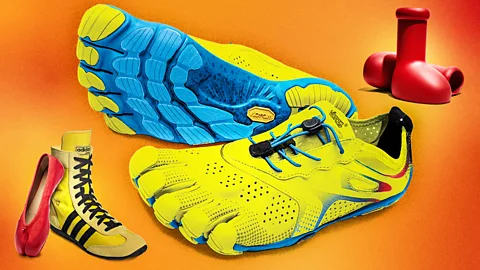
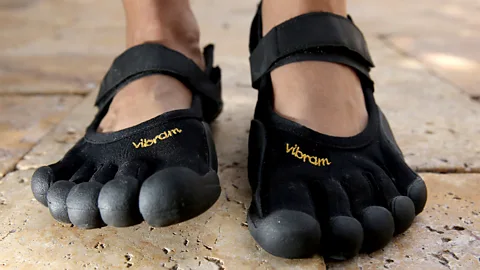
There are the shoes that laugh in the face of elegance or "good taste" to offer something unexpected, bizarre or outright daft. Think Crocs or those five-toed shoes that clothe toes like a glove; or the iconic frog wellington boots, the Wellipet, that Jonathan Anderson brought back out of the pond and on to the catwalk in 2023.
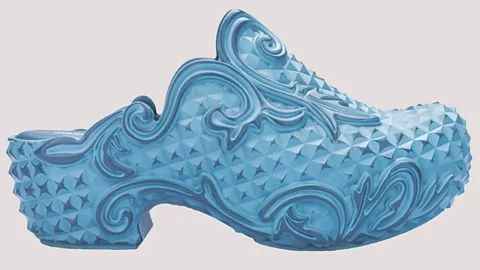
Clogs in general have offered a rich seam of inspiration, from sensible orthopaedic models to avant-garde takes, such as the jelly clogs with an embossed rococo-style design from Parisian brand Y/Project. Then there are the currently infamous Gardana gardening clogs the colour of mucus that are seen on trendy feet from Brooklyn to Paris.
The Frankenshoe
And among other things, mutation and cross-breeding are "in". There is the so-called "Frankenshoe", a hybrid of shoe silhouettes mashed into one. Among the best-known hybrid-shoe is the sneakerina – a dainty, balletic trainer-pump – which jeté'd its way across the fashion industry last year
 Getty Images
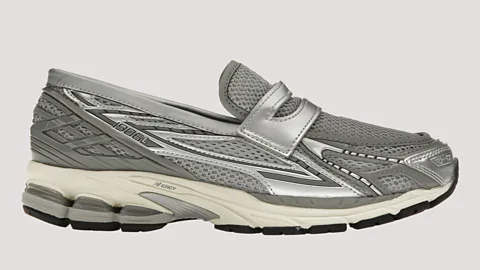
Then there's also the snoafer (the sneaker and loafer), which The Wall Street Journal coined "the footwear equivalent of the spork". It doesn't stop there: there's also the sock-boot, the clog-trainer and the wedge-trainer, once a staple of the 00s and now cautiously back.
The cloven-toe shoe
A main character in this story is the cloven-toe shoe. Laughably gross to many, the split-toe design has been wending its way on to fashion-lovers' feet around the world for years now thanks to the renaissance of Maison Margiela's Tabi shoes. Debuted in 1988 and inspired by 15th-Century Japananese sock design, their impact has been seismic. And you'd now be hard pushed to find a trainer brand not offering some kind of cloven design.
But perhaps the most hyperbolic of all ugly shoes, tellingly designed by an art collective more for the sake of generating memes than protecting metatarsals, is the MSCHF big red boot, worn by many street stylers after they were launched in 2023.
Some of these strange shoes are as much stunt as shoe. As J'Nae Phillips, creator of the Fashion Tingz newsletter, tells the BBC: "people increasingly enjoy fashion items that provoke reactions, become conversational objects, or function almost like visual memes".
 FarFetch
But for many of these strange footwear choices, particularly the less sensational among them, real-life demand is high. Sneakerinas, for instance, are in demand, versionas of which made their way on to Lyst's index of the hottest products last year.
The snoafer
There are other permutations of the sneaker. Sales of Mary Jane-inspired sneakers were "up more than 350% year-over-year in Q1 2026, which is a clear signal that this is moving beyond editorial hype and into genuine consumer demand," Brendan Dunne of re-sale platform StockX tells the BBC. And the snoafer's most popular take, the New Balance 1906L, "has seen more than 13,000 sales on StockX since launch". There is, he says, "huge interest in hybrid silhouettes that blend sport, fashion, and a bit of unexpected design".
If You Know You Know
So what's going on? Why are fashion-lovers so intent on breaking out of the shoe-box? According to Phillips, these oddities signal something that the fashion literate like to communicate: "a deliberately awkward, hybrid or unexpected shoe can break the stiffness of an outfit and make someone look more self-aware, more culturally fluent, and less overly polished."
There's also an element of If You Know You Know, which has been a potent force in fashion of late. As Meg Palmer of market research agency Verve says of split-toe shoes, they are "a nod to even knowing about Maison Margiela, it… shows that you are part of an elite subculture". Although, she points out, "it’ll be interesting to see how (and if at all) split toe shoes will continue to signal status as they become more widespread and get co-opted by different brands. Will we need even 'uglier' variants?"
The wrong-shoe theory
These out-of-the-box shoes came to the fore at a time in 2023 when a styling trick by Allison Bornstein, dubbed the "wrong-shoe theory", was gaining traction on TikTok – she posited that footwear that was a mismatch or looked a little "off" was the perfect way to add personality to an outfit. And what’s more "off" than a Frankenshoe?
 New Balance
It's the perfect antidote to carefully curated online environments. As Phillips puts it: "a lot of these shoes also carry a kind of anti-perfection energy.” And, "in a moment where personal style feels increasingly performative and optimised, an unusual shoe can signal individuality, humour, discernment, or even a refusal to dress in an overly predictable way".
Palmer agrees. "In the age of AI slop, perfectly curated Instagram feeds, predictable algorithms etc these 'ugly' shoes feel like a juxtaposition to the 'perfection' we see online."
More like this:
In that way, these shoes can become a bit anarchic: "you can wear a Damson Madder 'girly' frilly outfit with a Nike split-toe Air Rift shoe and it feels like a middle finger to the beauty standards and gender conventions we're being served," says Palmer.
Plus, lines are blurring everywhere we look, not just in fashion, and hybrids are a natural by-product: another good example are the Franken-pastries rising in the world of baking, where croissants, doughnuts and cookies are constantly being cross-baked. For Phillips, "in many ways, these hybrids also mirror broader cultural mashups: the blurring of work and leisure, masculine and feminine codes, high fashion and functionality."
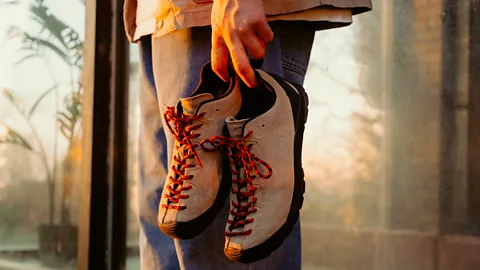
The approach shoe
Plus, she says, "we're seeing the continued collapse of boundaries between utility wear, sportswear, orthopaedic design, luxury fashion and internet aesthetics." In this light, "shoes originally designed for hiking, recovery, barefoot movement or pure practicality now read as culturally interesting because they disrupt conventional ideas of elegance or attractiveness."
 Keens
KeensIt's part of why approach shoes, which marry the comfort of a hiking shoe with the strong grip of a climbing one, have been scaling fashion's heights of late. Objectively a bit odd to look at, though not strictly speaking ugly, they offer intrigue and function.
And this links to another often overlooked reason we are seeing some unexpected moves in fashion's footwear of choice. When it comes to many of these shoes – the more potato-like ones and the clogs designed for horticulture in particular – it comes down to one thing. "You can talk a lot about rebellion, AI slop fatigue, taste, status etc," says Palmer. "But it's all just as simple as… they're really, really comfy." My approach shoes, I can confirm, feel like a fluffy loaf of bread on your foot. And who wouldn't want that?
--
If you liked this story, sign up for The Essential List newsletter – a handpicked selection of features, videos and can't-miss news, delivered to your inbox twice a week.
