The Other Bennet Sister: Mary Bennet is the Austen heroine for the 21st Century - here's why

 BBC
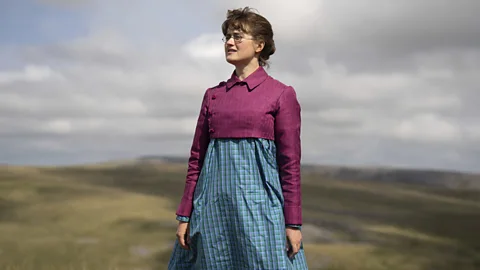
BBCBased on the acclaimed novel The Other Bennet Sister, a new TV imagining of the life of Pride and Prejudice character Mary Bennet has won the hearts of British viewers. Here's why this Austen character is so relatable today.
"Her mother was right, she neither glowed nor bloomed," writes Janice Hadlow in her 2020 novel The Other Bennet Sister, a reimagining of the life of Mary Bennet. Mary is one of the five Bennet sisters in Jane Austen's Pride and Prejudice – the one who is most often dismissed and forgotten. Despite early-19th Century conventions, she has no interest in marriage, or societal occasions: she'd rather have her head in a geology book. Oh, and to her family's dismay, she wears spectacles. But how else is she meant to read?
"Austenmania" is ever-growing, and 2026 alone will see three new major Austen adaptations across film and TV. From zombie comedies to murder mysteries, servant perspectives and Bollywood musicals, there have been endless spin-offs of Austen's beloved stories and characters. Even Mary, who is a minor character in Pride and Prejudice, has not been ignored in modern literature. There are a host of books about what she might have got up to when Elizabeth Bennet wasn't around – including a historical spy trilogy.
Now The Other Bennet Sister has been adapted for the small screen by Sarah Quintrell and Maddy Dai. Telling Mary's story through her own eyes, the show has been a huge hit with British audiences: 7.3 million viewers watched the first episode, and there have been swarms of Gen-Z TikTok fan edits. Why has this interpretation of the "plain" middle child sparked such devotion in viewers, particularly younger ones?
One way to answer that question is to go back to Austen's novel. Sandwiched between the two attractive, sensible elder sisters, Jane and Elizabeth, and the immature, younger sisters, Kitty and Lydia, Mary is an outlier. She is neither beautiful, nor silly. So, where does that leave her, and what did Austen intend to do with this character?
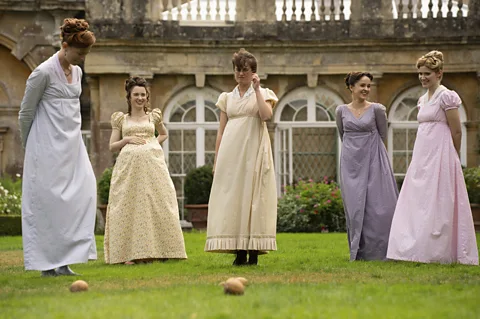
Mary's function in Pride and Prejudice is showing "the different ways girls can be," says Sandie Byrne, professor of English at the University of Oxford, UK. "Not all girls about whom you might write are beautiful and perfect. Austen is always mocking the sentimental novel and the gothic novel, in which the heroines are beautiful and talented... She's saying, some girls are like Mary."
Austen also demonstrates one of the truths of motherhood, Byrne says: "Children aren't always loved, and children aren't always loved equally."
A relatable heroine
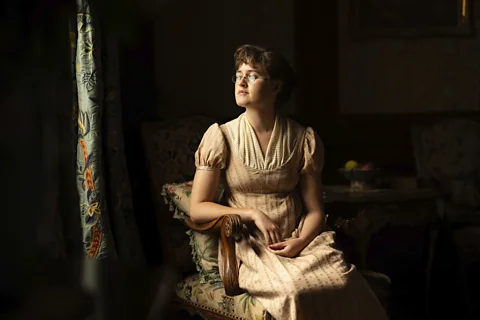
When we meet Mary (played by Ella Bruccoleri) in the BBC TV series, she is clumsy, awkward and finds conversation a struggle, spouting random bits of knowledge to carry her through. There are hints such as these throughout that – in the modern day – she might be considered neurodivergent. Mary reminds us that children can be raised in the same household, but have very different perspectives and experiences of life – a familiar feeling for many.
And even if viewers don't relate directly to her, they will at least root for her. "[People say,] I want to see her do well, because we recognise a woman who's been held up to standards in society that she can't reach, that she's having a value system placed on her," the show's writer Quintrell tells the BBC.
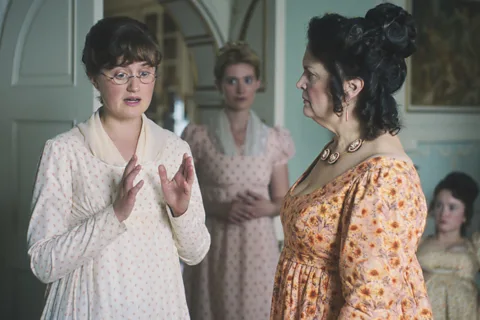
Mary's journey properly begins with the death of her father, Mr Bennet (Richard E Grant). As per the inheritance laws of Regency England, his cousin Mr Collins (Ryan Sampson) has become the owner of the Bennet estate, Longbourn, and he swiftly moves in with his new wife before the family have had a moment to grieve. (In a nice touch, Lucy Briers, the original Mary Bennet in the BBC's 1995 TV adaptation of Pride and Prejudice, plays housekeeper Mrs Hill.)
As the only unmarried sister, Mary receives a proposition from her aunt and uncle, the Gardiners (Indira Varma and Richard Coyle), to stay with them in London. It's a far better option than being the full-time companion to her mother, Mrs Bennet (Ruth Jones). Mary relentlessly seeks but cannot gain the approval of her critical, self-absorbed mother, whose signature phrase is "You have no compassion on my poor nerves!"
Mary's move to London, away from the shadows of her sisters and the scathing remarks of her mother, allows her to blossom. She is shown choosing increasingly colourful fabrics for her dresses – a sign that she is beginning to embrace her authentic self. The theme of fashioning your own identity is a timeless one, but it's especially relevant for young people today.
"I think we have a very similar thing today with social media. You have all this messaging, which is telling you to make yourself into a certain person in order to be acceptable to society," Bruccoleri, who plays Mary, tells the BBC. "I think it's a really narrow definition… this is what perfect looks like, and this is what you have to be."
One character who encourages Mary to make her own choices, and helps her to flourish, is Mrs Gardiner. Through gentle encouragement and invitation, she provides the maternal warmth that was lacking in Mrs Bennet – and this gives the series its truest love story. "Mrs Gardiner is a really good example of how we can be with young people in terms of not judging, and not telling them what we think they should do and how we think they should live… but shepherding them," Quintrell says.
Still, Mrs Bennet has a small redemption arc, as the audience is reminded that her actions are a product of society: she needs to save five daughters – and herself – from ruin. "I don't think she's a villain," Bruccoleri says. "I think she's trying to show Mary love in a very practical way, but it's not what Mary needs or is particularly helpful to her."
The series even manages to convey the humanity in Caroline Bingley and Mr Collins, two of Austen's more snooty and pompous characters, "which really speaks to Mary's ability to see people for who they are," Quintrell says. This is one reason why the series works so well: it offers fresh perspectives on characters that have existed for centuries.
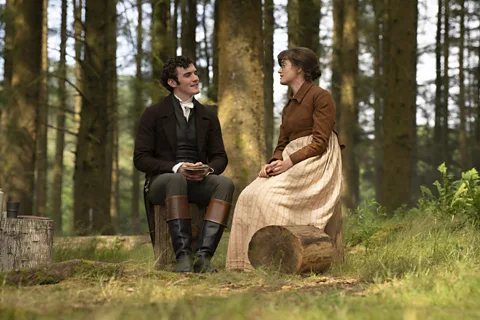
And let's not forget the romance. By being herself, Mary attracts two potential suitors – the endearing Tom Hayward (Dónal Finn) and charming William Ryder (Laurie Davidson). Hayward and Mary's relationship is delicate and considered, founded in particular on their love of reading (not to mention, he also wears spectacles).
In an iconic scene, Mary sits back and relaxes as Ryder and Hayward pull her rowboat to shore. As both men are handsome, intelligent and likeable, Mary's agency takes full effect when she is faced with another life-changing decision – which she makes in her own time, and on her own terms.
More like this:
The Other Bennet Sister is a delight because it shows that all girls have value, however quirky or bookish. And the warmth and humour the series brings to Mary's idiosyncrasies – from her wonky still-life paintings to her enthusiastic bird-call imitations – underline this message.
Above all the series shows the joy to be found as a young adult in discovering one's own agency and unique sense of self, however intense the pressures and expectations of the world around us. As the show's star Ella Bruccoleri puts it: "I just love that this story is about trying to shut out that noise, and about listening to your own instincts."
The Other Bennet Sister is released on Britbox on 6 May and is available on BBC iPlayer in the UK.
--
If you liked this story, sign up for The Essential List newsletter – a handpicked selection of features, videos and can't-miss news, delivered to your inbox twice a week.
