How to avoid writing irritating emails

 Getty Images
After a conversation about subtly snarky emails went viral on twitter, it might be worth asking yourself: are you being accidentally rude?
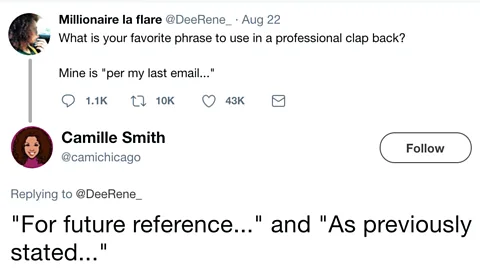
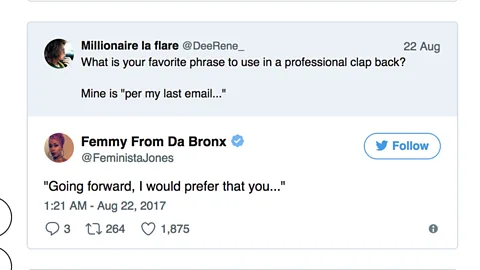
A couple of weeks ago, Danielle René caused a stir when she tweeted her preferred method of subtly putting someone down in the workplace by email: using the simple phrase "per my last email." Alongside her favourite passive aggressive clap back, the Washington DC-based writer and marketer asked her followers to share theirs.
The results were eye-opening, with the post going viral as hundreds of people chimed in to share the seemingly innocuous phrases they use in emails when they want to deliver a verbal swipe. But often, we employ irritating phrases in our emails inadvertently.
If you’ve sent a well-intentioned email that elicited a curt response, you may well be guilty of this common pitfall. From “as you are aware” to “please advise”, the Twitter responses revealed email exchanges to be a social puzzle, where using the wrong word or phrase at the wrong moment can easily cause offence or annoyance.
 Getty Images
Email communication “is a minefield because you don’t see how people are reacting”, says Deborah Tannen, professor of linguistics at Georgetown University in Washington DC. When it comes to using email at work, there are right and wrong ways to make your point and get what you need, without being misinterpreted or upsetting someone. Here are some of the key dos and don’ts.
Take time to review
We all convey subtle meaning beyond the specific words, tone, and intention of our emails. Even the length of our emails and our grammar (or lack thereof) say something about our thought process. But it can be difficult to predict how we come across to others. Often, we press ‘send’ without pausing to consider how our message may be interpreted by the recipient.
“We are so comfortable with this media that we don’t ask ourselves: am I being clear? am I going to be misunderstood?” says Naomi Baron, a linguistics professor at American University in Washington DC and author of author of Words on Screen: The Fate of Reading in a Digital World. After a message is sent, she adds, “a lot of people will judge you.”
Keep up the niceties
In recent years, email has increasingly been considered a more formal communication tool at work, largely due to the proliferation of instant messaging platforms like Slack. Younger workers now believe “email is for old people”, says Baron. “That attitude is reshaping the growing formality of what email has become,” she says.
You might also like:
But avoiding traditional email formats and phrases can make you seem less knowledgeable, says Madhumita Lahiri, English professor at the University of Michigan in Ann Arbor who has worked in India, South Africa and the UK before settling in the US.
 Twitter
Far from being stuffy and outdated, phrases such as “dear” or “hope you’re well” are good to use at the beginning of an email and help the reader ease in to what you’re writing, Lahiri says. “There’s a very conventional way of starting and ending and it signals that you know what you’re doing.”.
Avoid being bland
Even though you want to be professional when using email, letting your personality – and intention – shine through can be a good thing, says Alex Moore, co-founder of email productivity tool Boomerang in San Francisco.
According to a 2016 Boomerang study of the sign-offs from 350,000 email threads, those that were either more positive or more negative were found to have a response rate that was 10-15% greater than emails that sounded more neutral.
“You don’t want to be extremely positive or extremely negative, but people still respond to emotion even in written form,” says Moore.
Keep it simple
According to Boomerang’s research, simple email language gets the best response. The firm’s studies have revealed that emails written at a third-grade level got a 53% response rate compared to 39% for university-level writing and 46% for kindergarten-level writing.
Keeping language simple will also help you avoid cultural misinterpretations. You may think you’re being polite with your lofty phrases, but you could actually come across as negative in certain parts of the world, warns Lahiri. In the UK, she says, writing “unfortunately this is...” or “I regret...” are considered polite responses, but they could offend readers elsewhere. For example, in the US, “it’s easier just to thank a lot,” she says. “Phrases such as ‘I’m afraid’ can come across as negative emotions as opposed to just politeness in the US.”
 Twitter
Watch out for puzzling punctuation
Opinions vary when it comes to exclamation points, ellipses and capital letters, and what using them in an email says about the sender. While younger people may pepper emails with exclamation points to sound friendlier, older workers use them more sparingly. For twentysomethings, “exclamation points just mean you’re friends, while a period signals seriousness,” says Lahiri.
Ellipses can be equally confusing, signifying the end of a sentence for older people but having a negative connotation for younger people. All caps in an email might come across as an expression of anger for some, but that’s not always the case when used by older generations, Lahiri adds.
And, email interpretation can differ depending on gender. In her research, Tannen found that women who didn’t use exclamation marks, repeat letters (i.e. sooo or loooove) or other signifiers of their emotion in emails were interpreted as cold by some recipients. But men who sent straightforward emails with little emotion were not, she found. Men also tend to send shorter emails and often include jokes, which can be misunderstood by the email’s recipient, cautions Tannen. “Be aware of what these phenomena say about you and how they might be interpreted,” she adds.
Tweak the tone
While it’s always good to initiate email communication with professional politeness, you can dispense with the formality as the relationship develops and you become more familiar with someone. Another trick Tannen recommends is to mimic the tone of the person you are emailing.
And if you’re still anxious about how your business emails are being interpreted, technology can help. Online tools including Boomerang’s Respondable and IBM Watson’s Tone Analyzer can help you decipher the hidden meaning in your own, or someone else’s messages.
“We all reflect different emotions and language styles in our writing,” says Rama Akkiraju, an engineer at IBM’s Watson division on their San Jose, California campus. This artificial intelligence analyses everything from word choice to length and punctuation of a piece of text to tell you whether it sounds extraverted, say, or agreeable or confident.
Think about your sign-off
The best way to end an email is to be forward looking and show gratitude, says Boomerang’s Moore.
 Getty Images
Signing off with “thanks in advance” resulted in a 65% response rate in a Boomerang study, the highest of any closing words. Other successful sign-offs: thanks, thank you and cheers. “You need to show some sort of thanks that shows that you are appreciative,” says Moore.
But taking it too far and pushing too much for a response, for example with a “don’t hesitate to call” can come across as more mean-spirited than helpful, says Lahiri. “It’s actually a super passive-aggressive line,” because it makes the reader think twice about impact of their reply, she adds.
Anything in writing is always going to be at risk of misinterpretation, so the next time you fire off a quick response – have a look back to check that you’re not accidentally coming off as aggressive. Unless, of course, that’s exactly what you want.
If you liked this story, sign up for the weekly bbc.com features newsletter called "If You Only Read 6 Things This Week". A handpicked selection of stories from BBC Future, Culture, Capital and Travel, delivered to your inbox every Friday.
