This film explores the causes and consequences of coastal flooding, focusing on case studies from the UK.
Video
Coastal flooding can be a threat to towns, villages and cities around the shoreline of the United Kingdom.
Flooding sea water can cause serious damage to homes, businesses and agricultural land. In extreme cases, it can drive people from their homes and destroy wildlife habitats.
Climate change, extreme weather and the retreat of beaches due to erosion all mean an increased risk of coastal flooding.
Coastal flooding happens when storms and high winds push waves of sea water towards the coast. It is even worse when a storm coincides with the spring tide. This is when the gravitational pull of both the sun and the moon combine to create a high tide.
In December 2013, the United Kingdom was hit by the worst tidal surge in over fifty years. Gale force winds combined with the high spring tide and an area of low pressure. Thousands of people had to be evacuated from their homes and over a thousand homes were flooded. Two people were killed.
But, the deadliest kind of coastal flooding is when an earthquake shifts the seabed causing a huge tidal wave to form. This is called a tsunami.
One of the worst tsunamis ever recorded happened in the Indian Ocean on Boxing Day in 2004. It flooded the coastlines of fourteen countries, in some places reaching up to three kilometres inland, sweeping away homes and villages and killing more than two hundred thousand people.
Fortunately, because of its geographical situation, the United Kingdom is unlikely to be affected by a tsunami. But, coastal flooding here caused by high tides and climate change can be serious and can threaten lives and livelihoods.
Video summary
This short film, first published in 2020, is for teachers and review is recommended before use in class.
Download/print a transcript of the video.
This short film for secondary schools explores the causes and consequences of coastal flooding through UK case studies.
It examines at the impact of coastal flooding on communities and how patterns of flooding are changing over time.
It supports the requirements of National Curriculum physical geography at KS3 with regard to:
- geological timescales and plate tectonics
- rocks, weathering and soils
- weather and climate, including the change in climate from the Ice Age to the present
- and glaciation, hydrology and coasts.
Teacher notes
Download/print the Teacher Notes for this episode (pdf).
Before watching the video
Ask students what flooding is, and why it can happen at the coastline. Discuss with students what they think the impacts of flooding are.
Introduce key terms such as:
Tidal surge: A rise in sea level caused by strong winds and low atmospheric pressure from storms.
Tsunami: Giant, powerful waves caused by tectonic activity.
During the video
You may wish to stop at relevant points during this short film to pose questions and check understanding or wait until the end. Useful questions might include:
- What is flooding?
- What is increasing the risk of coastal flooding?
- What is a spring tide?
- What happened in December 2013?
- What is a tsunami?
- What happened on Boxing Day 2004?
- Is the UK likely to be affected by a tsunami?
After watching
Ask students to pick out five key pieces of information from the clip about coastal flooding. Look at a map of the UK and the fetch of waves that approach the UK coastline. Which areas of the UK do students think are most at risk of coastal flooding.
Task students with researching the coastal flooding in December 2013. What were the impacts of flooding, categorise these into social, economic and environmental. How long did it take for conditions to return to ‘normal’ after the storm surge.
Students could also look back further in time to 1953 when the UK experienced its worse coastal flooding.
Where next?
It isn’t just the UK that experiences coastal flooding. Task students with researching low-lying coastal areas that experience flooding and the impacts that this is having.
Examples include: The Maldives, Tuvalu and Bangladesh.
Students could use this map as a starting point. They could change the parameters based on what they want the map to show.
Students and teachers over the age of 16 can create a free Financial Times account. For a Financial Times article about coastal flooding in the UK from 2019, click here.
Curriculum notes
This short film is relevant for teaching geography at KS3 in England, Wales and Northern Ireland and 3rd and 4th Level in Scotland.
This short film helps meet the requirement of the Key Stage 3 national curriculum in geography requirement to develop and understanding of:
- physical geography relating to: geological timescales and plate tectonics; rocks, weathering and soils; weather and climate, including the change in climate from the Ice Age to the present; and glaciation, hydrology and coasts.
More videos from this series
Primary and secondary industries. video
A short film for secondary schools explaining primary and secondary industries.
Tertiary and quaternary industries. video
A short film for secondary schools explaining tertiary and quaternary industries, what they are and how they fit into global economy.

Erosion. video
A short film for secondary schools explaining the various types of erosion and illustrating the dramatic effect the process has had on landscapes across the world.
Plate tectonics. video
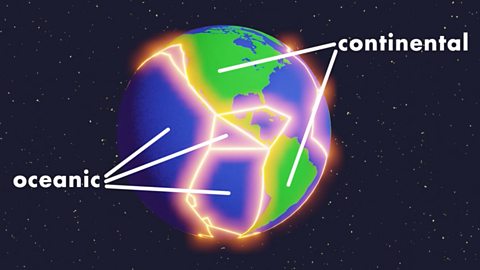
A short animated film for secondary schools detailing tectonic plates, their movement and boundaries, and what this means for Earth.
Responses to flooding. video
A short film for secondary schools explaining the common responses to flooding and the methods employed to prevent and reduce flooding. Footage shows examples of hard and soft engineering techniques.
Glaciation. video
A short film for secondary schools explaining glaciation: what it is, how it shapes the land and the effects of climate change on the world’s glaciers.
Rapid urbanisation. video
Investigates how rapid urbanisation impacts on both urban and rural areas and the challenges this presents.
River flooding. video
A short film for secondary schools offering explanation of the causes and effects of river flooding. Footage shows examples of case studies of river flooding in the UK and across the world.
Climate. video
A short animated film for secondary schools describing the factors that determine the climate of a country and the main climate zones of the world.