Trump don land for Supreme Court ova birthright citizenship mata
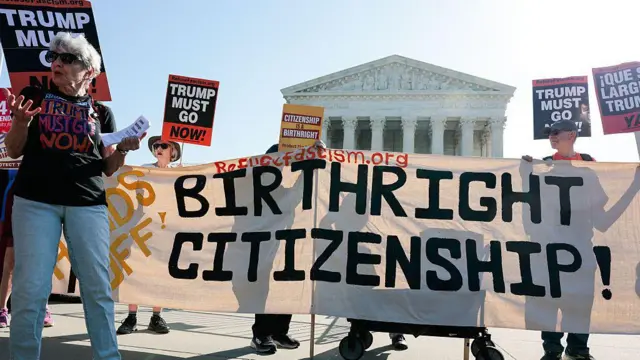
Wia dis foto come from, Kent Nishimura / AFP via Getty Images
Di United States Supreme Court dey hear oral arguments on weda pikin wey dem born for US get constitutional right to citizenship.
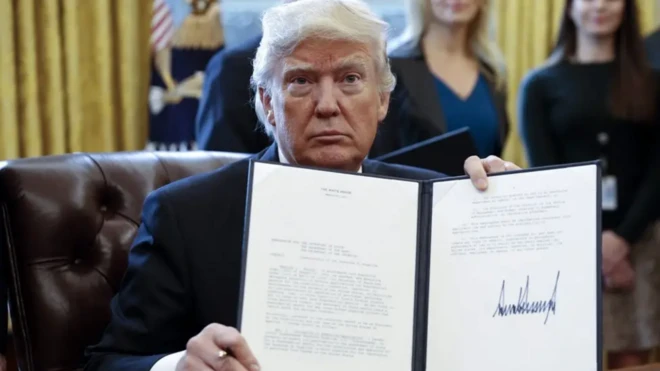
Donald Trump don already break record as di first sitting president for America wey go attend oral arguments for di chamber even as na im start di gbege wit di executive order wey im bin sign for im first day back for office.
Di order bin wan enta automatic US citizeship wey dem bin dey give pikin dem wey dem born for di US by parents wey bin dey di kontri illegally abi dem just land di kontri for short time.
Di pipo wey bin dey against di Trump order say e go against di 14th Amendment of di US Constitution, wey dem ratify for 1868, wey tok say "all pipo wey dey born or naturalised for di United States, and dey subject to di jurisdiction be citizens of di United States".
Di pipo wey like di order say Trump new meaning of di clause go allow make govment fit fight "significant threats to national security and public safety".
Birthright citizenship worldwide
Birthright citizenship, or jus soli (right of di soil), no be di norm globally.
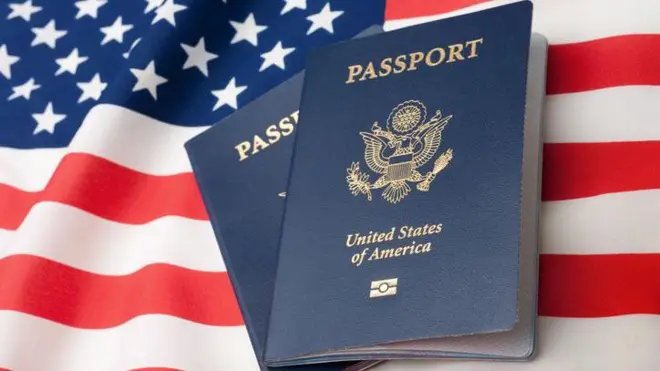
Di US na one of about 30 kontris - mostly for di Americas - wey dey give automatic citizenship to anybody wey dem born for dia borders. Oda examples na Brazil, Argentina, Chile, and Mexico.
In contrast, many kontris for Asia, Europe, and some parts of Africa dey follow jus sanguinis (right of blood) principle, wia pikin dey inherit nationality from dia parents, no mata di place wia dem born dem.
For example, Russia, Indonesia, Japan, China, Thailand, Vietnam, Nigeria, and most of di Middle East and North Africa dey use dis system.
India too dey follow jus sanguinis, while Pakistan na rare exception for Asia, dem dey grant automatic citizenship to anybody wey dem born for dia soil.
Oda kontris get combination of both principles, dem dey also grant citizenship to pikin of permanent residents. Nations wey dey use mixed approach include di UK, Portugal, Spain, France, Germany, Australia, and South Africa.
John Skrentny, sociology professor for University of California, San Diego believe say, though birthright citizenship or jus soli dey common throughtout di Americas, "each nation-state get im own unique road to am".
"For example, some involve slaves and former slaves, some no involve dem. History dey complicated," e tok. For di US, dem adopt di 14th Amendment to address di legal status of freed slaves.
However, Mr Skrentny argue say wetin most of dem get in common na "building a nation-state from former colony".
"Dem gatz dey strategic about who dem go include and who dem go exclude, and how to make di nation-state dey governable," e explain. "For many, birthright citizenship dey based on di territory wia dem born di pesin, e fit help dem achieve dia state-building goals.
"For some, e dey encourage immigration from Europe; for odas, e ensure say indigenous populations and former slaves, and dia pikin dem, go dey included as full members, and dem no go dey stateless. Dis na particular strategy for particular time, and dat time fit don pass. "
Wia dis foto come from, Shawn Thew/EPA/Bloomberg via Getty Images
So wetin go change if Trump get im order through Supreme Court?
Even though di language of di 14th Amendment of di US Constitution go dey di same, wetin birthright citizenship in principle go fully change.
E mean say one month afta dis order turn to law, two groups of pipo no go dey seen as citizen for birth again dem be pikin of undocumented immigrants and pikin of temporary visa holders.
Constitutional law sabi pipo tok say dis go be hard legally and fit mean say thousands pikin go dey born "stateless".
One study wey dem bin publish for May suggest say to remove birthright citizenship go mean say di number of di undocumented pipo for di US fit rise by anda 2.7 million pipo by 2045 and 5.4 million by 2075.
Di goment argument be say, "unrestricted birthright citzenship" dey opposite of how oda kontris dey do for dia own citizenship laws.
Solicitor General John Sauer wey be di pesin wey dey download Trump administration arguments arrange first how di history of birthdright citizenship for di US na for granting citizenship to newly freed slaves and dia pikin dem for di 19th century.
E tok say di way di law dey interpreted now, "dey derep di priceless and profound gift of American citizenship" and dey attract and reward illegal immigration.
Di Supremem Court justices come start to dey sama Sauer questions like one about di Dred Scott v. Sandford, an 1857 Supreme Court case wey determine say African Americans bin no get right to citizenship.
Infact na di 14th Amendment scata dat particular judgement.
Sauer tok say "di newly freed slaves bin get di relationship of domicile" to di US and bin no get allegience to any foreign power wey e tok say temporary visa holders and undocumented immigrants no fit claim.
Di koko of im ansa be say na "allegience" to di US na di focus of who supposee get birthright citizenship from di 14th Amendment.
How dis birthright citizenship mata take start?
For im first dat wen e enta office aain for 2025, President Donald Trump bin sign executive order to end automatic citizenship rights, wey dey inside di US Constitution for almost evribodi wey dem born for di US territory.
Immediately, plenti group sue di move wey include five pregnant women, 22 states, two cities, di Maryland immigrant advocacy group CASA and di Asylum Seeker Advocacy Project.
Judges for district courts for Maryland, Massachusetts and Washington state block Trump order.
Den im Department of Justoce come ansa say dis no be mata wey temporary restraining order go do anytin to am so dem carry di mata go Supreme Court.
Afta dem take di case for june, dem rule say federal judges no fit give injunctions wey go block orders wey dey go effect nationwide.
But di justices no comot di injutions fully, judges fit still block order from taking effect for di pipo wey sue against dem while dia lawsuits continue.
Even though di mata come from case of birthright citizenship, na oly injuctions di Supremem Court rule on for June.
Di koko of di mata about weda or not pipo wey dem born for di US be automatic citizens na wetin di Supreme Court dey torchlight nowand e start wit di oral argument for April 1.
Di decidion on di mata still dey expected to drop by June or July dis year.