Quick version
Several factors led to the outbreak of Irish Civil War(June 1922 - May 1923)
- the partition of Ireland in 1921
- the Irish War of Independence
- the Anglo-Irish Treaty of 1921
After the treaty, the republican movement was broadly split into two:
- a pro-treaty wing led by Michael Collins
- an anti-treaty wing led by Éamon de Valera
Tensions led to violence:
- 14 April 1922, anti-treaty IRA forces captured the Four Courts buildings
- 22 June 1922, Sir Henry Wilson, MP, was assassinated by the IRA
- 26 June 1922, Irish National Army leader, J.J. O’ Connell, was abducted by the IRA
The Irish Civil War began in earnest when Michael Collins, leader of the Provisional Government, ordered the bombardment of the Four Courts. Fighting broke out in Dublin and soon spread through the Irish Free State.
Video - The Anglo-Irish Treaty
On the 6th December, 1921, the Anglo Irish Treaty was signed.
The treaty created two new nations – Northern Ireland, and the Irish Free State. Both would have their own parliaments, with limited powers, and both would remain part of the British Empire.
It also created a framework for peace – ending the fighting of the Anglo Irish War, which had lasted for 2 years.
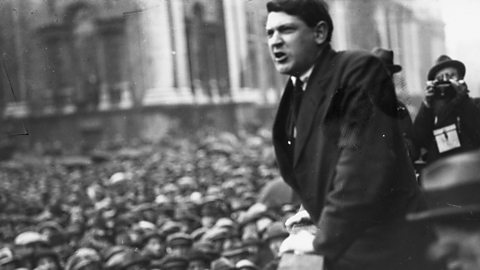
The chief negotiator of the Irish Nationalist delegation was Michael Collins, who had led the IRA during the war.
The limited independence offered by the treaty wasn’t what he and his comrades had been fighting for.
But he believed that the treaty was the best deal Ireland could hope for at that time, and that it would lay the ground for full independence in the future.
He also knew that many of his fellow nationalists would not accept it, and would see him as a traitor.
When he signed, he commented that he was “signing my own death warrant”.
After weeks of fierce debate, the parliament of the Irish Republic - the Dáil - voted to accept the treaty.
The Irish Free State officially came into being on January 7th, 1922.
But it was a narrow victory – with close to half the delegates voting to reject the treaty.
Those who opposed the treaty were led by President of the Irish Republic Eamon de Valera, who immediately resigned when the vote passed.
The fight for freedom, he said, would continue - “and the Irish people, instead of fighting foreign soldiers, will have to fight the Irish soldiers of an Irish government set up by Irishmen."
The entire nationalist movement became split.
The members of the IRA who accepted the treaty became the national army of the Irish Free State. They were known as the ‘Regulars’.
The members who opposed it became the ‘Irregulars’.
Men who had been fighting alongside each other were now on opposing sides – led by Collins and de Valera, who had up to now been close friends.
In April 1922, the Irregular IRA occupied the Four Courts - Ireland’s most important law courts - in Dublin.
They wanted to provoke a crisis, and thought that if they forced the British to attack them, the Nationalist side would have to re-unite.
As the leader of the new Free State Army, Michael Collins felt compelled to prove that the government in Dublin was able to maintain control.
He gave the Irregulars an ultimatum to surrender – which they rejected.
On June 18th, 1922, Collins gave his forces the order to attack, using artillery borrowed from the British. The first shots of the Irish Civil War were fired.
Learn in more depth
What has become known as the Irish Civil War was a brutal conflict lasting from June 1922 until May 1923.
It shaped the new Irish Free State and state of Northern Ireland, and has had a lasting impact on the nature of Irish politics to this day.
The origin of the conflict had several contributing factors.
Irish War of Independence, 1919-1921
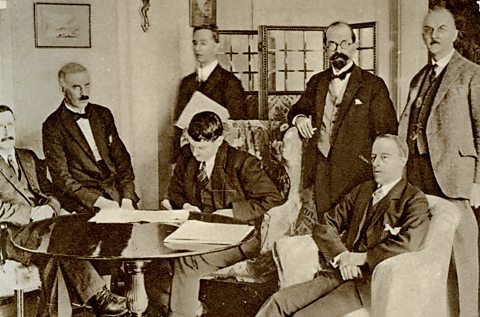 Image source, Culture Club / Getty
Following the Declaration of Independence in 1919, a long guerrilla conflict began between the armed forces of the the new republic - the Irish Republican Army (IRA) - and forces controlled of loyal to the British state - the British Army, the Royal Irish Constabulary, and Ulster Special Constabulary, and auxiliary forces known as the Black and Tans.
By 1920, Irish republicans controlled most of the south of Ireland. The north was mostly under the control of forces loyal to Britain.
In 1921, the Government of Ireland Actpartitioned Ireland into two separate self-governed areas, Southern Ireland and Northern Ireland.
Later in the same year, the Anglo-Irish Treaty was signed, bringing an end to the hostilities between the Irish Republic and the British state. The terms of the treaty led to deep divisions among Irish republicans.
Image source, Culture Club / GettyAnglo-Irish Treaty, 1921
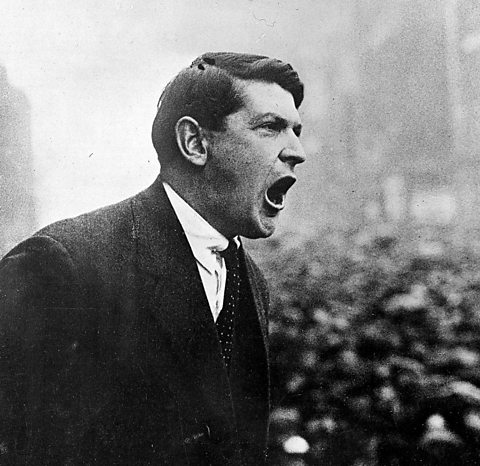 Image source, Roger Viollet/ Getty Images
The treaty that was eventually concluded between the two sides comprised 18 articles. This included:
- the 26 counties of ‘Southern Ireland' were to become a ‘Free State’, separate from the United Kingdom
- the Free State would still be a dominion within the British Empire.
- because of this, the Irish Parliament would need to take an oath of allegiance to the British crown
- a Governor General would be appointed to Ireland to represent the crown
- British forces would be removed from Ireland, although the British navy would retain the use of three naval bases (known as ‘treaty ports’)
- the partition of Ireland, which had occurred when Northern Ireland was created in 1920 under the Government of Ireland Act, was recognised
- a Boundary Commission would be set up to review the border
The treaty was signed in London by high-ranking representatives of the Irish Free State including Michael Collins and Arthur Griffith. Back in Ireland, the treaty had to be debated and approved.
The debate was fierce and bitter, with President Éamon de Valera rejecting the treaty.
Eventually a vote was held and the pro-treaty side won, but only by a slim majority of 64 to 57. De Valera resigned, and over the coming months Irish republicanism remained divided over the issue.
Image source, Roger Viollet/ Getty ImagesIrish republican divisions, 1920s
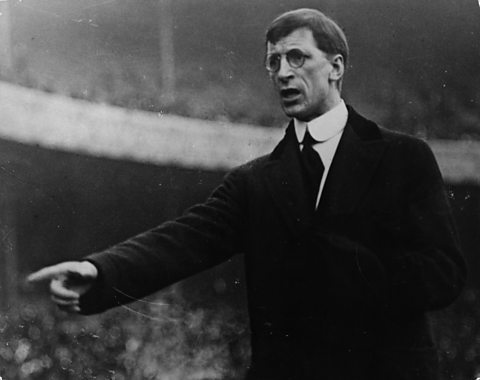 Image source, General Photographic Agency / Getty Images
From January until June 1922 the divide deepened, and tensions mounted but peace was maintained.
In the run up to a general election in Ireland in the summer of 1922, both Michael Collins and Éamon de Valera agreed an electoral pact so as not to splinter the movement.
Over the course of that year the British Government had fulfilled their side of the Anglo-Irish Treaty, bit by bit handing power over to the new provisional government headed by Collins.
One of the most symbolically significant events of this period was the hand over of Dublin Castle, historically the seat of British rule in Ireland, to Collins on the 16th January 1922.
Image source, General Photographic Agency / Getty ImagesOrigins of the Irish Civil War, 1922
Occupation of the Four Courts, 1922
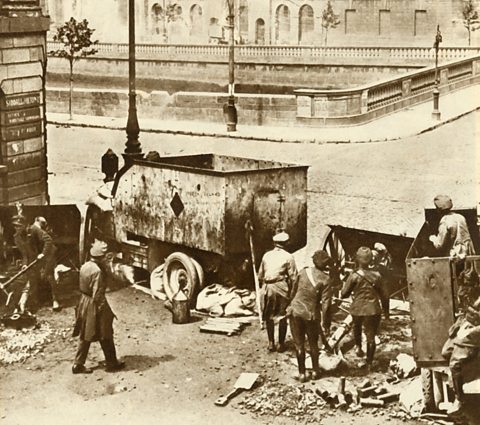 Image source, Print Collector/ Getty Images
The rifts within republicanism between pro-treaty factions and anti-treaty factions increased during 1922.
In the same period, there were sporadic outbreaks of violence occurred between various factions of the IRA, and between the IRA and British forces in Northern Ireland.
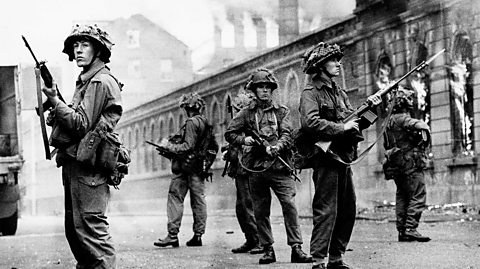
Then, on 14 April 1922, the anti-treaty wing of the IRA occupied the Four Courts buildings in Dublin.
The Courts were the home of Ireland's most important law courts, and their capture by force by an anti-treaty military was a direct challenge to the authority of Provisional Government of the Irish Free State under Michael Collins.
Initially, Collins was reluctant to take action against the occupiers in case it triggered an escalation in violence.
Image source, Print Collector/ Getty ImagesIncreased republican conflict
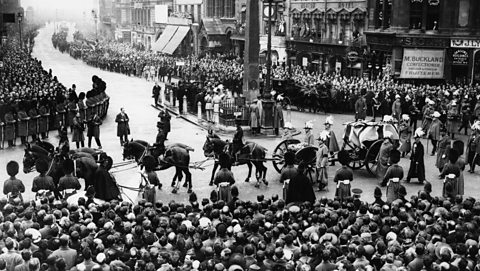 Image source, Central Press / Getty Images
As well as the capture of the Four Courts, there were several incidents during 1922 that increased tensions and the likelihood of civil war in Ireland.
The pact agreed between Collins and de Valera to keep the republican movement united collapsed in the run up to the general election.
- the election polls were a significant victory for the pro-treaty factions
- an IRA convention after the election held a vote on continuing war with Britain in order to reunite north and south Ireland – it was only narrowly defeated
- 22 June 1922, Field Marshal Sir Henry Wilson, a prominent Unionist MP was assassinated by the IRA in London
- 26th June the IRA kidnapped J.J. O’ Connell, the Deputy Chief of Staff in the National Army
The assassination of a serving MP angered the British Government and put enormous pressure on Collins to maintain order in the Free State. If the Anglo-Irish Treaty was seen to have been breached, then open hostilities between Britain and Ireland could resume.
Image source, Central Press / Getty ImagesThe outbreak of the Irish Civil War, 1922
On 28 June 1922, responding to pressure to act to restore order, Collins ordered a military response to recapture the Four Courts from the anti-treaty IRA forces that had occupied it since 14 April.
After giving them a day’s warning to surrender, Collins gave the order for Ireland’s new National Army to begin bombardment using artillery donated by the British Army. This shelling marks the commencement of hostilities in the Irish Civil War.
Irish Civil War conflict
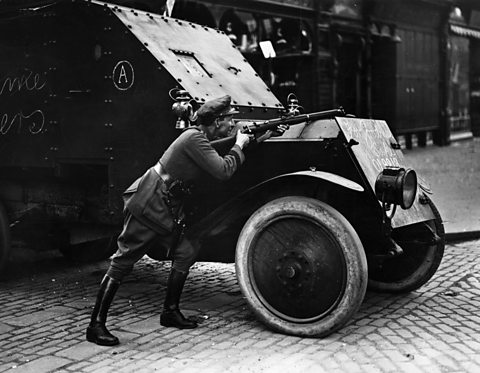 Image source, Brooke / Stringer/ Getty Images
While the IRA occupants of the Four Courts surrendered after three days of bombardment, the conflict spread through Dublin and out into the other areas of the Free State.
The opening weeks of the conflict saw open, conventional warfare between the forces of the Provisional Government and the anti-treaty IRA.
By autumn, fighting was dominated by guerrilla tactics, similar to the ambushes, assassinations and raids that characterised the previous Irish War of Independence.
Image source, Brooke / Stringer/ Getty ImagesOutcome of the Irish Civil War
The result of the conflict was inevitable:
- the pro-treaty National Army had more men than anti-treaty forces
- the National Army were better equipped than the anti-treaty forces
- the Provisional Government had law-making powers and they interned 13,000 potential rebels
One of the most prominent casualties was Michael Collins. After the fighting of the civil war was more-or-less over, he was ambushed and assassinated on 22 August 1922 by an anti-treaty IRA squad.
In May 1923, de Valera ordered the IRA to lay down their arms, conceding that they could not win by force. On 31 July 1923, the High Court of Justice in Ireland ruled that a state of war no longer existed
Both sides lost significant numbers of people, including leaders. A significant number of civilians were also killed:
| Group | Number of deaths |
|---|---|
| Civilian | 371 |
| National Army | 638 |
| IRA | 429 |
| Total | 1,485 |
(Source: Irish Civil War Fatalities Project, University College Cork)
Test your knowledge
Quiz
Recap what you have learned
Several factors led to the outbreak of Irish Civil War(June 1922 - May 1923)
- the partition of Ireland and the creation of Northern Ireland in 1921 drove Irish republicanism
- bitter fighting during the Irish War of Independence led to lasting resentment of British involvement in Ireland
- the Anglo-Irish Treaty of 1921 ended the war with Britain but divided the Irish republican movement
After the treaty, the republican movement was broadly split into two:
- a pro-treaty wing led by Michael Collins that sought to establish security under the Provision Government of the Irish Free State
- an anti-treaty wing led by Éamon de Valera that rejected the terms of the treaty and acceptance of a partitioned Ireland
Tensions broke out into violence:
- 14 April 1922, anti-treaty IRA forces captured the Four Courts buildings – the Free State's law courts in Dublin
- 22 June 1922, the influential MP, Sir Henry Wilson, was assassinated in London by the IRA
- 26 June 1922, Irish National Army leader, J.J. O’ Connell, was abducted by the IRA
The Irish Civil War began in earnest when leader of the Provisional Government, Michael Collins, ordered the bombardment of the Four Courts. Fighting broke out in Dublin and soon spread through the Irish Free State.
More on Britain and Ireland, 1900 - 1985
Find out more by working through a topic
- count12 of 14