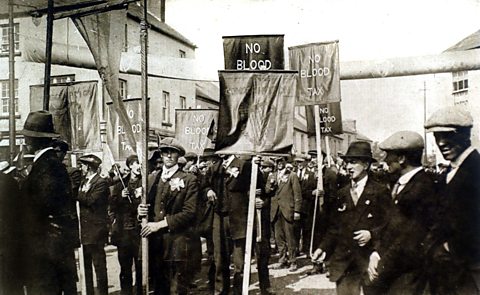
Quick version
English and Scottish involvement in Ireland dates back centuries.
- Anglo-Norman invasion of Ireland, 1169 – 1177, saw large amounts of Irish land seized.
- The Crown of Ireland Act, 1542, declared King Henry VIII of England the King of Ireland.
- Plantation of Ulster, 1606, saw Protestants from Scotland and England establish colonies in northern Ireland and take control of land from Irish inhabitants.
The Irish Cultural Revival began in the late 1800s. It promoted Irish language, culture, arts, and sports.
- Gaelic Athletic Association, founded in 1884
- Gaelic League formed in 1893 to preserve and promote the Irish language.
- The Irish Literary Revival, late 1800s, early 1900s
From the middle 1800s, new political groups with nationalist agendas began to emerge.
- The Irish Republican Brotherhood, 1858
- Sinn Féin, 1904
- Irish Citizen Army, 1913
The issues of Irish governance raised by these nationalist groups would dominate Irish politics for many years to come.
Video - Tensions in Ireland before 1914
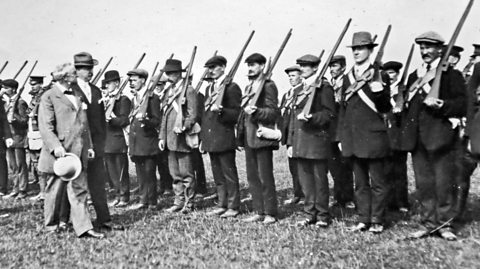
On July 26th 1914, a yacht sailed into the bay at Howth, near Dublin.
It was carrying one thousand guns - which were swiftly handed out to a battalion of the Irish Volunteers - a newly formed militia who wanted Irish independence.
The rifles were old and out of date – but the Volunteers were now armed…
They weren’t the only shipment of arms to arrive in Ireland, at a time when tensions over the future of the country were growing, and the North and South felt increasingly divided…
Belfast had overtaken Dublin to become Ireland’s largest city, and its place in the British Empire meant that its manufacturing sector was booming.
By contrast, the South was dependent on farming, and far poorer.
The majority Protestant population of the North were strongly committed to the Union of Britain and Ireland – to protect their cultural identity, their jobs, and their wealth.
In the majority Catholic South, a cultural revival movement had promoted the Irish language, and a strong sense of Irish identity.
Politically, most people did not want to be ruled by London.Some Nationalists believed in full independence for the whole island of Ireland. The Irish Republican Brotherhood, and the Irish
Volunteers, were organising, and prepared to use force to bring about change….
But Northern Protestants were determined to never allow an end to British rule. The Ulster Volunteers had ten thousand members, armed and ready to fight.
Moderate Nationalists, though, hoped that change could be brought about without shots being fired…
The Irish Parliamentary Party, led by John Redmond, were moderate nationalists who campaigned for Home Rule.
The idea of Home Rule was for Ireland to stay part of the United Kingdom, with a devolved parliament in Dublin governing over matters such as transport or education.
Redmond’s vision was popular, and the IPP had won huge support in the 1910 general election.
British Prime Minister Herbert Asquith had a majority of just one. He needed the IPP’s support. In exchange, he agreed to Home Rule for Ireland.
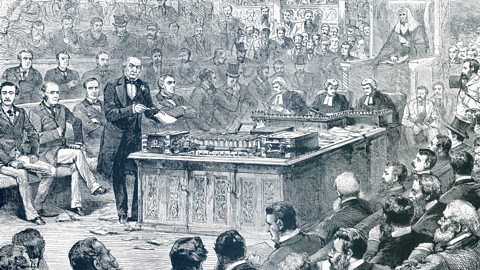
It was fiercely contested in Parliament, but in 1912, the Third Home Rule bill passed – with its implementation postponed for two years
Ireland was headed for major change - but while the majority of people were happy with the compromise of Home Rule, those with more extreme views on both sides opposed it…
Conflict seemed inevitable - but Irish tensions were overshadowed.
When Britain entered World War I in 1914, Home Rule was suspended – and Ireland’s future hung in the balance.
Learn in more depth
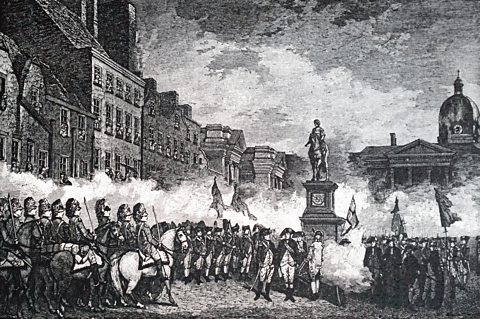 Image source, Universal History Archive / Getty
Throughout the centuries, a number of events resulted in Ireland falling under political control from England and then Great Britain.
Differing forms of In Ireland, nationalism refers to those who want to weaken or end the Union with Britain. or republicanism sprang up in Ireland in response.
- Anglo-Norman invasion of Ireland, 1169 – 1177. The Anglo-Normans gained control of large swathes of Irish land. This land was seen as under allegiance to the King of England.
- Poynings' Law, 1494. The Irish parliament could only meet with the approval of England's monarch and Privy Council.
- The Crown of Ireland Act 1542. Created the title of King of Ireland for Henry VIII of England.
- Nine Years' War, 1593 – 1603. Gaelic lords and clan chiefs fought against English domination in northern parts of Ireland.
- Plantation of Ulster, 1606. A policy of establishing Protestant Scots and English colonies on land seized from Irish Catholics in northern Ireland.
- Irish Rebellion of 1641. An uprising by Catholic land owners demanding greater self-governance for Ireland and the return of seized Catholic land.
- The Eleven Years' War, 1641 – 1653. A part of the War of Three Kingdoms. Oliver Cromwell, leader of the English Parliamentary forces, occupied Ireland. It became part of the English Commonwealth.
- Irish Rebellion of 1798. Inspired by the French Revolution (1796), an association of Irish Presbyterian and Catholic groups called the Society of United Irishmen formed to bring about a republican revolution in Ireland.
- Act of Union, 1801. On the back of the 1798 Irish Rebellion, the Act brought the Kingdom of Ireland into union with the Kingdom of Great Britain (England and Scotland), to create the United Kingdom of Great Britain and Ireland.
Image source, Universal History Archive / GettyThe Irish Cultural Revival
A number of cultural organisations set up in the 19th Century helped to fuel Irish nationalist sentiment at the turn of the 20th Century.
1884 - Gaelic Athletic Association
In 1884 the Gaelic Athletic Association (GAA) was set up “for the preservation and cultivation of our national pastimes.”
- Uniquely Irish sports and games like Gaelic football and hurling began to build in popularity.
- All Ireland championships in both sports helped to draw the country together, as well as creating a sense of national identity.
- Those who played were banned from playing ‘English games’, like rugby and soccer.
- Policemen, soldiers, and other representatives of the British state were prohibited from joining.
This helped created a sense that Irish national identity was separate to Britishness. It also created tensions with those, largely Protestants, who did see themselves as British.
1893 - Gaelic League
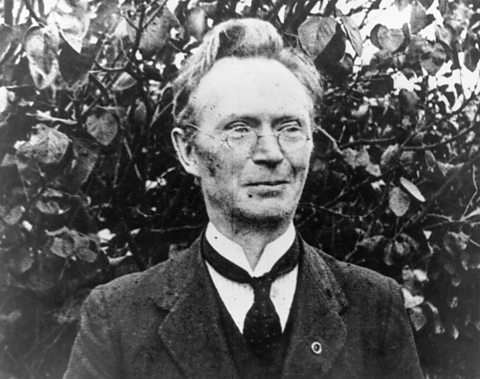 Image source, Sean Sexton / Getty
In 1893 the Gaelic League was set up by Douglas Hyde and Eoin MacNeill.
Their aim was to revive and promote the Gaelic Irish language and culture in order to ‘de-Anglicise the Irish people’.
The League grew in popularity, with 43 branches by 1897, 100 by 1901, and 600 branches and 50,000 members by 1904.
They achieved a number of cultural successes:
- St Patrick’s Day was recognised as a national holiday in Ireland.
- the teaching of the Irish language was made mandatory in schools.
One leader of the League, D.P. Moran, stated that non-Catholics “must recognise that the Irish nation is de facto a Catholic nation”.
As a result, the increasing anti-Protestantism led to many leaving the League, and brought about a more general decline from 1905.
Image source, Sean Sexton / GettyThe Irish Literary Revival
Interest in Irish culture and language led to a burst of Irish literary talent at the end of the 19th and start of the 20th Century, known as the Irish Literary Revival.
Writers such as W.B. Yeats, Lady Gregory, J.M. Synge, and Alice Milligan helped to foster romantic cultural notions of Ireland’s heritage, folklore and heroes.
Such cultural nationalism in some ways helped to inspire a young generation to see Ireland as ‘other’ to Britain, and perhaps to fight for that separation.
The re-emergence of Irish nationalism
Alongside growing awareness and pride in Irish culture, there was increasing political questioning of how Ireland was ruled. Several republican groups emerged, pushing for Ireland to control its own future.
The Irish Republican Brotherhood, 1858
The Irish Republican Brotherhood, founded in 1858, was a secret society committed to the creation of an independent Irish Republic and were willing to use force if necessary to achieve their aims.
After a number of unsuccessful risings, most notably in 1867, the group were driven underground until the turn of the 20th Century.
A group of radical Ulster republicans, such as Denis McCullough and Bulmer Hobson, helped to drive new energy into the IRB movement in the early 1900s.
This momentum was aided by the return to Ireland of Thomas Clarke, a veteran campaigner who had spent over fifteen years in prison.
There was a purge of IRB leadership in 1914. Older, more cautious men were replaced by younger, more militant types, many of whom would dominate the Easter Rising two years later.
Sinn Féin, 1904
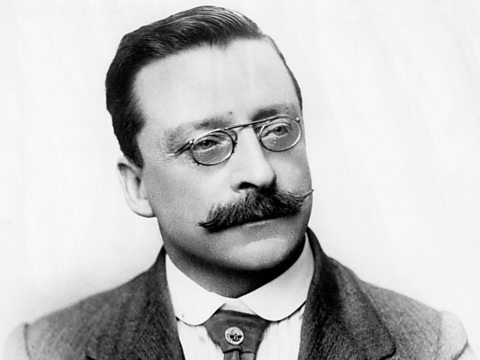 Image source, Apic / Getty
Another republican group which emerged was Sinn Féin (Ourselves Alone), a political party established by Arthur Griffith, in 1905.
They were to be an alternative to the more moderate Irish Parliamentary Party (or Nationalist Party), and operated as an umbrella group for a range of more radical voices in Irish politics. They wanted:
- a republican parliament in Ireland
- more separation from Great Britain than traditional Irish Nationalists.
They believed that they should abstain from Westminster, and still do, arguing that the Irish shouldn’t rely on a British parliament to give them concessions.
A significant by-election in North Leitrim in 1908 gave Sinn Féin the opportunity to run against the Irish Parliamentary Party. Sinn Féin lost, although they did poll a respectable 1157 votes against the IPP’s 3103.
Image source, Apic / GettyIrish Citizen Army, 1913
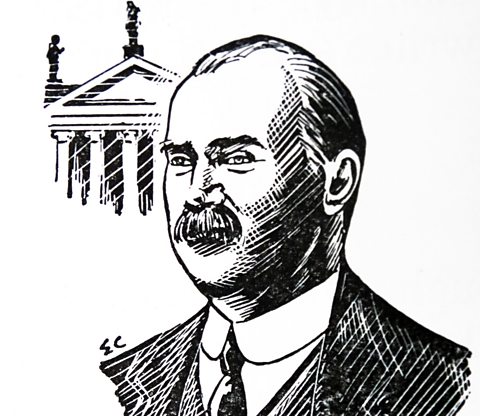 Image source, Universal History Archive / Getty
In 1913, the Irish Citizen Army was formed. It was a paramilitary force set up to protect republican protestors from intimidation and violence from the police.
Its leaders were James Connolly and James Larkin, two socialist Trade Union leaders.
They had two clear aims:
- to gain independence for Ireland
- to set up a socialist republic.
They intended for the working class of all religions to join up to improve their lives, however their membership was overwhelmingly Catholic since they were based in Dublin.
All these groups wanted an Ireland separate from Britain, and all believed the use of force was justified in order to achieve this.
The rise of these more radical nationalist groups meant that reaching a compromise on Home Rule would be more difficult to achieve.
Image source, Universal History Archive / GettyTest your knowledge
Quiz
Recap what you have learned
English and Scottish involvement in Ireland:
- Anglo-Norman invasion of Ireland, 1169 – 1177, saw large amounts of Irish land seized
- The Crown of Ireland Act, 1542, declared King Henry VIII of England the King of Ireland
- Plantation of Ulster, 1606, saw Protestants from Scotland and England establish colonies in northern Ireland
The Irish Cultural Revival began in the late 1800s.
- Gaelic Athletic Association, 1884
- Gaelic League, 1893
- The Irish literary revival, late 1800s/early 1900s
From the middle 1800s, new political groups with nationalist agendas began to emerge.
- The Irish Republican Brotherhood, 1858
- Sinn Féin, 1904
- Irish Citizen Army, 1913
More on Britain and Ireland, 1900 - 1985
Find out more by working through a topic
- count2 of 14
- count3 of 14
- count4 of 14
- count5 of 14