Quick version
The Irish Parliamentary Party (IPP) was Ireland's largest and most successful party:
- they were a nationalist party led by John Redmond
- they campaigned for Home Rule – for Irish affairs to be managed in Ireland
- they held the balance of power in the House of Commons, giving them significant influence.
Sinn Féin were an Irish republican party formed in 1905 by Arthur Griffith.
- they wanted full separation from Great Britain
- they promoted Irish language and culture to create a more Irish identity for Irish citizens
- the opposed Irish involvement in World War One
At the 1918 General Election, Sinn Féin replaced the IPP as Ireland's largest party.
Key events in the rise of Sinn Féin were:
- the 1916 Easter Rising
- the death of Thomas Ashe
- the 1918 Anti-Conscription Campaign
- the leadership of Eamon de Valera
Learn in more depth
Irish politics before WW1
In the late 19th Century and early 20th Century, Irish politics was dominated by the nationalistIrish Parliamentary Party (IPP).
During this period the whole of Ireland was part of the United Kingdom of Great Britain and Ireland. The IPP campaigned for some degree of self-governance for Ireland – called Home Rule.
Under the leadership of John Redmond, the IPP had close working relationship with the Liberal Party that formed the UK Government. This made the IPP influential.
By contrast, in the early 20th Century, Sinn Féin was a small party with relatively little support. Founded in 1905 by Arthur Griffith, by the first general election after the end of World War One in 1918, Sinn Féin had overtaken the IPP to become the dominant force in Irish politics.
The decline of the Irish Parliamentary Party
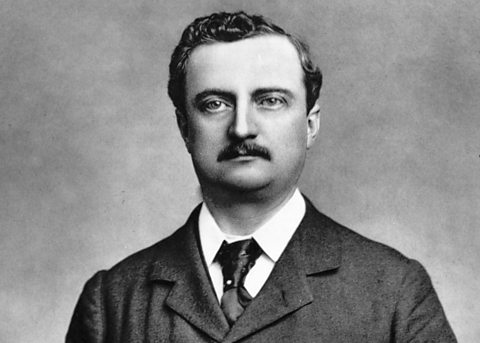 Image source, Hulton Archive / Getty
Led by John Redmond, the Irish Parliamentary Party were the dominant voice in Irish nationalist politics before World War One.
They had supported the British war effort in 1914 and as casualty figures rose, this led many to question the IPP’s position.
- A new British coalition government was formed in 1916.
- Redmond's IPP was not asked to join.
- Many nationalists in Ireland saw this as a snub.
- This undermined Redmond and the IPP’s approach of cooperation with the British Government.
When Redmond died of heart disease in March 1918, his party was already in clear decline. They were losing party members and seats in by-elections.
1918 General Election
After the war ended, a general election was held on 14th December 1918.
- The Irish Parliamentary Party had difficulty even finding candidates.
- A number of seats previously help by IPP MPs were not contested by IPP candidates.
- Many went to unopposed Sinn Féin candidates automatically.
- The IPP went from having over 70 seats in Ireland to just six.
The IPP’s decline was absolute – the part dissolved just four years later in 1922.
Image source, Hulton Archive / GettyThe Rise of Sinn Féin during WW1
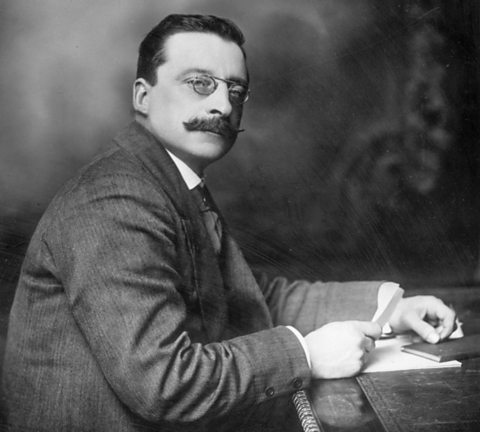 Image source, Hulton Archive / Getty
Sinn Féin, (translated as "We Ourselves") was founded by Arthur Griffith, an Irish writer and journalist in 1905.
The party held no parliamentary seats before 1918, but saw a rapid growth in support during World War One. This mirrored the sharp decline of the Irish Parliamentary Party.
Sinn Féin's early policies advocated for:
- complete withdrawal from the Westminster Parliament
- Irish affairs being decided in an Irish Parliament
There were several key moments during the rise to dominance in Irish politics:
- the Easter Rising, 1916
- the death of Thomas Ashe, 1917
- the importance of Eamon de Valera
- the Anti-Conscription Campaign, 1918
Image source, Hulton Archive / GettyThe Easter Rising, 1916
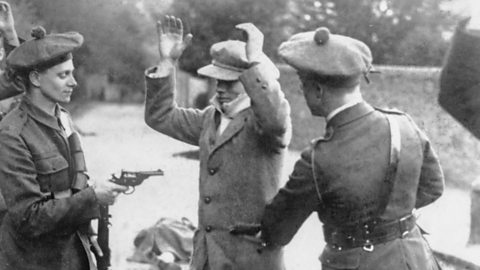
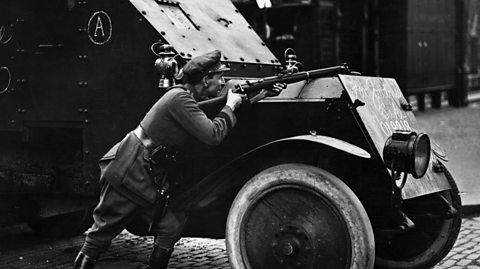
The Easter Rising of 1916 saw an armed republican force of around 1,500 seize control of key parts of Dublin. They proclaimed the establishment of an Irish Republic free from British control.
After six days of fighting the rising failed and the republican leaders arrested. Fifteen were later executed by firing squad for their role in the insurrection.
Although several republican groups were involved in the Easter Rising, the British press were quick to blame Sinn Féin. Many Sinn Féin leaders were arrested, despite not being involved in the insurrection.
Many in Ireland saw the British response, including the execution of the Rising's leaders, as brutal. Public opinion shifted to support the republicans. Sinn Féin gained new recruits and a boost in popularity.
Thomas Ashe's hunger strike, 1917
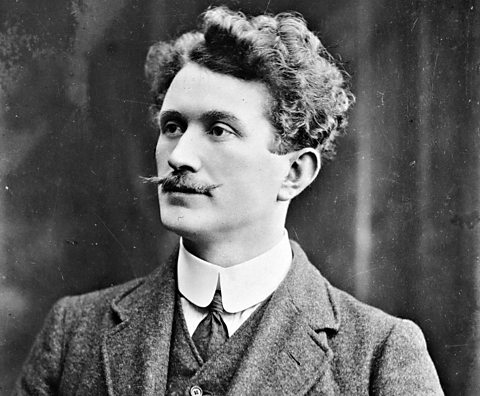 Image source, ALAMY
The idea that republicans were willing to make the ultimate sacrifice for their country was continued beyond the rising in the person of Thomas Ashe.
Ashe was one of the founders of the Irish Volunteers, and a member of the Irish Republican Brotherhood. He commanded a battalion during the Easter Rising of 1916. After republican forces surrendered, Ashe was sentenced to death, but the sentence was reduced to live in prison.
He was released as part of a general amnesty in 1917 but was rearrested soon after following a series of speeches he gave supporting an armed revolution against the British Government.
Ashe demanded to be treated as a prisoner of war. Together with a number of other prisoners, he went on hunger strike. The authorities introduced a policy of mandatory force-feeding, and Ashe died in his cell shortly afterwards.
…his death was caused by the punishment of taking away from the cell bed, bedding and boots, and allowing him to be on the cold floor for 50 hours, and then subjecting him to forcible feeding in his weak condition after hunger-striking for five or six days.
– verdict from the inquest into the death of Thomas Ashe
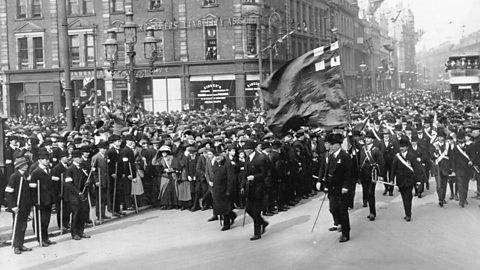
Ashe was seen as a A person who dies for their religious or political belief., and his funeral became a propaganda tool for Sinn Féin, attracting 30,000 mourners.
Image source, ALAMYThe Anti-Conscription Campaign, 1918
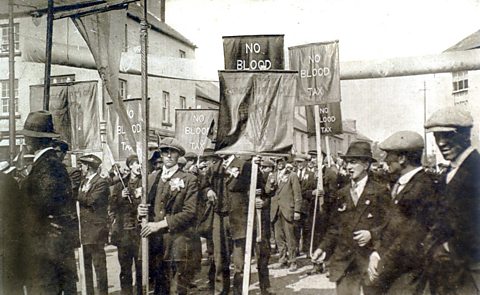 Image source, Photo 12 / Getty
When Compulsory enrolment in the armed forces. was introduced in Britain in 1916, Ireland was excluded. Conscription was opposed by nationalists, and, after the Easter Rising, the British government feared it would provoke hostility.
However, increased pressure from German forces meant that the British army needed more men. In 1918 the British Government introduced conscription for all men of military age in Ireland.
Sinn Féin were vocal opponents to conscription and were active in anti-conscription protests.
Although the IPP and other organisations were also involved in the protests, the public perception was that Sinn Féin was the key driving force behind the anti-conscription campaign.
Image source, Photo 12 / GettyThe role of Éamon de Valera
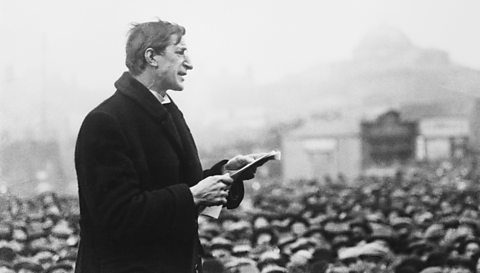 Image source, Bettmann / Getty
Éamon de Valera was another young ‘rebel’ who was sentenced to death but then reprieved alongside Ashe.
By 1917, de Valera was both President of Sinn Féin and President of the Irish Volunteers – a duel role that demonstrates clearly how Irish republicanism merged both political and militant tactics.
He gave a clear message that, if elected, Sinn Féin representatives would not sit in the British Parliament, and that if they won a majority, they would declare independence for Ireland.
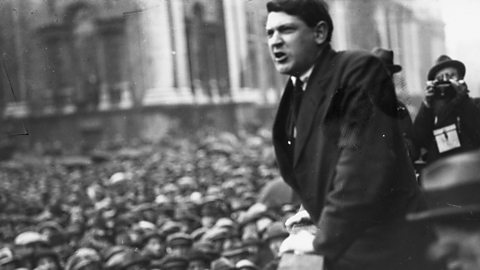
de Valera also worked closely with Michael Collins, another leader of Sinn Féin, the Irish Volunteers, and the Irish Republican Brotherhood.
Éamon de Valera was an excellent public speaker and Michael Collins an impressive military organiser; together they formed an extremely effective campaign for advancing the cause of Irish republicanism.
Image source, Bettmann / GettySinn Féin electoral success, 1917 to 1918
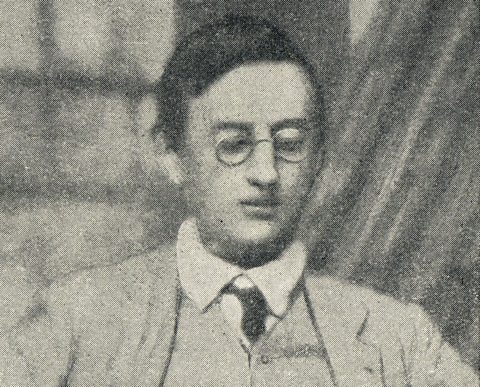 Image source, ALAMY
In the 1917 to 1918 period Sinn Féin won six by-election victories.
The first of these, the North Roscommon seat in February 1917, was won by Count George Noble Plunkett, father of the executed Easter Rising leader Joseph Plunkett.
Another surprise Sinn Féin success came in South Longford in May 1917 when the victor was still in prison on account of his role in the Easter Rising.
A third victory came in East Clare in July 1917 when the previous MP, Willie Redmond (John Redmond’s brother), was killed in action in the war. Éamon de Valera took the seat from Redmond's Irish Parliamentary Party with 71% of the vote.
In the general election that followed the end of World War One in December 1918, Sinn Féin’s dominance in Ireland was overwhelming.
They campaigned for the severance of all ties with Great Britain, an end to any proposal that would keep Northern Ireland separate, and the establishment of an Irish Republic.
Image source, ALAMYWhat was Sinn Féin's 1918 election manifesto?
de Valera and other leaders of the Sinn Féin standing committee produced a clear manifesto for their 1918 election campaign, based on four key points:
Sinn Féin aims at securing the establishment of that Republic:
1. By withdrawing the Irish Representation from the British Parliament and by denying the right and opposing the will of the British Government or any other foreign Government to legislate for Ireland.
2. By making use of any and every means available to render impotent the power of England to hold Ireland in subjection by military force or otherwise.
3. By the establishment of a constituent assembly comprising persons chosen by Irish constituencies as the supreme national authority to speak and act in the name of the Irish people, and to develop Ireland's social, political and industrial life, for the welfare of the whole people of Ireland.
4. By appealing to the [Paris] Peace Conference for the establishment of Ireland as an Independent Nation.
(The Manifesto of Sinn Féin as prepared for circulation for the General Election of December, 1918)
Sinn Féin won 73 of the 105 Irish seats for the British Parliament and became the most important political voice in Ireland.
Such was their dominance and popularity by 1918 that 25 of the constituencies where Sinn Féin won were uncontested by other political parties.
Sinn Féin's 1918 General Election success
Seats won at General Elections
| Election year | Irish Parliamentary Party | Sinn Féin |
|---|---|---|
| 1910 | 74 | Did not contest |
| 1918 | 6 | 73 |
Test what you have learned
Quiz
Recap what you have learned
Before World War One, the Irish Parliamentary Party(IPP) was Ireland's largest and most successful party
- a nationalist party
- led by John Redmond
- campaigned for Home Rule – for Irish affairs to be managed in Ireland
Sinn Féin were a much smaller party, formed in 1905, and had no MPs.
- a republican party
- led by Arthur Griffith
- wanted full separation from Great Britain
- promoted Irish language and culture to create a more Irish identity for Irish citizens
- opposed Irish involvement in World War One
By the time of the 1918 General Election, Sinn Féin had replaced the IPP as Ireland's largest party. The IPP ceased to exist four years later. They campaigned for:
- severing all ties with Great Britain
- ending any proposal that would keep Northern Ireland separate
- establishing an Irish Republic
Key events in the rise of Sinn Féin were:
- the 1916 Easter Rising
- the death of Thomas Ashe
- the leadership of Eamon de Valera
- the 1918 Anti-Conscription Campaign
More on Britain and Ireland, 1900 - 1985
Find out more by working through a topic
- count7 of 14