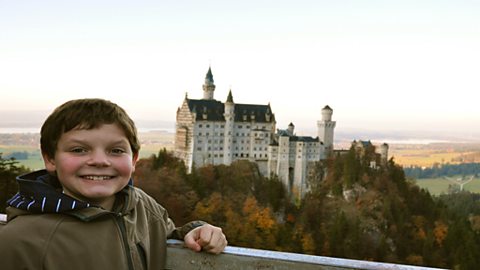
A child-led introduction to Veere, in the province of Zeeland, Netherlands, suitable to support study of a European location at KS2.
The video
Robert - TRANSLATED: I am Robert. I am nine years old. I live in Vera, in the province of Zeeland. Zeeland is in the south-west of the Netherlands. The province consists of islands and water. Did you know that almost half of our province is water?
After the big North Sea flood in 1953, the Delta works were built. My home is located near the Delta works. The Delta works is a network of sluices. When there's a really big storm they protect our land from the sea. There are 13 Delta works dams. Without this dam, half of the Netherlands would flood.
What is so special about the dam? The sluices can remain open. The sea water can flow in with the tides. This is good for the fishermen and nature. Famous engineers from all over the world have come to see it.
I live in the centre of Vera. It's a town of about 1,600 inhabitants. I live with my family, just a few minutes' walk from school. There are 72 pupils at my school. School starts at half past eight, but I get there a few minutes earlier so I can play around with my friends. We usually play ball.
Our school is Protestant and class starts and ends with a prayer. Afterwards, we sing a song, and I love taking part. We also sing in English. My favourite subject is maths. I really enjoy maths because it is easy.
All - SINGING: And we are ready to go. Ready to go, ready to go. We are ready to go, you and me. Where we can see. Are you ready? Yeah!
Robert - TRANSLATED: Whilst I'm at school, my mum works at a nice restaurant in the town centre. Lots of tourists go there in the summer. And their favourite meal is mussels. Tourists come from all over the world to just eat mussels, oysters, and lobster. Hundreds of people living in Zeeland, earn their living from mussels and oysters. In Europe, the Netherlands is the biggest producer of mussels after Spain and France.
We have different types of mussel farming. One method is called hang culture. Where the mussels grow on ropes in the water. The baby mussels take about 30 months to grow into big, juicy muscle. These mussels are big, but they are not yet big enough. These are from near the river mouth, where the water mixes with the seawater from the North Sea.
My dad, grandpa and my uncles are fish wholesalers. This is Friday. This is the day when dad gets back with a lorry full of fish. They buy, sell and transport fish. My dad fetches fish from all over Europe. Sometimes, I go and help him when he comes back from a trip. When he arrives, we offload the fish into containers. I've been doing it since I was three years old, and I also joined him on trips.
Your hands get really cold, but it's still fun! My great-grandfather founded the business. At the time, he traded fish from the local area. Sometimes I travel with my dad in his lorry. This is great fun, and I can visit lots of other places in Europe.
My favourite thing of all is football. That's my passion. I train twice a week and then I have a match on Saturdays. My older sister, Nina, also plays football.
My position is striker. I support Ajax. It's the best team in the Netherlands. I love football because I love to score. If you are passing Vera any time, come and watch me play.
Video summary
Download/print a transcript of the video.
Nine-year-old Robbert introduces his hometown of Veere in the province of Zeeland in the Netherlands.
His province is made up of islands and water, and after a very large flood in 1953 the government built the Delta works, a network of 13 dams and sluices on the coast.
The area is famous for inland lakes and attracts lots of people who like sailing.
The area is also famous for its shellfish, especially mussels, lobster and oysters. Robbert’s father is a fish wholesaler, selling fish all over Europe from his fleet of lorries.
Robbert shows us his school and how his fellow pupils often sing English songs at the start of the day. Robbert has a passion for football; he’s a striker and supports Ajax, one of the most successful Dutch teams.
Teacher Notes
Download/print the Teacher Notes for this episode (pdf).
Teacher Notes prepared in partnership with the Geographical Association.
Central idea
- Places can be both similar and different to each other.
Think, work and apply like a geographer
- Compare
- Sense of place
- Perspective
Questions to explore
- Where are Veere and the Netherlands?
- Which countries and seas border the Netherlands?
- Why are dams needed in areas of the Netherlands?
- What is life like in Veere, a small Dutch town?
- What is life like where we live?
- How is life in a small Dutch town similar/different to our own?
- What physical and human features can be found in a place?
- Are similar and different features found in places?
Key learning outcomes
- To know how to locate places at different scales on a map.
- To know that humans can manage a landscape.
- To know what life might be like in a small town in the Netherlands.
- To know that there both similarities and differences between different places.
Geographical vocabulary
- Dam
- Flood
- Sluices
- Tide
- Engineers
- Tourism
Suggested learning opportunities
My life in…(name of town)
- Using the transcript from the video pupils discuss what main areas of Robert’s life in Veere are covered in the video (background on location, something special about the area/town, life in school, jobs of parents, types of farming, industry and trade that happen in the area, leisure time activity).
- Pupils produce their own short video of life in their town, they might be able to include on location footage the aspect of what they do in school or use photos and artefacts to introduce other aspects of life.
- Discuss that even within one class there might be many different stories and viewpoints to explore when thinking about a place.
Similarity and difference snap
- In pairs pupils create lists of the physical and human features seen throughout the video- restaurant, church, school, factory, dam etc. Compare and share lists as a class and then chose ten features and write onto individual sticky notes.
- Using a map of the local area see how many of the ten sticky notes can be added to the map to show a similar feature and discuss whether any that are left might be found somewhere in the UK.
Ideas for going further and links
- Using the clip as a stimulus, pupils could complete further research on the different methods to prevent flooding used within the UK and the EU.
KS1/KS2 Primary Geography: Cities, towns and villages
KS2 Geography: Urban settlements - living in a city or megacity
KS2 Geography: A location in Europe - Haarlem, Netherlands
This clip will be relevant for teaching Geography at KS2 in England and Northern Ireland, Progression Step 3 in Wales and 2nd and 3rd level in Scotland. The National Curriculum for Geography at Key Stage 2 emphasises study of a European location and making comparisons with a location in the United Kingdom.
A location in Europe - Haarlem, Netherlands. video
10-year-old Mika describes the traditional Dutch architecture of her hometown of Haarlem, Netherlands.
A location in Europe - Rotterdam, Netherlands
11-year-old Martina introduces the busy port of Rotterdam, Netherlands, where her parents work.
A location in Europe - Kinderdijk, Netherlands. video
Nine-year-old Donna introduces Kinderdijk - a region famous for its canals and windmills.
A location in Europe - the North Frisian island of Sylt, Germany. video
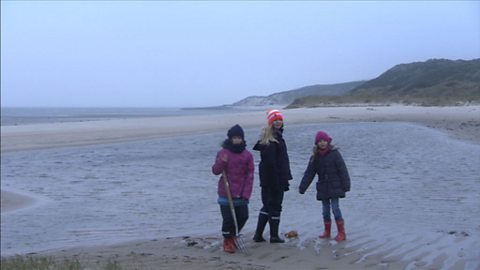
11-year-old Helen explains what life is like on the German island of Sylt.
A location in Europe - Inzell, Germany. video
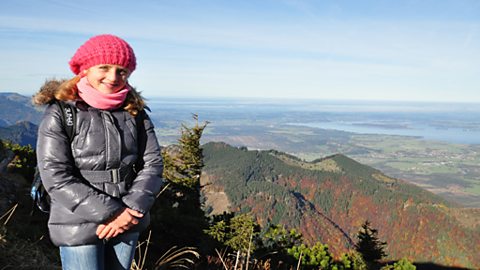
11-year-old Josephine introduces the physical and human geography of Inzell, in Bavaria.
A location in Europe - Hamburg, Germany. video
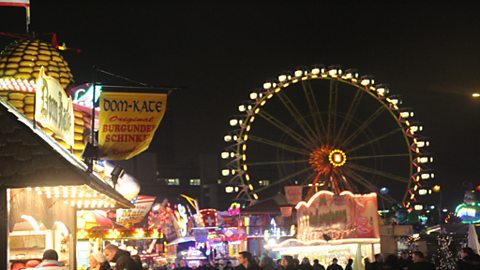
Nine-year-old Zoe introduces the physical and human geography of Hamburg, Germany.
A location in Europe - Cologne, Germany. video
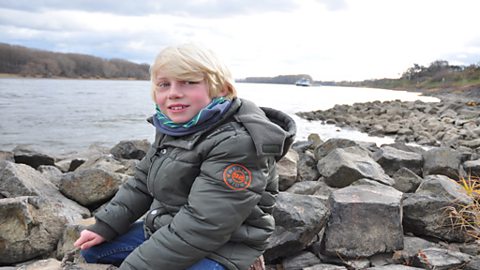
Nine-year-old Niklas shows what life is like in the city of Cologne.
A location in Europe - Füssen, Germany. video
12-year-old Philipp introduces Füssen in the Allgäu region of Bavaria.