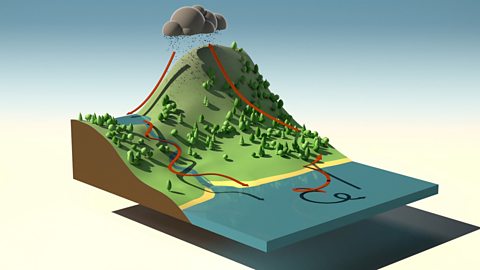
Exploring settlements - the key features of a village, town and city and the similarities and differences between each place.
Human beings have developed all sorts of settlements or communities. Some big, some small, some close together and some far apart.
Pretty much every settlement, no matter how extraordinary or ordinary it is, can be classified as a city, a town or a village.
But what makes these places different?
This is Ava. She's going to help us discover more about villages.
Villages are small settlements with a small number of houses for a few hundred people. Most villages are found in the countryside and may be surrounded by farms where food is produced and sold to people in towns and cities. Some villages have a few shops.And there may be a place of worship, like a church. And there’s usually a school.
Thanks, Ava. It was great exploring Saintfield with you!
This is Sam and he’s in a town. Hi Sam!
A town is a larger settlement than a village. More people live in a town – normally a couple of thousand - so they need more homes and more shops. You might even find some leisure facilities. And often a town hall. There are places of worship and of course, towns have schools too.
Thanks, Sam, for helping us explore Bangor!
Now, to our biggest settlement - a city. And here’s Isabel to help us with this one.
Hi Isabel!
Cities are the largest kind of settlements and often have millions of people living in them. All those people have to live somewhere so you’ll find lots of different kinds of homes. Some people live in houses, others in flats or apartments. Cities usually have a lot to offer – shops, leisure facilities, restaurants, cinemas, museums, places of worship, many have a cathedral like this one. And, of course, you’re never far from a school in a city.
Thanks, Isabel, for showing us around Belfast!
It’s not just the people that live in cities, towns or villages that get to enjoy what each place has to offer. Roads, railways and pathways connect them all, so people from villages can easily get to a city to shop and people who live in towns can easily get out to the countryside.
Video summary
This video examines settlements - the key features of a village, town and city. It helps pupils to investigate what makes these places different and what their common features are.
It has been developed to help pupils explore their local area and the wider locality to identify examples of the key features of villages, towns and cities in context.
Teacher Notes
Download/print the Teacher Notes for this episode (pdf).
Teacher Notes prepared in partnership with the Geographical Association.
Central or big idea
- Settlements are classified by their range of features.
Think, work and apply like a geographer
- Interconnect
- Compare & contrast
- Sense of place
- Scale
Questions to explore
- What is a settlement?
- What are the key features of a village?
- What are the key features of a town?
- What are the key features of a city?
- How are villages, towns and cities connected?
- Why is it important for these different settlements to be connected?
- What makes places similar and different?
Key learning outcomes
- Know that settlements have a range of shops and services.
- Know that larger settlements usually have a wider range of features.
- Know how to compare settlements to observe unique and shared features.
Suitable for teaching geography at KS1 and KS2 in England and Wales, Early and 1st and 2nd level in Scotland and Foundation and KS1 in Northern Ireland.
Key geographical vocabulary and definitions
- Village
- Town
- City
- Services
- Physical feature
- Human feature
Suggested learning opportunities
- Use a map of the United Kingdom to locate key cities, towns and villages in their local area and beyond.
- Use the symbols and keys found on OS maps to explore transport links between places.
- Use online maps such as Google Street View to explore the features of their local settlements.
- Provide a reasoned opinion for which kind of settlement they would prefer to live in.
Ideas for going further and links
- Discuss how the physical geography of a place impacts on the development of settlements.
- Explore how localities change over time and think about whether cities in the future will have the same key features as cities oftoday.
KS1/KS2 Primary Geography: The United Kingdom
KS2 Geography: Settlements
KS2 Geography: Urban settlements - living in a city or megacity
Geography KS2: A location in Europe - Cologne, Germany
Weather, climate and climate change. video
Exploring the difference between weather and climate, climate zones around the world and climate change.
Maps. video
Maps, mapping and navigation - including map keys, symbols, compass points and co-ordinates.
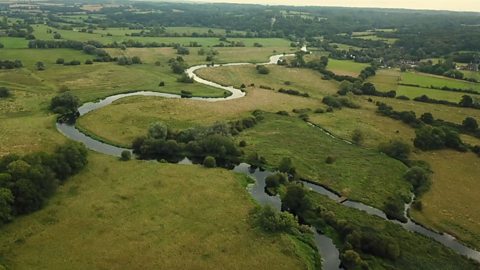
Rivers. video
Exploring the journey of water to the sea, including source, stream, river, meander, river mouth and estuary.
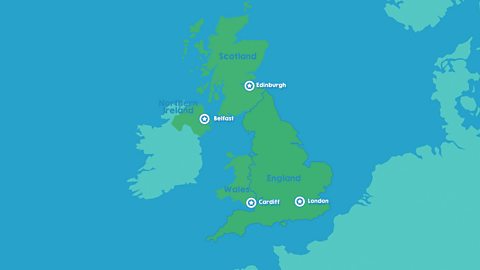
The United Kingdom. video
Identifying the four countries of the UK - England, Scotland, Wales, Northern Ireland - and their capital cities: London, Edinburgh, Cardiff, Belfast.
The world. video
Exploring the regions of the Earth: the continents, oceans, Equator, Northern and Southern Hemispheres and the North and South Poles.

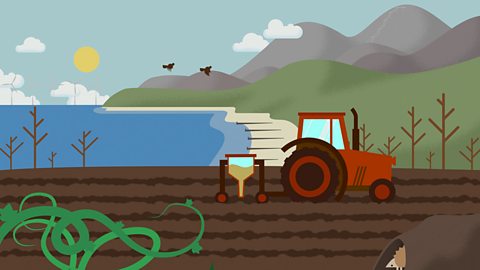
The seasons. video
Spring, summer, autumn, winter... Identifying the four seasons of the United Kingdom's temperate climate.
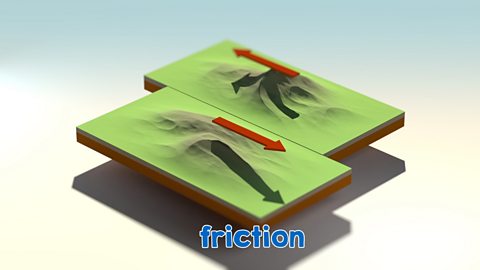
Earthquakes. video
An animation for KS2 pupils on tectonic plate movement and steps to lessen the impact of earthquakes.
The water cycle. video
An short animation for KS2 pupils explaining the water cycle, including evaporation, condensation and precipitation.