A child-led introduction to Inzell in Bavaria, Germany, suitable to support study of a European location at KS2.
The video
Josephine: My name is Josephine. I'm 11 years old and I'm a speed skater in Inzell.
Josephine - TRANSLATED: Inzell is world-famous for speedskating. Inzell is at the foot of the Alpsin a region called Chiemgau. And it's in Bavaria.
We have lots of beautiful mountains. These are the Alps and the Alps are in Germany. Over there, where you can see the snow caps, that's all Austria. The river is made from melting ice water that runs down from the mountains. It's a little bit cloudy, but otherwise you could see Munich. And Munich is where my mum works.
Sometimes, I like to go walking in the forest. The forest is very important in our area. It protects us from rock and snow avalanches. It gives us wood as we still build many houses from wood. We also use the wood for our heating.
There are lots of farms in Bavaria. Some of the farms are very old. The animals, mostly the cows, are now brought into barns because it's getting colder and the snow will come soon. They'll stay there until April. Some cows are still in the meadows but they'll soon be brought in.
In the autumn, like now, we still get sunny days. So, sometimes, I like to go wave boarding with my friend, Susanna. I especially like wave boarding with her, because we can do lots of good tricks together. Soon, we won't be able to anymore, because in winter we always get a lot of snowfalls. Sometimes more than a metre.
Here, in Inzell, you can do lots of sports in the winter, like skiing, cross-country skiing and sledging. But, for me, the best is speed skating. Speed skating actually started at a lake here called Frillensee. In the 1950s and '60s, people trained here in winter, and there were very important competitions here. It's the coldest lake in Germany. And one of the coldest in Europe. In the winter, it's completely frozen.
Now, all the competitions are held at our new indoor arena. The ice stadium in Inzell is really new. It was officially opened for the world Championships in 2011. It's the most modern speed skating arena in Europe, and in Germany there are only three. Teams come from all over the world to train here. Inzell, can offer teams the best training facilities all year round.
I trained three times a week with my two friends, Anita and Susanna. We get on really well and we joke around and chat. Anita and Susanna are both really nice. When we train, we often skate in a threesome, one behind the other.
We are all the same speed and level, so we can keep together, which is always much more fun. It's great racing around the track together, feeling the air rushing passed us. At competitions, we wear a skin-tight suit. Then we feel so light on the ice. Almost like you're flying. And, yes, that's just such a great feeling. I hope you can come and watch us one day!
Video summary
Download/print a transcript of the video.
A child-led introduction to Inzell in Bavaria, Germany.
Inzell lies in the Chiemgau region of Bavaria in the German Alps.
Josephine, 11, is a speed skater and trains at the Max Aicher stadium, one of only three all-weather speed skating stadiums in Germany.
The stadium hosts many international competitions and has an environmentally friendly roof design that protects the ice from direct sun rays, thus saving on the electricity required to keep the ice frozen when the temperature rises in summer.
Josephine likes to ski in winter and wave-board with her friends in summer. She shows us the mountain ranges in her area, the rivers made from snow and ice melt, and the traditional Bavarian farms with their cows that graze the Alpine meadows in the summer and come into the stalls for the long harsh winters.
The region is full of lakes and she walks us round the highest and coldest lake in Germany. This lake used to be the venue for international speed skating competitions. The lake is surrounded by forest.
The forests protect the inhabitants from snow and rock avalanches and provide essential sustainable wood for building homes and heating.
This clip was originally broadcast as part of the series Living abroad.
Teacher Notes
Download/print the Teacher Notes for this episode (pdf).
Teacher Notes prepared in partnership with the Geographical Association.
Central idea
- Seasons impact human activity in a region.
Think, work and apply like a geographer
- Compare
- Interconnected
- Space
- Sense of place
Questions to explore
- Where is Inzell, Munich, Germany, the Alps?
- Which countries border Germany?
- What is life like in the Alps?
- What words could be used to describe mountains and life in the mountains?
- Are all areas of a settlement the same?
- Why are forests important to people in rural areas of Bavaria?
- How do the seasons impact life in rural Bavaria?
- Would everyone enjoy living in the mountains, why/why not?
- Which place in the video would you like to explore and why?
Key learning outcomes
- To know how to locate places at different scales on a map.
- To know how physical features affect human activity and how this can be managed.
- To know what life might be like in an alpine biome.
- To know how to interpret information from a video source.
Geographical vocabulary
- Mountain
- Season
- Region
- Alps
- Lake
Suggested learning opportunities
Winter or summer
- Pupils can sort activities depending on whether they are more likely to happen in each season- this could be a Venn diagram. A number of sports could be included and discussions focus on the time of year and where they are popular. Pupils could investigate which sports are in the Summer and Winter Olympics. Pupils could use maps to locate and demonstrate the countries that participate and achieve gold medals at these events.
Alpine life
- Take pupils on a walk through the local neighbourhood and ask them to record down what they see happening, including people and animals. Discuss what else might be happening at different times of day and areas you didn’t manage to reach - eg park, High Street, etc. Pupils imagine that their neighbourhood was covered in more than a meter of snow every winter. Pupils list the potential problems that this would bring to the activities that they had observed and for each create a possible solution.
Ideas for going further and links
- Investigate the Alps: how they were formed, which countries they cover, how they compare to other mountain ranges across the globe and the highlights and challenges of living in a mountainous region.
KS2 Geography: Mountains - how tectonic plates create mountain ranges
KS1/KS2 Primary Geography: The seasons
This clip will be relevant for teaching Geography at KS2 in England and Northern Ireland, Progression Step 3 in Wales and 2nd and 3rd level in Scotland. The National Curriculum for Geography at Key Stage 2 emphasises study of a European location and making comparisons with a location in the United Kingdom.
A location in Europe - Haarlem, Netherlands. video
10-year-old Mika describes the traditional Dutch architecture of her hometown of Haarlem, Netherlands.
A location in Europe - Rotterdam, Netherlands
11-year-old Martina introduces the busy port of Rotterdam, Netherlands, where her parents work.
A location in Europe - Veere in the province of Zeeland, Netherlands. video
Nine-year-old Robbert introduces his hometown of Veere in the province of Zeeland, Netherlands.
A location in Europe - Kinderdijk, Netherlands. video
Nine-year-old Donna introduces Kinderdijk - a region famous for its canals and windmills.
A location in Europe - the North Frisian island of Sylt, Germany. video
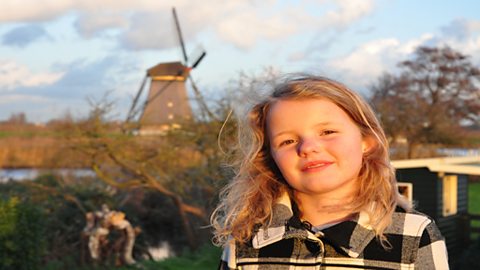
11-year-old Helen explains what life is like on the German island of Sylt.
A location in Europe - Hamburg, Germany. video
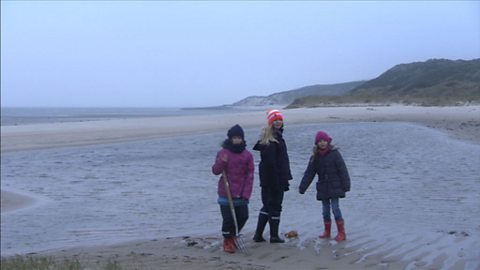
Nine-year-old Zoe introduces the physical and human geography of Hamburg, Germany.
A location in Europe - Cologne, Germany. video
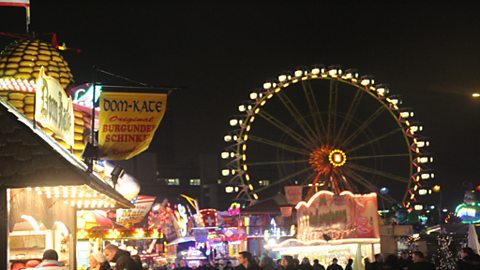
Nine-year-old Niklas shows what life is like in the city of Cologne.
A location in Europe - Füssen, Germany. video
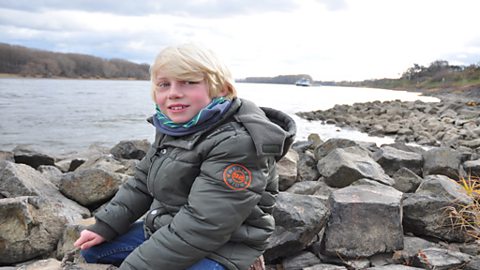
12-year-old Philipp introduces Füssen in the Allgäu region of Bavaria.