Characters in Richard III
The numerous characters in Richard III can be divided into different groups:
House of York
- Richard, Duke of Gloucester (later Richard III) – Ambitious, manipulative brother of the king
- King Edward IV – Reigning king at the start of the play
- Queen Elizabeth (Elizabeth Woodville) – Edward IV’s wife
- The Princes (Edward V and Richard, Duke of York) – Young heirs to the throne
- George, Duke of Clarence – Richard’s brother
- Duchess of York – Mother of Edward IV, Clarence and Richard
- Lord Hastings – Loyal to Edward IV
House of Lancaster
- Queen Margaret – Widow of Henry VI
- Lady Anne Neville – Widow of Prince Edward (Lancastrian heir), later Richard’s wife
- Richmond (Henry Tudor, later Henry VII) – Lancastrian claimant
Other Characters
- Duke of Buckingham – Richard’s ally, turned critic
- Lord Stanley (and Sir William Stanley) – Politically cautious nobles
- Sir James Tyrrell – Arranges the murder of the Princes
- The Murderers (first and second murderer) – Kill Clarence
- Ghosts of Richard’s Victims – Appear before the Battle of Bosworth to curse Richard and bless Richmond
Richard
Richard
Richard is presented as a charismatic yet deeply ruthless figure who drives the action of the play through his relentless pursuit of power. He begins by openly declaring his intention to deceive, manipulate and destroy those who stand between him and the crown, using charm, wit and calculated violence to achieve his aims. His intelligence and dark humour make him compelling, even as his actions grow increasingly brutal. Richard’s ability to perform different roles – loyal brother, humble servant, loving suitor – reveals his skill as an actor, shaping how others see him while hiding his true motives. As the play progresses, his confidence falters and moments of fear and isolation expose the psychological cost of his ambition. His downfall at Bosworth shows the limits of tyranny and the restoration of moral order. Richard ultimately embodies the dangers of unchecked ambition and the corrupting influence of power.
Words to describe Richard
- Ruthless
- Manipulative
- Ambitious
- Charismatic
- Deceitful
- Intelligent
- Calculating
- Relentless
- Theatrical
- Isolated
Key quotations for Richard
Richard revealing his bitterness and ambition
“Now is the winter of our discontent
Made glorious summer by this sun of York.”
(Act 1, Scene 1)
Richard begins the play by explaining that although England is at peace, he himself feels unhappy and out of place. This shows his deep resentment and hints that he will disrupt the peace to get the power he wants.
Richard boasting after manipulating Lady Anne
“Was ever woman in this humour woo’d?
Was ever woman in this humour won?”
(Act 1, Scene 2)
After persuading Lady Anne to accept his ring, Richard celebrates privately, amazed at his own success. This reveals his confidence in manipulation and his enjoyment of controlling others.
Richard losing power on the battlefield
“A horse! A horse! My kingdom for a horse!”
(Act 5, Scene 4)
During the Battle of Bosworth, Richard finds himself in danger and desperately needs a horse to keep fighting. This moment shows how far he has fallen: the once powerful king is reduced to panic and desperation.
King Edward IV
King Edward IV appears in the early part of the play as a well‑intentioned but weakened king whose failing health creates the political instability Richard exploits. Although he tries to bring peace to his divided family, Edward is easily influenced and unable to control the growing tensions at court. His attempts at reconciliation come too late, and his inability to see Richard’s true nature allows the conflict to escalate. Edward’s death becomes the turning point that enables Richard to move quickly against the princes and seize power. Dramatically, Edward represents the collapse of legitimate authority: a king who wants harmony but lacks the strength to enforce it. His vulnerability highlights the contrast between his gentle leadership and Richard’s ruthless ambition. Through Edward, the play explores how a kingdom can fall into chaos when a ruler is too weak to manage rival factions or recognise the dangers within his own family.
Words to describe King Edward IV
- Authoritative
- Well‑meaning
- Diplomatic
- Trusting
- Naive
- Vulnerable
- Unfortunate
- Ineffective
- Passive
- Overwhelmed
Key quotations for King Edward IV
Edward attempting to heal divisions within his family
“Have I a tongue to doom my brother’s death,
And shall that tongue give pardon to a slave?”
(Act 2, Scene 1)
Edward expresses guilt for condemning Clarence and questions how he can show mercy to others when he failed his own brother. This highlights his troubled conscience and shows how his weakness and indecision contribute to the chaos that follows.
Edward urging reconciliation at court
“Why, so. Now have I done a good day’s work.”
(Act 2, Scene 1)
After persuading the nobles to make peace, Edward believes he has restored harmony among his divided supporters. This reveals his desire for unity, but also his naivety, as he does not see how deeply the conflict runs – or how Richard is manipulating events.
Edward reflecting on the burden of kingship
“O God! I fear Thy justice will take hold
On me, and you, and mine, and yours for this.”
(Act 2, Scene 1)
Edward fears divine punishment for the political violence and family conflict surrounding him. This shows his growing sense of helplessness and foreshadows the downfall of his family after his death.
Queen Elizabeth
Queen Elizabeth is a central political figure in Richard III, caught between protecting her children and navigating the dangerous world of the royal court. As the wife of Edward IV, she begins the play in a position of influence, but her power quickly weakens as Richard rises. She is intelligent, perceptive and aware of the threats surrounding her family, yet she is unable to prevent Richard’s manipulation or the murder of her sons. Her grief and fear deepen as she realises how effectively Richard has dismantled her security. However, she also shows resilience and strategic thinking, especially in her later confrontation with Richard, where she outmanoeuvres him by pretending to agree to his plans while secretly supporting Richmond. Through Elizabeth, the play explores the vulnerability of women in a violent political system and highlights the emotional cost of Richard’s ambition on the families he destroys.
Words to describe Queen Elizabeth
- Determined
- Protective
- Intelligent
- Perceptive
- Resilient
- Strategic
- Fearful
- Grieving
- Powerless
- Isolated
Key quotations for Queen Elizabeth
Elizabeth grieving the loss of her family’s power
“Ah, my poor princes! Ah, my tender babes!”
(Act 4, Scene 4)
Elizabeth cries out in anguish after learning her sons have been murdered in the Tower. This shows the depth of her grief and highlights the human cost of Richard’s ambition.
Elizabeth recognising Richard’s threat
“Thou didst usurp my place, and dost thou not
Usurp the just proportion of my sorrow?”
(Act 4, Scene 4)
Elizabeth confronts Richard, accusing him of stealing both her position and her right to mourn. This reveals her growing courage and her understanding of how completely Richard has destroyed her security.
Elizabeth outmanoeuvring Richard
“Shall I forget myself to be myself?”
(Act 4, Scene 4)
When Richard pressures her to support his plan to marry her daughter, Elizabeth questions whether she should betray her own identity. This moment shows her intelligence and resistance, as she ultimately deceives Richard and secretly supports Richmond instead.
Lady Anne
Lady Anne is one of the most tragic figures in Richard III, caught in a moment of deep grief when Richard first confronts her. She appears during the funeral procession of Henry VI, mourning both him and her husband, Prince Edward, whom Richard has murdered. At first, she is fierce, outspoken and determined to condemn Richard for his crimes. However, Richard’s manipulation and emotional pressure overwhelm her, leading her to accept his ring despite her hatred for him. This sudden shift reveals how vulnerable she is in a world dominated by male power and political violence. As the play continues, Anne becomes increasingly isolated and powerless, trapped in a marriage she never wanted. Her early strength fades into despair, and her death – reported rather than shown – emphasises how completely Richard destroys those around him. Through Anne, the play explores grief, coercion and the devastating impact of Richard’s ambition on innocent lives.
Words to describe Lady Anne
- Grieving
- Vulnerable
- Passionate
- Outspoken
- Courageous
- Conflicted
- Isolated
- Powerless
- Manipulated
- Tragic
Key quotations for Lady Anne
Lady Anne condemning Richard during Henry VI’s funeral procession
“O, cursed be the hand that made these holes!”
(Act 1, Scene 2)
Anne lashes out at Richard as she mourns Henry VI, whose wounds she blames on him. This shows her fierce grief and moral courage, establishing her as one of the few characters willing to confront Richard openly.
Lady Anne overwhelmed by Richard’s manipulation
“Thine eyes, sweet lady, have infected mine.”
(Act 1, Scene 2)
Richard flatters Anne during his shocking attempt to woo her beside the corpse of her father‑in‑law. This moment reveals how Richard’s emotional pressure begins to weaken her resistance, highlighting her vulnerability in a male‑dominated world.
Lady Anne expressing despair in her marriage
“Lo, ere I can repeat this curse again,
Within so small a time, my woman’s heart
Grossly grew captive to his honey words.”
(Act 4, Scene 1)
Anne reflects bitterly on how quickly she was persuaded to marry Richard, despite her hatred for him. This shows her deep regret and the tragic loss of power that defines her fate in the play.
Queen Margaret
Queen Margaret is one of the most powerful and haunting presences in Richard III, even though she no longer holds political authority. As the widow of Henry VI, she appears as a figure shaped by loss, bitterness and a fierce desire for justice. Margaret acts almost like the play’s moral conscience, reminding the Yorkists of the bloodshed that brought them to power and predicting the suffering that will fall upon them. Her curses are central to the play’s structure: many of her prophecies come true, giving her an almost supernatural force. Although she is isolated and dismissed by others, Margaret’s voice carries weight because she speaks truths the court refuses to acknowledge. Dramatically, she represents the consequences of past violence and the cyclical nature of revenge. Her presence warns that no crime goes unpunished, and that the cruelty of the present is rooted in the unresolved conflicts of the past.
Words to describe Queen Margaret
- Vengeful
- Prophetic
- Bitter
- Defiant
- Fearless
- Isolated
- Grieving
- Relentless
- Accusatory
- Marginalised
Key quotations for Queen Margaret
Margaret cursing the Yorkists for the suffering they caused her
“Richard yet lives, hell’s black intelligencer.”
(Act 1, Scene 3)
Margaret unleashes a fierce curse on Richard as she confronts the court that destroyed her family. This establishes her as a prophetic, vengeful force whose words foreshadow the downfall of those she condemns.
Margaret warning Elizabeth and the Duchess of York of the grief to come
“From forth the kennel of thy womb hath crept
A hell‑hound that doth hunt us all to death.”
(Act 4, Scene 4)
Margaret tells the Duchess of York that Richard, her own son, is the source of the suffering engulfing England. This highlights her role as truth‑teller, exposing the consequences of unchecked ambition and past violence.
Margaret claiming her curses are being fulfilled
“Why, I have lived to look upon their death.”
(Act 4, Scene 4)
Margaret declares that the destruction she predicted has begun to come true. This reinforces her prophetic power and shows how the play’s cycle of revenge is unfolding exactly as she foretold.
Buckingham
Buckingham is one of the most important political figures in Richard III, serving first as Richard’s closest ally and later as a symbol of the dangers of misplaced loyalty. At the beginning of their partnership, Buckingham is confident, persuasive and skilled at manipulating public opinion. He helps Richard secure the crown by stage‑managing events, spreading rumours and presenting Richard as a reluctant leader. However, Buckingham’s loyalty has limits. When Richard orders the murder of the princes, Buckingham hesitates, revealing a moral boundary he is unwilling to cross. This moment marks the breakdown of their alliance and exposes Richard’s ruthlessness toward anyone who resists him. Buckingham’s eventual capture and execution show how quickly power shifts in a corrupt political world. Dramatically, he represents the ambitious noble who believes he can control events but ultimately becomes a victim of the very schemes he helped create, highlighting the play’s theme of political betrayal.
Words to describe Buckingham
- Ambitious
- Persuasive
- Strategic
- Confident
- Manipulative
- Opportunistic
- Calculating
- Disloyal
- Hesitant
- Doomed
Key quotations for Buckingham
Buckingham helping Richard stage‑manage public opinion
“ Give me some little breath, some pause, dear lord. ”
(Act 3, Scene 7)
Buckingham pretends to be overwhelmed as he publicly urges Richard to accept the crown, playing his part in their political performance. This shows his skill in manipulation and how actively he supports Richard’s rise to power.
Buckingham hesitating over the murder of the princes
“ Give me some little breath, some pause, dear lord,
Before I positively speak in this. ”
(Act 4, Scene 2)
When Richard demands the princes’ deaths, Buckingham stalls, unable to give immediate approval. This moment reveals the moral boundary he will not cross and marks the beginning of their broken alliance.
Buckingham realising Richard has turned against him
“ Why, then the world is grown so bad
That wrens make prey where eagles dare not perch. ”
(Act 3, Scene 6)
Buckingham reflects bitterly on how corrupt and dangerous the political world has become. This highlights his growing fear and foreshadows his downfall once Richard decides he is no longer useful.
Richmond
Richmond (Henry Tudor, later Henry VII) enters Richard III as a distant but steadily growing threat to Richard’s power, representing hope, stability and the promise of a restored moral order. Although he appears late in the play, his presence is felt throughout as those oppressed by Richard look to him for rescue. Richmond is calm, principled and guided by a strong sense of justice, contrasting sharply with Richard’s ruthless ambition. His speeches emphasise unity and divine support, presenting him as a leader who fights not for personal gain but for the good of the country. At Bosworth, he shows courage and determination, inspiring his followers with a vision of peace after years of civil conflict. His victory ends the Wars of the Roses and symbolically heals the divisions between the houses of York and Lancaster. Dramatically, Richmond functions as the moral counterbalance to Richard, embodying the triumph of legitimacy and virtue over tyranny.
Words to describe Richmond
- Honourable
- Just
- Courageous
- Steadfast
- Hopeful
- Principled
- Composed
- Inspiring
- Determined
- Victorious
Key quotations for Richmond
Richmond rallying his troops before Bosworth
“ In God and our good cause fight we our battle. ”
(Act 5, Scene 3)
Richmond encourages his soldiers by framing their fight as morally justified and divinely supported. This establishes him as a principled leader whose authority comes from righteousness rather than fear.
Richmond contrasting his values with Richard’s tyranny
“ The wretched, bloody, and usurping boar,
That spoiled your summer fields and fruitful vines. ”
(Act 5, Scene 2)
Richmond describes Richard as a destructive force who has harmed the nation. This highlights Richmond’s role as a restorer of peace and order, positioning him as the moral opposite of Richard.
Richmond promising unity after victory
“ We will unite the white rose and the red. ”
(Act 5, Scene 5)
After defeating Richard, Richmond vows to end the conflict between York and Lancaster through marriage. This shows his commitment to healing the nation and symbolises the beginning of a new, stable political era.
Test your knowledge of the characters in Richard III
Further study
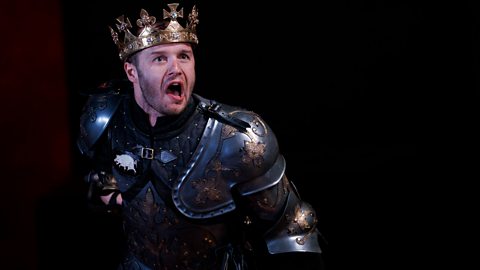
Why Shakespeare's Richard III became a controversial villain. interactive
The notorious monarch is one of the Bard's most iconic characters. But the truth about him is increasingly contested, as is the depiction of his disability.
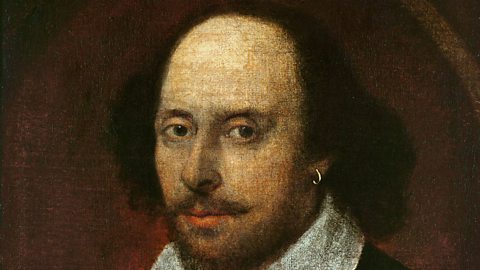
The study of Shakespeare, controlled assessment guidance. activity
Unit 3 of the CCEA GCSE English Literature qualification is a controlled assessment unit based on the study of a play by William Shakespeare.
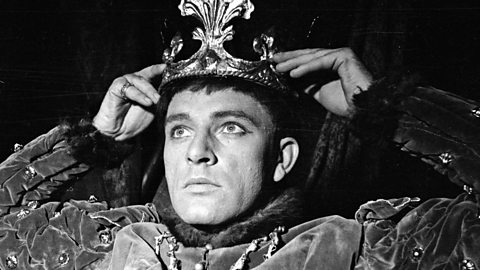
Is Shakespeare History? The Plantagenets. podcast
Melvyn Bragg and guests discuss Shakespeare's treatment of English Plantagenet history from Richard II to Richard III and all the Henrys in between, written under Elizabeth I.
More on Richard III
Find out more by working through a topic
- count3 of 5
- count4 of 5
- count5 of 5
- count1 of 5

