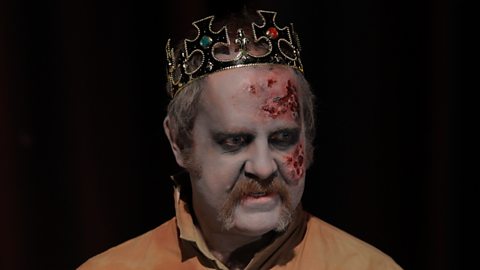
The plot of Richard III
Richard III follows the ruthless rise and dramatic fall of one of Shakespeare’s most notorious villains. Set after theA conflict between the houses of Lancaster and York, which lasted from 1455 to 1487. The two sides were rival claimants to the English throne. , England is finally enjoying peace under King Edward IV. But his younger brother Richard, Duke of Gloucester, is far from satisfied. Bitter, ambitious and determined to seize the crown for himself, Richard decides to eliminate anyone who stands between him and the throne.
Richard begins by targeting his own family. He tricks King Edward into believing that their brother Clarence is plotting against him. Clarence is imprisoned in the Tower of London, where Richard secretly arranges his murder. With one obstacle removed, Richard turns his attention to Lady Anne, the widow of a man he himself killed. Through manipulation and emotional pressure, he persuades her to marry him – an early sign of his chilling ability to twist people to his will.
When King Edward dies, Richard is appointed Lord Protector for Edward’s young sons, the rightful heirs. Instead of safeguarding them, he destroys their support network. He executes loyal nobles such as Lord Hastings and has Queen Elizabeth’s influential relatives arrested and killed. With the princes isolated, Richard’s ally Buckingham stages a public campaign to present Richard as a humble, reluctant leader chosen by God. The crowd is convinced, and Richard is crowned King Richard III.
But Richard’s paranoia grows. He imprisons the princes in the Tower and orders their murder, committing the act that will define his legacy. He then disposes of his wife, Anne, so he can attempt to marry his niece, young Elizabeth, hoping to strengthen his claim to the throne. Even Buckingham, once his strongest supporter, turns against him.
Meanwhile, opposition gathers behind Henry Tudor, Earl of Richmond, a distant Lancastrian heir. As Richard’s tyranny becomes unbearable, nobles and common people alike defect to Richmond’s side. On the eve of battle, Richard is haunted by the ghosts of all those he has killed, each one cursing him and blessing Richmond. Shaken but defiant, Richard enters the Battle of Bosworth Field.
The battle ends Richard’s violent “game”. He is killed, and Richmond becomes King Henry VII. By promising to marry young Elizabeth, he unites the houses of Lancaster and York, bringing an end to decades of civil war. The play closes with the hope of a new, peaceful era – made possible only after the downfall of England’s most infamous usurper.
Plot overview
England is finally at peace after the Wars of the Roses, but Richard, Duke of Gloucester, is secretly jealous of his brother King Edward IV and begins plotting to take the crown for himself.
Richard arranges for his brother Clarence to be imprisoned in the Tower of London and then murdered, removing one obstacle between himself and the throne.
He shockingly persuades Lady Anne – widow of a man he killed – to marry him, proving how skilled he is at manipulation.
When King Edward IV dies, Richard becomes Lord Protector for Edward’s young sons, who are the rightful heirs.
Richard eliminates key supporters of the princes, including Lord Hastings, and has Queen Elizabeth’s powerful relatives arrested and executed.
With the princes isolated, Richard’s ally Buckingham stages a public campaign to present Richard as the ideal king. Richard pretends to be humble and reluctant, and the crowd accepts him as King Richard III.
Richard imprisons the two princes in the Tower and secretly orders their murder, committing the crime that will define his reputation for centuries.
Richard’s tyranny turns the nobles and the public against him. Even Buckingham deserts him when Richard refuses to spare the princes.
Henry Tudor, Earl of Richmond, gathers support in France and returns to England to challenge Richard’s rule. On the night before battle, Richard is haunted by the ghosts of his victims.
At the Battle of Bosworth Field, Richard is defeated and killed. Richmond becomes King Henry VII and promises peace by uniting the houses of Lancaster and York through marriage to young Elizabeth.
Test your knowledge of William Shakespeare's Richard III
Further study
Why Shakespeare's Richard III became a controversial villain. interactive
The notorious monarch is one of the Bard's most iconic characters. But the truth about him is increasingly contested, as is the depiction of his disability.
The study of Shakespeare, controlled assessment guidance. activity
Unit 3 of the CCEA GCSE English Literature qualification is a controlled assessment unit based on the study of a play by William Shakespeare.
Is Shakespeare History? The Plantagenets. podcast
Melvyn Bragg and guests discuss Shakespeare's treatment of English Plantagenet history from Richard II to Richard III and all the Henrys in between, written under Elizabeth I.
More on Richard III
Find out more by working through a topic
- count2 of 5
- count3 of 5
- count4 of 5
- count5 of 5