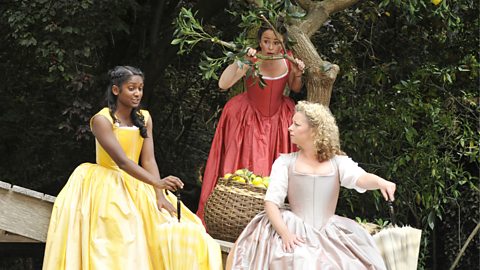
Character overview
There are two main love stories in this play. One shows Claudio falling in love with Hero, then being tricked into thinking she is disloyal. He To reject or declare something as wrong. her at the altar and later discovers he is in the wrong. To make amends, he agrees to marry Antonio's daughter, who turns out to be Hero in disguise.
The other story is that of Benedick and Beatrice. At the start of the play they tease each other and bicker. Later, they are tricked into realising their love for the other and eventually they agree to marry.
Main characters
- Benedick
- Beatrice
- Claudio
Secondary characters
- Hero
- Don John
- Don Pedro
- Leonato
Minor characters
- Dogberry
- Antonio
- Borachio
- Conrade
- Margaret
- Ursula
- The Watch
- The Friar
Benedick
Benedick is one of the main characters in this play and is initially presented as light-hearted and carefree. In his banter with Beatrice he seems quick-witted and arrogant. When talking to his friend Claudio, he scorns love and vows he will never marry. He is portrayed as mature and as having known Beatrice previously.
However, he appears hurt by Beatrice's sharp words about him at the masked ball and he is quick to give in to desire when he overhears his friends discussing Beatrice and her apparent love for him.
By the end of the play we see Benedick transformed from soldier to lover and he asks for Beatrice's hand in marriage. Their banter continues on less severe terms than at the start.
| How is Benedick like this? | Evidence | Analysis |
|---|---|---|
| Witty | ||
| Leonato explains to the messenger that Beatrice and Benedick are both witty. | “they never meet but there's a skirmish of wit / between them,” (Act 1 Scene 1) | A 'skirmish' suggests a tussle or a fight, which shows us that Benedick and Beatrice are well matched in their cleverness. |
| Proud | ||
| After dancing with Beatrice at the masked ball he is offended by her comments about him. | “But that my Lady Beatrice should know me, and not / know me!” (Act 1 Scene 2) | Beatrice called him the “prince's fool” and this hurts Benedick's pride. His offence at her mistaking him shows how full of self he is. |
| Changeable | ||
| After eavesdropping on his friends in the orchard, Benedick is quick to admit his feelings have changed. | “When I said I would / die a bachelor, I did not think I should live till I / were married.” (Act 2 Scene 3) | Despite his earlier claims that he would never marry, he softens and changes when he suspects Beatrice loves him. |
| Playful | ||
| Even when he and Beatrice have agreed to marry, he continues to tease her. | “Come, I will have thee; but, by this light, I take / thee for pity.” (Act 5 Scene 4) | The love between Beatrice and Benedick seems honest and equal. They do not change their playful relationship after they have admitted their true feelings. |
Beatrice
Beatrice is Benedick's equal, matching his wordplay in the opening scenes with clever To reply in a rude, sharp or witty manner. and put-downs. Even from the start their lively banter seems to hide deeper feelings of desire.
When she overhears Hero and Ursula talking about how Benedick loves her, she is quick to soften and acknowledge her own feelings for her former opponent.
She defends her cousin, Hero, when she is accused of being unfaithful and pleads with Benedick to “Kill Claudio!” She represents the inequality in society at the time, showing how, as a woman, she is unable to take action and seek revenge.
In the end she agrees to marry Benedick, though she continues to tease him until he silences her with a kiss.
| How is Beatrice like this? | Evidence | Analysis |
|---|---|---|
| Argumentative | ||
| Benedick greets her with a nickname that means scornful. | “What, my dear Lady Disdain! Are you yet living?” (Act 1 Scene 1) | The sarcasm implied by this nickname and the question that Benedick offers both show how their relationship is based on their quick-witted arguments. |
| Bold | ||
| How is Beatrice like this? She puts Benedick down in front of others. | “I wonder that you will still be talking, Signior / Benedick; nobody marks you.” (Act 1 Scene 1) | Beatrice speaks her mind. When Benedick returns from the wars, she shows her boldness by speaking out against him. She contrasts with Hero who is quiet and well-behaved. |
| Outspoken | ||
| Leonato warns her that she will never be married if she continues to be so sharp in the way she speaks. | “By my troth, niece, thou wilt never get thee a / husband, if thou be so shrewd of thy tongue.” (Act 2 Scene 1) | Her outspokenness is regarded as an undesirable personality trait. Women at the time were expected to be discreet. |
| Frustrated by society | ||
| She shows her dissatisfaction with the role that society has dictated for women. | “O God, that I were a man! I would eat his heart / in the market-place.” (Act 4 Scene 1) | She claims she would take revenge on Claudio if she were a man. The repetition of the phrase “that I were a man” in this scene emphasises her frustration. |
Claudio
Claudio is an honourable soldier and friend to Benedick and Don Pedro. He falls in love with Hero at first sight, showing his romantic nature (although it could be argued that this hastiness reveals an immaturity).
He asks for Hero's hand in marriage but is then tricked by Don John into believing that his wife-to-be has been unfaithful. His behaviour at the wedding is cruel as he accuses Hero of dishonesty in front of the congregation.
Later, when he hears Borachio's confession and realises his mistake, he is To express regret and remorse for sin.. He apologises to Leonato and agrees to marry Hero's cousin without even meeting her. He is delighted at the second marriage to unveil his new wife and find she is actually his beloved Hero.
| How is Claudio like this? | Evidence | Analysis |
|---|---|---|
| Conventional | ||
| He admires Hero for her modesty and beauty. | “Is she not a modest young lady?” (Act 1 Scene 1) | Whereas Benedick will fall in love with Beatrice and her sharp wit, Claudio falls in love with Hero who demonstrates all the conventional aspects of the ideal Elizabethan woman. |
| Easily influenced | ||
| When Don John suggests that Don Pedro is wooing Hero for himself, Claudio is quick to move to jealousy. | “Farewell, therefore, Hero!” (Act 1 Scene 1) | Although he has agreed for Don Pedro to woo Hero on his behalf he still reacts quickly to Don John's claim. This also shows his immaturity. |
| Hurtful | ||
| When he learns from Don John that Hero has been unfaithful, he denounces her at the altar. | “Give not this rotten orange to your friend.” (Act 4 Scene 1) | His rejection of Hero is made worse because he does it publicly. |
| Repentant | ||
| When he admits his mistake, Claudio is grateful for Leonato's understanding. | “Your over-kindness doth wring tears from me!” (Act 5 Scene 1) | Claudio claims that Leonato's generosity moves him to tears. He agrees to marry Antonio’s daughter to make up for his mistake. |
Secondary characters
Hero
Hero is the innocent and obedient daughter of Leonato. She contrasts with the more outspoken and independent Beatrice and presents a conventional image of a suitable and desirable wife.
Claudio describes her as a ‘jewel’ when he first meets her and praises her for being ‘modest’. He accuses her on their wedding day of being unfaithful, and she faints. The Friar advises her father to pretend she is dead, to give her a chance of a life.
At the end of the play, when Claudio has seen the error of his accusations, Hero is given to him as a wife, in disguise as Antonio's daughter.
| How is Hero like this? | Evidence | Analysis |
|---|---|---|
| Beautiful | ||
| Hero is so beautiful that Claudio falls in love with her at first sight. | “In mine eye she is the sweetest lady that ever I looked on.” (Act 1 Scene 1) | Claudio praises Hero for her beauty. She is also admired by Don Pedro and is often referred to as “fair Hero”. |
| Obedient | ||
| Beatrice tells Antonio that her cousin always does what her father asks. | “Yes, faith; it is my cousin's duty to make curtsy and say ‘Father, as it please you.’” (Act 2 Scene 1) | We learn about Hero from the things that other characters say. Here Beatrice highlights how dutiful her cousin can be. She uses the words “duty”, “curtsy” and “please” to emphasise Hero's obedient nature. |
| Quiet | ||
| In comparison to Beatrice, Hero doesn't say much at all in the play. | “I talk'd with no man at that hour, my lord.” (Act 4 Scene 1) | When Claudio accuses her of being with another man, he uses elaborate language. However, Hero responds with simple, quiet truth. |
| Forgiving | ||
| Even though Claudio humiliates her at the altar, Hero is prepared to give him a second chance. | “And when I lived, I was your other wife: / And when you loved, you were my other husband.” (Act 5 Scene 4) | She reveals herself to Claudio at the second wedding. Her speech is straightforward and lacking in blame or resentment. |
Don John
Don John is a thoroughly unpleasant character. Some readers say he is too evil to be believed. He appears first in Act 1 Scene 1 as a sulky and bad-tempered character. He says he is honest in that he admits his true nature, though in fact he is untrustworthy.
He is jealous of Claudio and plots to damage the soldier's new‑found romance with Hero. With Borachio and Conrade, Don John sets up a scene that appears to show Hero being unfaithful. The audience learns that they intend to trick Claudio by showing him Margaret declaring her love for Borachio and making him think she is his wife‑to‑be.
At the end of the play we learn that Don John has tried to escape but is arrested and brought back to Messina.
| How is Don John like this? | Evidence | Analysis |
|---|---|---|
| Moody | ||
| Don John describes how he is ruled by his moods. | “I cannot hide what I am: I must be sad when I have cause and smile / at no man's jests” (Act 1 Scene 3) | He claims to be unable to hide his true self and will show his sadness or joy as it arises. |
| Villainous | ||
| He acknowledges that he is a mischievous and unpleasant character. | “It must not be denied / but I am a plain-dealing villain.” (Act 1 Scene 3) | He seems to be honest about his villainy and admits that his behaviour is bad. |
| Dishonest | ||
| At the masked ball, Don John pretends not to know who Claudio is and claims that Don Pedro is wooing Hero for himself. | “He is enamoured on Hero; I pray you, dissuade him from her: she is no equal for his birth: you may / do the part of an honest man in it.” (Act 2 Scene 1) | Although Don John appears honest in admitting that he is a villain, he is dishonest with others. Here, he lies to Claudio about his brother’s motives. |
| Resentful | ||
| Don John openly admits his dislike of Claudio. | “I am sick in displeasure to him.” (Act 2 Scene 2) | He is jealous of Claudio and experiences this resentment as a physical sickness. His bitterness towards the “young start‑up” Claudio leads to his plot against Hero. |
Don Pedro
Don Pedro is the Prince of Arragon and Don John’s brother. At the start of the play he returns from the wars with Benedick and Claudio. When Claudio confesses that he is in love with Hero, Don Pedro offers to woo her for him at the masked ball. He keeps his promise, even though Claudio becomes suspicious.
He is involved in the tricking of Benedick with Leonato and Claudio. In the orchard scene he appears witty and light‑hearted as he plays with words and sets up Benedick.
He supports Claudio in To reject or declare something as wrong. Hero at the wedding and later joins his friend to make amends by praying at her tomb.
| How is Don Pedro like this? | Evidence | Analysis |
|---|---|---|
| Confident | ||
| When Claudio seems shy about approaching Hero, Don Pedro steps in to woo her for him. | “Here, Claudio, I have wooed in thy name, and / fair Hero is won.” (Act 2 Scene 1) | Don Pedro shows confidence and trustworthiness in winning Hero’s hand for Claudio. |
| Loyal | ||
| When Don John claims that Hero is unfaithful, Don Pedro pledges his allegiance to Claudio. | “And, as I wooed for thee to obtain her, I will join with thee to disgrace her.” (Act 3 Scene 3) | He promises to support Claudio, though this loyalty is misguided as Hero is condemned without being heard. |
| Humble | ||
| Don Pedro joins Claudio to make amends at the end of the play and mourns publicly at Hero’s tomb. | “The wolves have prey'd; and look, the gentle day, / Before the wheels of Phoebus, round about / Dapples the drowsy east with spots of grey.” (Act 5 Scene 3) | He reflects on events using natural and mythological imagery, suggesting a forgiving and humble character willing to allow renewal. |
Leonato
Leonato is the Duke of Messina, Hero’s father and Beatrice’s uncle. At the start of the play he welcomes the soldiers to his home.
He is shown as a protective and caring father and a generous host. He holds a masked ball for his guests and later helps trick Benedick in the orchard, perhaps as part of his The male head of a family or group. feelings towards his niece, Beatrice.
At the wedding, when Hero is accused by Claudio, Leonato focuses on his own sense of dishonour and wishes for death, both for himself and his daughter. However, he later shows forgiveness by allowing Claudio to marry Hero.
| How is Leonato like this? | Evidence | Analysis |
|---|---|---|
| Generous | ||
| He invites Don Pedro and the soldiers to stay with him for over a month. | “I tell him we shall stay here at / the least a month; and he heartily prays some / occasion may detain us longer.” (Act 1 Scene 1) | Don Pedro explains that Leonato hopes for a reason to extend their stay, showing his generosity to his guests. |
| Patriarchal | ||
| He wants his daughter and his niece to find husbands. | “By my troth, niece, thou wilt never get thee a husband, if thou be so shrewd of thy tongue.” (Act 2 Scene 1) | Leonato worries that Beatrice’s sharp speech makes her undesirable, revealing his patriarchal values. |
| Honourable | ||
| When Hero is accused at the altar, Leonato wishes to die. | “Hath no man's dagger here a point for me?” (Act 4 Scene 1) | His sense of honour is so strong that he would rather die than live with the disgrace of his daughter’s apparent behaviour. |
Minor characters
Dogberry – the Captain of the Watch. He is officious and takes his role seriously, but is also largely ineffective. This is partly because he is comically lenient with any criminal he catches, but mainly because of his overblown and unclear manner of speech which makes his communication hard to understand. His inaccurate speech forms the basis of some of the comedy in the play.
Antonio – Leonato’s brother, who takes part in the deception of Claudio at the ‘second’ wedding by pretending the disguised Hero is his daughter.
Borachio – Don John’s immoral associate, who comes up with the plan to disgrace Hero at the altar. Margaret, Hero’s maid, is attracted to him, a fact he uses to set the plan in motion by pretending she is Hero and using her as ‘evidence’ of Hero’s unfaithfulness. He is arrested for bragging about his part in the plan.
Conrade – another loyal but immoral associate of Don John’s, who is arrested by the Watch alongside Borachio.
Margaret – Hero’s maid. She is sometimes witty and bawdy in her speech, and she is attracted to Borachio; it is she who is mistaken for Hero when Borachio sets up his tryst with her as ‘evidence’ of Hero being with other men.
Ursula – another maid attending to Hero, who helps in the plan to make Beatrice and Benedick fall in love.
The Watch – the police of Messina, comprised of Verges, Seacole and others.
Friar Francis – first contracted to marry Hero to Claudio, he is the first man to believe Hero’s innocence after Claudio’s To reject or declare something as wrong., and seems to have a good understanding of human nature when he notes people most want what they had when they no longer have it. It is the Friar who suggests the plan of pretending Hero has died and helps to hide her before conducting the second wedding later.
Test your knowledge of the characters in Much Ado About Nothing
Further study
The study of Shakespeare, controlled assessment guidance. activity
Unit 3 of the CCEA GCSE English Literature qualification is a controlled assessment unit based on the study of a play by William Shakespeare.
Shakespeare's life, work and legacy. collection
A collection of interactive articles exploring the life, work and legacy of the Bard.
Classic Stories. audio
A classic story in English: William Shakespeare's Much Ado About Nothing.
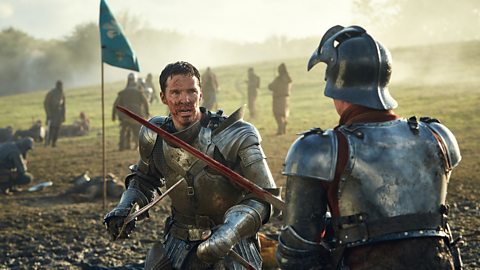
Shakespeare on the BBC. collection
Find out how to watch, listen to and learn about William Shakespeare's works across the BBC.
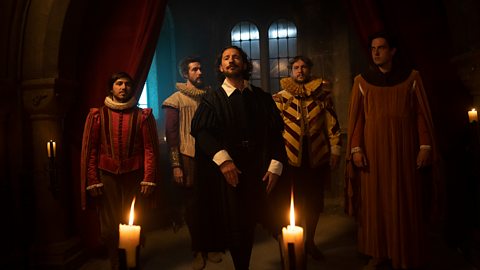
Shakespeare Lives. collection
Shakespeare Lives marks the 400th anniversary of the death of William Shakespeare.
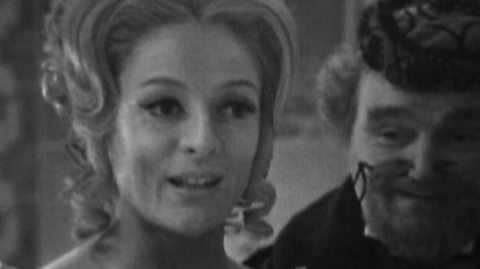
Much Ado About Nothing starring Maggie Smith (1967) video
Watch an extract from the earliest UK TV broadcast of Shakespeare's Much Ado About Nothing, starring Maggie Smith.
More on Much Ado About Nothing
Find out more by working through a topic
- count3 of 5
- count4 of 5
- count5 of 5

- count1 of 5