Summary of Much Ado About Nothing
- Type of play: Comedy
- Date written: Around 1599 (A period in European history from 1300-1600 which saw new scientific discoveries and the creation of great art. literary period)
- Setting: Messina, on the island of Sicily, around the 16th century
- Themes: Love, marriage and relationships, family, duty and loyalty, gender roles, jealousy, deception, appearance and reality, society and manners, pride and honour, revenge.
- Useful vocabulary: Secret planning or plotting, often involving deception. Intrigue usually creates tension or complications in a story., The act of behaving according to social rules or expectations, rather than challenging them., Kind, generous, and wanting to do good. A benevolent person acts with goodwill towards others., The act of controlling or influencing someone unfairly, often without them realising it., A masquerade is a masked party where characters hide their identities, allowing them to speak and act more freely. It represents how appearances can deceive., A lack of action or resistance. A passive person allows events to happen instead of taking control., Someone who follows the rules or always agrees with others., A man whose partner has been unfaithful. The term is often associated with jealousy or loss of status., A child born to parents who are not lawfully married., A society in which men hold the power and control., The action of being unfaithful to a spouse., Related to marriage or the relationship between spouses., A lively and competitive exchange, often verbal, involving argument, teasing, or wit., Quick, clever conversation where people respond sharply to one another., Light‑hearted teasing or playful conversation..
Plot
Act I
As soldiers return from war, Beatrice and Benedick resume their sharp verbal sparring, while Don John quietly sets out to cause trouble.
| Scene | Main events | Main themes and notes |
|---|---|---|
| 1 | • Leonato, the governor of Messina, waits with his daughter Hero and niece Beatrice for the return of Don Pedro, the Prince of Aragon, from a recent battle. • Don Pedro arrives with a few of his soldiers – Claudio, Benedick and Balthasar – as well as his half brother Don John, against whom he was fighting but with whom he is now seemingly reconciled. • The groups greet each other before Beatrice and Benedick indulge in some scathing repartee – they are known for merrily mocking each other and have done so for a long time. • Most of the group go into Leonato’s house but Claudio stays outside and confesses to Benedick that he has fallen in love with Hero. Benedick is scornful of love in general but Don Pedro arrives to check on them and, after hearing of Claudio’s feelings, he promises to woo Hero for him. | This opening scene does a lot to introduce the characters and their relationships as well as some of the major themes of the play. Claudio falling in love with Hero at first sight, Don Pedro’s willingness to match‑make and the declarations by both Beatrice and Benedick that they do not care about love all help to set the plot in motion. Benedick uses the A literary device where an object, person, place, or event represents something beyond its literal meaning. of the bull and Imagery is where the writer uses words to paint picture to help the reader visualise the subject being described. Imagery often involves a comparison such as simile, metaphor or personification. of horns to illustrate his aversion to love and marriage. Horns were a well-known A metaphor is a word or a phrase used for dramatic effect, to describe something as if it were something else. for the shame of cuckoldry – it was imagined that a man whose wife is unfaithful could not see the horns on his head though everyone else could. Benedick’s resistance to Don Pedro’s initial image of a strong bull in a yoke shows he views love and marriage as impediments to freedom and forces that take away the bull’s strength and masculinity. Themes: Love, marriage and relationships, family, duty and loyalty, gender roles, appearance and reality, society and manners. |
| 2 | • Leonato’s brother Antonio tells Leonato that he has strange news. His servant mistakenly claims he overheard Don Pedro confess love for Hero. • Antonio warns that Don Pedro may intend to ask Leonato to marry her. • Leonato decides to wait and asks Antonio to tell Hero so she is prepared when Don Pedro approaches her at the masked ball. | Cases of mistaken identity – a classic Shakespearean comedy device – create barriers for the lovers. Here, Don Pedro’s offer to woo Hero for Claudio has been mistaken for his own romantic intention. Antonio’s reaction and Leonato’s concern about warning Hero suggest a match with an older man would be unexpected, though Don Pedro’s status could override objections. Themes: Love, marriage and relationships, family, duty and loyalty, appearance and reality, society and manners. |
| 3 | • Don John is urged by Conrade to appear happier and ingratiate himself with Don Pedro, but he refuses. • Borachio brings the accurate news: Don Pedro will woo Hero for Claudio. • Don John decides to use the situation to harm Claudio, who fought against him and gained glory. His companions vow loyalty. | Don John presents himself as a malicious A character who creates conflict with the main character. who delights in causing suffering. He uses the metaphor of “food” for the idea of damaging Claudio, suggesting that revenge nourishes him. This scene establishes him as motivated by bitterness, jealousy, and wounded pride. He resents Don Pedro both for defeating and forgiving him, rejecting the expectations of gratitude or loyalty. Themes: Marriage and relationships, family, duty and loyalty, jealousy, deception, appearance and reality, society and manners, pride and honour, revenge. |
Act II
Well‑meaning friends meddle successfully, tricking Beatrice and Benedick into love, while Don John plots rather less kindly behind the scenes.
| Scene | Main events | Main themes and notes |
|---|---|---|
| 1 | • Just before the masked ball begins, Leonato, Antonio and Beatrice discuss Beatrice’s attitudes to love. Hero is reminded that the prince will attempt to woo her. • The guests, Don Pedro and his men, arrive in their masks and the party begins. Don Pedro asks to dance with Hero, and various other characters guess at who is who. Beatrice speaks to a masked Benedick about her disdain for Signor Benedick. • Don Pedro, Leonato and many of the others exit but Claudio remains. Don John convinces Claudio that Don Pedro has wooed Hero for himself. • Benedick complains that Beatrice has insulted him, alluding to their past connection. • Claudio learns the truth and discovers Hero does want to marry him. • Don Pedro proposes that they work together to bring Beatrice and Benedick into a romance. | Hero’s A lack of action or resistance. A passive person allows events to happen instead of taking control. and obedience highlighted; contrast with Beatrice’s wit and assertiveness. Early planting of mistrust in Claudio – Hint at something that will happen later and have greater significance. later conflict. Use of A metaphor is a word or a phrase used for dramatic effect, to describe something as if it were something else. language around A man whose partner has been unfaithful. The term is often associated with jealousy or loss of status. and courtly behaviours. Themes: Love, marriage, obedience, gender roles, deception, appearances vs reality. |
| 2 | • Don John and Borachio plot to sabotage the marriage of Claudio and Hero. • Borachio plans to stage a scene with Margaret at Hero’s window to make Hero appear unfaithful. • Don John intends to present this “evidence” to Don Pedro and Claudio. | Villainy driven by spite; Don John’s desire to cause harm for its own sake. Metaphor of “poison” emphasises moral corruption and destructive intent. Themes: Deception, jealousy, honour, loyalty and disloyalty, appearance vs reality. |
| 3 | • Benedick reflects alone on Claudio’s transformation due to love and lists the traits he would want in an ideal partner. • Don Pedro, Claudio and Leonato stage a conversation about Beatrice’s supposed love for Benedick. • Benedick believes them and decides to return Beatrice’s “love.” • Beatrice delivers a message to Benedick; he interprets multiple meanings into it. • Scene contrasts the humorous matchmaking plan with the more serious Hero/Claudio plot. | Exploration of masculinity, ego and romantic transformation. Benedick’s A speech performed by a character, often depicting that person thinking or talking aloud to his or herself. reveals inner conflict and comedic self‑importance. Themes: Love, wit, pride, gender expectations, social performance, deception (good‑natured vs harmful). |
Act III
Where Don John’s scheme convinces Claudio that Hero is unfaithful, even as the watch accidentally stumble across the truth while trying to do their jobs.
| Scene | Main events | Main themes and notes |
|---|---|---|
| 1 | • At Hero’s request, Margaret goes to tell Beatrice that she has heard Hero talking about her outside and that she should secretly go and listen. • Noting Beatrice’s arrival, Hero and Ursula stage a conversation similar to that in the previous scene, lamenting how Benedick is deeply in love with Beatrice but too afraid to tell her because of her renowned scorn. Hero notes how Beatrice is so arrogant and contemptuous that even she does not dare tell her cousin about Benedick, for fear of being mocked by her. • Hero and Ursula go back to the house, and Beatrice considers what she has heard. She resolves to be kinder in her manners and to return Benedick’s love. | Hero speaks more here than in any previous scene, showing both playfulness in ‘pranking’ her cousin and good insights into Beatrice’s nature. There is a sense of truth in what she says about being afraid to tell Beatrice truths for fear of being laughed at; she cares for her cousin but may find her cynicism about love abrasive at times. It is perhaps notable that in the conversation overheard by Benedick, his friends took care to flatter him, while in this conversation, Beatrice’s flaws are exposed instead. Her stubbornness and pride are considered to go against the feminine ideal; her failure to act in a traditional gender role is criticised, even by those who love her, because it is seen to exclude her from marriage, which was supposed to be the ideal life for a woman. Beatrice’s short A speech performed by a character, often depicting that person thinking or talking aloud to his or herself. here shows she feels she needs to change her behaviour – in other words, that she must stop fighting against society’s expectations of how a woman should behave. Themes: Love, marriage and relationships, family, duty and loyalty, gender roles, deception, appearance and reality, society and manners, pride and honour. |
| 2 | • Claudio, Don Pedro, Leonato and Benedick discuss plans for after Claudio’s wedding the next day. Benedick has shaved off his beard, complains of having toothache and seems more serious, claiming he is not the same as he used to be. • Benedick asks to speak with Leonato and they exit together. Don Pedro gleefully imagines he is asking to marry Beatrice. • Don John enters and tells Don Pedro and Claudio that Hero is unfaithful. Claudio cannot believe the news, and Don Pedro is taken aback. Don John claims he will give them proof if they join him at midnight. | Benedick’s friends note his new demeanour and appearance and tease him about being in love. He complains of toothache – in Shakespeare’s time, this was considered as an ailment akin to heartache or lovesickness. He has also cut off his beard – the beard was a symbol of mature masculinity, again suggesting love could rob a man of his manhood. At hearing Don John’s news, Claudio says he will shame Hero at the altar tomorrow if he sees the proof; Don Pedro says he will back him up in publicly shaming her. This premeditation suggests that Claudio’s public denunciation of his fiancée the next day is less about being rash and heartbroken, and more about male pride. Themes: Love, marriage and relationships, family, duty and loyalty, gender roles, deception, appearance and reality, society and manners, pride and honour, revenge. |
| 3 | • Dogberry, the captain of the Watch, instructs the guards to keep an eye around Leonato’s house before the wedding in the morning. • The guards overhear Borachio telling Conrade how he was paid a thousand ducats by Don John to stage a scene with Margaret at Hero’s window, tricking Claudio and Don John into thinking Hero was having sex with him the night before her wedding. • The guards arrest Borachio and Conrade. | Dogberry’s speech is a further source of comedy in the play – he often misuses words, replacing what he actually means with a similar-sounding word of different meaning. This is now usually known as a malapropism, though that term came from a character in a drama written long after Much Ado About Nothing. He also issues ridiculous instructions to the guards, implying they should allow any wrongdoers they catch to go free; his speech amuses the audience but also casts doubt on the effectiveness of the guards, and may make the audience wonder if they will be capable of foiling the scheme of Borachio and Don John. Themes: Marriage and relationships, duty and loyalty, deception, appearance and reality, society and manners, revenge. |
| 4 | • Early in the morning, Hero is preparing for the wedding, helped by Ursula and Margaret. • Beatrice arrives and greets her cousin saying she is unwell – she has a cold. • Margaret makes bawdy jokes, both about Hero’s wedding night and Beatrice’s affliction, suggesting she is in love. She also notes that Benedick is behaving differently than usual, and wonders whether Beatrice could change and fall in love just as Benedick seems to have done. • Ursula tells them the groom and his men have arrived, and they hurry to be ready. | Although Hero scolds Margaret for her earthy humour, showing the modesty she is known for, she also shows some spirit in disagreeing with her about outfit choices and sticking to her own choices, showing some strength of mind. Beatrice’s cold mirrors Benedick’s toothache, aligning the idea of love with the idea of sickness or suffering. It may be that the change of heart each of them is going through is shown in external physical discomfort. Hero also claims to feel unwell, saying her heart feels heavy – it is unclear whether this is a similar physical sign of suffering for love, a case of wedding day nerves or a bad feeling about what is to come. Themes: Love, marriage and relationships, family, duty and loyalty, gender roles, society and manners. |
| 5 | • On the way to the church for the wedding, Leonato is met by Dogberry and Verges. • They attempt to tell him about the two men they have arrested, but they are so long-winded and unclear in their meaning that Leonato, in a rush, dismisses them and says they should go and interrogate the arrested men instead. He proceeds to the church, unaware of what is to come. | Dogberry’s formerly comical speech patterns here have implications for the plot, as they block the discovery of Don John’s treachery in time. Leonato impatiently departing from informants who could have saved his daughter’s honour creates When the audience knows something that the characters don’t. for the audience, who know the importance of the message Dogberry has failed to deliver. Themes: Duty and loyalty, appearance and reality, society and manners. |
Act IV
At the wedding, Hero is publicly shamed and collapses, prompting Friar Francis to defend her innocence and suggest a dramatic plan involving a fake death.
| Scene | Main events | Main themes and notes |
|---|---|---|
| 1 | • To the shock of all but Don Pedro and Don John, Claudio publicly denounces Hero as impure and a liar at the altar before everyone present. • He recounts how they witnessed her with a man after midnight at her window. Leonato is horrified and Hero falls in a faint. • Claudio, Don Pedro and Don John leave the church. • Leonato denounces Hero, but the Friar who was to marry them tells him to pause. He believes Hero from watching her reactions, and alleges there must be a mistake. • The Friar advises the family to pretend Hero is dead – this will cover her shame, encourage people including Claudio to think more pitifully and fondly of her, and buy them time to find out what happened. If they cannot recover the truth, it is suggested Hero may be secretly sent to a religious order to hide her shame. • Benedick approaches a distraught Beatrice and they confess their love for one another. • Beatrice, preoccupied with the harm done to her cousin, is enraged and wants vengeance. She asks Benedick to kill Claudio. He initially refuses. She laments that she is not a man and cannot take revenge for Hero herself. Won over, Benedick agrees he will challenge Claudio to a duel, as well as bringing the news of Hero’s supposed “death”. | The play is a comedy but this scene borders on A type of drama in which characters undergo suffering or calamity and which usually ends with a death. A sad or catastrophic event causing suffering or death., as Hero’s public condemnation would have serious consequences for her and her family. Leonato’s desperate request for a dagger to stab himself and his hurtful reproach of his daughter when he believes the allegations against her show that the failure of a woman to be chaste before marriage was a matter of almost deadly honour for all her kin. Claudio uses the A metaphor is a word or a phrase used for dramatic effect, to describe something as if it were something else. of a “rotten orange” to describe Hero, conjuring the image of sweet fruit being spoiled and implying she is now past her best, tainted or even diseased. Against such a dramatic backdrop, Benedick’s confession of love for Beatrice, framed as it is with the question “Is not that strange?”, comes across as sincere, restrained and modest – a contrast to their former showy battles, suggesting true feeling and a changed demeanour towards her. Beatrice, although consumed with sadness and anger for her cousin, is likewise understated in returning his love, implying a quiet but true acceptance of one another. Beatrice’s faith in her cousin’s innocence and her anger at the damage done to Hero’s reputation show fierce loyalty, but her laments about her inability to punish those who harmed Hero show how powerless a woman really was in such a society. Her demand that Benedick fight for her cousin’s honour is partly a test of his love but also a desperate act, as Beatrice would never have wanted to rely on a man to act on her behalf. Themes: Love, marriage and relationships, family, duty and loyalty, gender roles, jealousy, deception, appearance and reality, society and manners, pride and honour, revenge. |
| 2 | • Dogberry attempts to question Borachio and Conrade. His technique is highly ineffective and the Sexton present reminds him he should call the accusers from the Watch instead. • The Watch relay the information they overheard, including the detail that Borachio was paid to damage Hero’s reputation. • The Sexton, believing Hero to have died of grief after being accused, arranges for Borachio and Conrade to be handcuffed and taken to Leonato for further questioning. | Dogberry’s incompetence as an A character who asks aggressive or systematic questions to uncover the truth. is luckily overruled by the more sensible Sexton (a church caretaker), who hears enough from the men of the Watch to feel Leonato should be informed about what has been discovered. It is the Sexton who also reveals the information that Don John is known to have secretly sneaked out of Messina since, which seems to confirm his involvement in the case. Themes: Duty and loyalty, deception, appearance and reality, society and manners, pride and honour, revenge. |
Act V
In the end, lies unravel, Don John is exposed, Hero is restored, and the play wraps up with forgiveness, multiple marriages and order cheerfully put back where it belongs.
| Scene | Main events | Main themes and notes |
|---|---|---|
| 1 | • Leonato complains of his suffering to his brother Antonio and resolves to have revenge on those who wronged Hero. • Don Pedro and Claudio enter. Both Leonato and Antonio angrily confront them about Hero’s “death”; when Claudio refuses to fight them, they leave. • Benedick arrives; Don Pedro and Claudio attempt to banter with him but become aware he is angry. Benedick takes Claudio aside and challenges him to a duel; he also tells Don Pedro he no longer wishes to serve with him and informs him that Don John has fled. He exits. • Dogberry and the Watch arrive with Borachio and Conrade in handcuffs; Borachio confesses the deception and confirms Hero’s innocence. • Horrified, Claudio begs to be forgiven, claiming he made a mistake. Leonato says Claudio must marry his niece, who looks like Hero, and Claudio gratefully accepts; the wedding is set for the following day. • Leonato wonders if Margaret was involved in the plot; Borachio confirms that she wasn’t. | Leonato’s complaints at the start of this scene highlight how strongly he feels the sleight against his family, focusing on his own personal grief rather than how Hero feels. This shows the importance of marriage in a family’s pride and status – in the patriarchal society of the play, a marriage is more about honour than the personal feelings of those who marry. Benedick’s refusal to joke with his comrades shows a sense of honour as well as love towards Beatrice. Benedick knows Hero is not dead and yet he accuses the men of having “killed” an innocent and challenges Claudio as Beatrice asked him to. His loyalties have changed from his fellow men to the woman he loves, and his refusal to engage with bawdy jokes or wordplay reflects this. He refers to Claudio as “Lord Lackbeard”, using the A literary device where an object, person, place, or event represents something beyond its literal meaning. of the beard to imply Claudio’s lack of true masculinity and honour. Borachio’s defence of Margaret implies he may have some sense of loyalty toward her, which is notable in one who took such delight in lying and causing trouble for others. Themes: Love, marriage and relationships, family, duty and loyalty, gender roles, deception, appearance and reality, society and manners, pride and honour, revenge. |
| 2 | • Benedick engages in a battle of wits with Margaret before she fetches Beatrice to see him. While waiting for Beatrice, he muses over his inability to write her a romantic poem. • She arrives and he asks how Hero is doing and tells Beatrice of his challenge to Claudio. While they are talking, Ursula interrupts to say they must go to Leonato at once, as news of the false accusation of Hero has been confirmed and Don John identified as the villain. Beatrice asks Benedick to go with her. | Benedick is no match for Margaret’s sharp and lewd humour in this scene – this may show that love has softened him, or that he does not want a battle of wits now with anyone but Beatrice. Benedick’s inability to express his true feelings in a romantic poem could be seen as a shortcoming, but it may be another instance of Shakespeare showing how love does not have to conform to the romantic ideals imagined by society. There is humour in Benedick’s silly attempts at rhyming, but his musing suggests that true feeling is not required to use An overused and unoriginal phrase. language and standard poetic forms to be meaningful – an idea Shakespeare further explored in some of his own poetry. Themes: Love, marriage and relationships, family, duty and loyalty, gender roles, society and manners, pride and honour. |
| 3 | • To comply with Leonato’s conditions given in the previous scene, Claudio visits the tomb of Leonato’s family and hangs a scroll on the grave he believes to be Hero’s. He praises her virtues, reverently promising to repeat this ritual every year to show respect for her. | A short scene, most likely intended to show Claudio’s changed attitude to Hero and a more serious sense of duty to family. His tribute to her may also remind the audience of the love he felt for her earlier; this could help to soften any anger the audience feels towards him for treating her so cruelly, allowing them to feel happier about the marriage in the following scene. Themes: Love, family, duty and loyalty, society and manners, pride and honour. |
| 4 | • As Leonato’s household awaits the arrival of Claudio for the promised marriage, Benedick admits his love for Beatrice and asks her uncle Leonato if he can marry her today. Leonato and the Friar agree. • Don Pedro and Claudio arrive, and the ladies enter wearing masks to conceal who is who. Claudio swears he’ll go ahead with the marriage no matter what, and Hero is revealed as her true self. • Benedick steps forward to ask for Beatrice and she unmasks herself. He asks if she loves him. Both are somewhat reluctant to admit their true feelings, each focusing on what they overheard about the other, but Benedick’s poem is produced as evidence of his love. Hero then produces a similar poem Beatrice has tried to write for Benedick, showing both have struggled to express their love for one another in words but do truly care for one another. • Happy that the two marriages will go ahead shortly, Benedick starts a joyous dance for everyone to join in, and news of Don John’s arrest arrives by messenger. | It is worth examining the contrast between the two couples again here, especially given the strangeness of the situation. We have to assume Claudio and Hero are delighted to be reunited because neither says much that seems joyful, even when Hero is revealed. Hero has almost as much to say about Beatrice’s failed poem as she has about her own situation; Claudio likewise focuses more on Benedick’s changed state as a man soon to be married than on his own wedding or bride. This puts more focus on Beatrice and Benedick, the “strange” couple that do not conform to societal standards of love and courtship but whose relationship seems better matched and more meaningful overall. There is irony in the way Beatrice and Benedick have been able to openly, even proudly, attack one another with words throughout the play but find it hard to express love as easily. Their talents with language fail them when it comes to writing about love, but their attempts to do so show they care. Their A character who creates conflict with the main character. relationship to each other is shown to have been masking true feelings. Language got in the way of them being together; it’s no coincidence that Benedick finally kisses Beatrice to “stop” the conversation. Benedick’s frequent mentions of cuckold’s horns do recur here, but the Imagery is where the writer uses words to paint picture to help the reader visualise the subject being described. Imagery often involves a comparison such as simile, metaphor or personification. has changed a little – the horns are “tipped with gold”, implying some value in marriage, and he broadly declares he will no longer speak negatively against marriage since he is now getting married himself. Themes: Love, marriage and relationships, family, duty and loyalty, deception, appearance and reality, society and manners, pride and honour, revenge. |
Watch this plot summary of Much Ado About Nothing
A quick run through of the plot from Shakespeare's Much Ado About Nothing
This is a play about… nothing?
No, it’s about love and lovers who pretend to hate each other and a brother who gets up to bad tricks and ruins a wedding. But it has a happy ending anyway.
This is Leonato, the governor, with his super catty niece, Beatrice.
Here comes Don Pedro, with his nasty brother Don John, his young pal Claudio and Benedick.
Beatrice and Benedick hate each other. They’ve got history. Ow! But look, young love! Claudio fancies Leonato’s daughter Hero. Hero?! That’s what you call a dog!
So, Don Pedro speaks to Leonato and sorts it out: Claudio and Hero will be getting hitched in a week. Cute!
But that’s not the only matchmaking Don Pedro gets up to! Don P stitches up his pal Benedick. He talks aloud in the garden so that Benedick hears, “Beatrice really loves Benedick”, and then they trick Beatrice the same way! Kinda mean and cute.
A night before the wedding, Don John, the evil brother, hatches a naughty plan. He tells Claudio and Don Pedro that Hero is a cheaty cheater. He shows them Hero’s window and, sure enough, some guy is smooching Hero! But it’s not Hero – it’s her maid! All set up by Don John.
So, wedding next day, and in front of everybody, Claudio and Don Pedro confront Hero with their accusation. Hero’s like, “Not true!” Hero’s so embarrassed, she fakes her own death. Yeah, I’ve done that. But wait! Everyone finds out what Don John did and Hero’s name is cleared.
Crafty Leonato, Hero’s Dad, knows Hero’s still alive, but doesn’t tell Claudio. To teach him a lesson he’s like, “Marry my secret niece.” And Claudio says, “Ok!” And at the altar, “Surprise! It’s Hero!” Even Benedick and Beatrice are like, “So, we were set up, but what the hay.”
Hey, where’s Don John? Ha! I don’t see a potty in there! It’s gonna get messy!
Test your knowledge of the plot of Much Ado About Nothing
Further study
The study of Shakespeare, controlled assessment guidance. activity
Unit 3 of the CCEA GCSE English Literature qualification is a controlled assessment unit based on the study of a play by William Shakespeare.
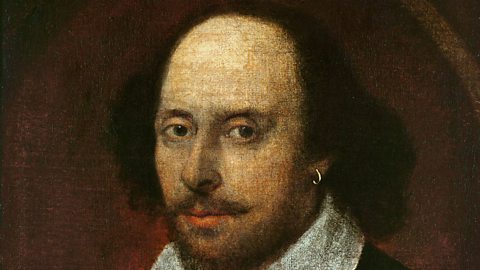
Shakespeare's life, work and legacy. collection
A collection of interactive articles exploring the life, work and legacy of the Bard.
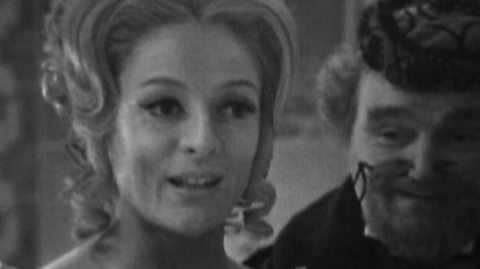
Much Ado About Nothing starring Maggie Smith (1967) video
Watch an extract from the earliest UK TV broadcast of Shakespeare's Much Ado About Nothing, starring Maggie Smith.
Classic Stories. audio
A classic story in English: William Shakespeare's Much Ado About Nothing.
Shakespeare on the BBC. collection
Find out how to watch, listen to and learn about William Shakespeare's works across the BBC.
Shakespeare Lives. collection
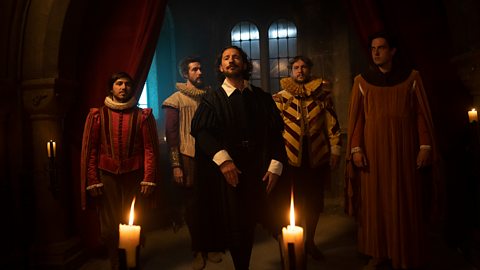
Shakespeare Lives marks the 400th anniversary of the death of William Shakespeare.
More on Much Ado About Nothing
Find out more by working through a topic
- count2 of 5
- count3 of 5
- count4 of 5
- count5 of 5

