Applicable context for Shakespeare's Much Ado About Nothing
Remember – context is important but don’t use too much!
A few small and relevant references used to support your points about the play are far better than huge chunks of unrelated information – even if the information is interesting.

Elizabethan society
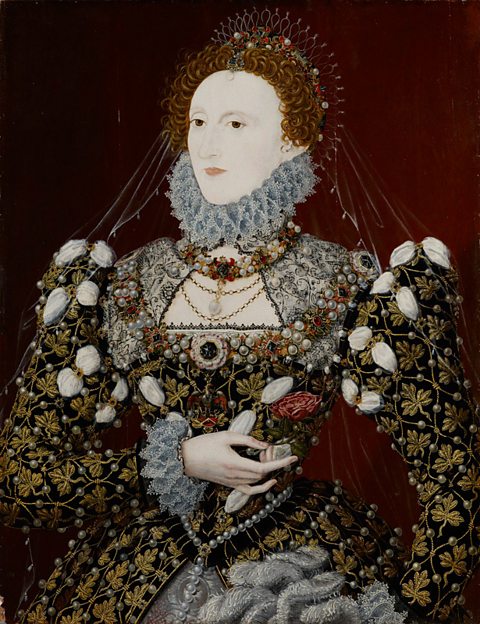 Image source, National Portrait Gallery, London
The English monarchy had experienced a good deal of political turmoil in the years preceding the reign of Queen Elizabeth, and even during the early years of her power: there were challenges to the throne and schemes to overthrow her as queen, as well as war and constitutional issues surrounding religion. By the late 1500s Elizabeth had largely proven herself to be a capable ruler and brought a degree of stability to the country, disproving the doubts of those who felt a woman could not rule. Elizabeth famously resisted marriage in favour of retaining her own autonomy; the fact she was known for this may have helped pave the way for audiences to feel positively about an outspoken and unusual female character like Beatrice, who did not seem to need or want a husband.
Following the Middle Ages, the A period in European history from 1300-1600 which saw new scientific discoveries and the creation of great art. (French for ‘rebirth’) had begun in Europe in the 14th century and brought renewed emphasis on learning, art and culture. It influenced the works of English playwrights like Shakespeare who often used stories from Greece and Italy to inform their works, but it also informed society’s philosophical ideas. While there was still a rigid class hierarchy in English society (citizens could be arrested for wearing clothing that suggested they were of a higher social class than they actually were, for example), Renaissance ideals meant greater emphasis on the individual and on the importance of their freedom to think and act for themselves.
Beatrice and Benedick represent some of these ideals in how they do not conform to society’s ideas of traditional courtship and marriage for the sake of family alliances and social status. Their rejections of marriage may be overturned by the end of the play, but there is little doubt that they are marrying for the sake of their feelings for each other, not because they have to. Benedick’s loyalty to Beatrice and her reliance on him to challenge Claudio show both characters have gained some personal growth and imply their love is realistic, pragmatic and based on respect, promising to give both the space to be their individual selves within a marriage.
Image source, National Portrait Gallery, LondonIllegitimacy
There was a common belief in The 'Golden Age' of the reign of Queen Elizabeth 1st in Britain from 1558-1603. England that those born out of wedlock, as Don John is, were naturally inclined to be evil. A son born to unwed parents faced immediate barriers to being accepted in society and was often prevented from inheriting wealth, titles or property from their father. Many Renaissance plays use a villain of A child born to parents who are not lawfully married. birth as the main A character who creates conflict with the main character. – Shakespeare himself uses it in King Lear with the character of Edmund, who resents being treated as a lesser being because of his illegitimacy; he manipulates others to improve his own social standing and get revenge on his brother and father.
Don John in Much Ado About Nothing is similarly bitter about his situation and this motivates him to attempt to ruin the potential happiness of Claudio and Hero; he notes his particular dislike of Claudio, who is young and in favour after his conduct in the war, and this suggests he is jealous of him.
Patriarchy and gender roles
Renaissance England was a A society in which men hold the power and control. society in which men held the positions of power and women were considered little more than their father’s or husband’s property. Traditional gender roles demanded Refraining from all sexual intercourse. and modesty from women, while men were allowed more freedom. Benedick boasts of his popularity with women, for example, when no woman would have been permitted to engage in casual relationships with men, or even to openly imply that men found her attractive, without bringing dishonour on herself and her family.
Marriage was important not only to preserve the ‘honour’ of a woman (who would have been expected to keep her virginity until marriage) but also to forge a connection between two families of equal wealth and status – a ‘good’ marriage meant family fortunes and titles were preserved and consolidated. It could even provide business opportunities or a rise in social status and these were considered the important factors in a marriage – not love between individuals.
Hero and Beatrice are contrasting characters – Hero is A lack of action or resistance. A passive person allows events to happen instead of taking control. and obedient, as an ideal Elizabethan woman was supposed to be. Beatrice, on the other hand, is strong‑willed and outspoken. Her wit can both charm and offend people, and she uses it to deflect the idea that she should be a wife to anyone. She is of noble birth and doesn’t seem to need to marry for the sake of her financial wellbeing, so her intention to never rely on a man seems like a valid future for her.
However, her rage at the treatment of her cousin and her desperation for revenge on Claudio for destroying Hero’s reputation show the imbalance of power between men and women. She laments that she is not a man and cannot fight Claudio herself for ruining Hero’s honour, and this illustrates how powerless women could be, even in the face of a false accusation.
Further study
The study of Shakespeare, controlled assessment guidance. activity
Unit 3 of the CCEA GCSE English Literature qualification is a controlled assessment unit based on the study of a play by William Shakespeare.
Shakespeare's life, work and legacy. collection
A collection of interactive articles exploring the life, work and legacy of the Bard.
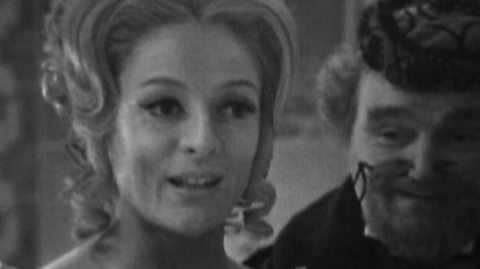
Much Ado About Nothing starring Maggie Smith (1967) video
Watch an extract from the earliest UK TV broadcast of Shakespeare's Much Ado About Nothing, starring Maggie Smith.
Shakespeare on the BBC. collection
Find out how to watch, listen to and learn about William Shakespeare's works across the BBC.
Classic Stories. audio
A classic story in English: William Shakespeare's Much Ado About Nothing.
Shakespeare Lives. collection
Shakespeare Lives marks the 400th anniversary of the death of William Shakespeare.
More on Much Ado About Nothing
Find out more by working through a topic
- count5 of 5

- count1 of 5
- count2 of 5
- count3 of 5