The form of William Shakespeare's Much Ado About Nothing
Comedy in Shakespeare’s time was something more like a modern audience’s understanding of a rom-com, or romantic comedy – it mostly revolved around love and marriage, with the main characters getting married or at least engaged by the end.
There would also be obstacles stopping the The chief character in a novel, film or play. from being together easily; very often these were overblown misunderstandings or mistaken identities. The mistaken identity in Much Ado About Nothing (when Margaret is said to be Hero) is caused by an intentional plot to cause harm; this and the dramatic fallout of the accusations against Hero mean that at times, the play borders on being a A type of drama in which characters undergo suffering or calamity and which usually ends with a death. A sad or catastrophic event causing suffering or death., with serious consequences. However, since no deaths occur and the mistakes are put right at the end, Much Ado About Nothing remains a comedy, even if modern audiences may not find the humour as readily as an The 'Golden Age' of the reign of Queen Elizabeth 1st in Britain from 1558-1603. audience might.
The A play on words, relying on similar sounding words or two meanings of one word. and comical wordplay used by various characters are another feature of comedy plays, as is the presence of at least one ‘fool’ or buffoon at whom the audience can laugh – in this case, Dogberry
The structure of William Shakespeare's Much Ado About Nothing
The play is divided into five In drama, an act is a section of the performance, usually made up of a number of scenes., although it is probable that Shakespeare himself didn’t organise it in this way for performance, and that editors imposed this The way the poet has organised the poem on the page eg number of stanzas, lines per stanza, breaks in between lines and stanzas. on the play when first publishing it.
It is worth noting the following aspects of structure which may bear some relevance to your Controlled Assessment topic:
- The structure is fairly standard for a Shakespearean comedy, starting with The part of a narrative that sets the scene for the audience, for example giving the backstory of the characters or information about the setting.introducing the main characters and situation; rising action taking in the plots to foil Claudio’s marriage and to make Beatrice and Benedick fall in love; the dramatic climax in which Hero is falsely accused at the altar; the falling action in which the ending is set up by the secret of Hero’s survival and the arrests and confessions of the villains who acted against her; and the Check your connection, refresh the page and try again.or resolution, which restores everything back to order and brings forth a happy ending.
- While a tragedy would often focus on a singular tragic hero, comedies tended to have multiple characters that could allow more than one love relationship to be portrayed. The conventional courtship and accepted gender roles of Claudio and Hero stand in contrast to the more unruly characters of Beatrice and Benedick, and their unusual relationship and path to marriage. This not only makes the plot more detailed and interesting for the audience, but means Shakespeare can offer some insight into what society does, or maybe should, value in romantic relationships.
The language and dramatic methods in Much Ado About Nothing
You will need to comment on language and dramatic methods in your Controlled Assessment, and analyse how and why they are used. You will need to consider your topic carefully and analyse the scenes most relevant to that topic.
Below are some more general ideas to help you write meaningfully about the use of language in the play.
Language structure in Much Ado About Nothing – rhythms and rhyme
The structure of the language simply refers to the different types of speech used for different characters. The lines of most significant Shakespearean characters were usually composed in Lines in a poem that don't rhyme, usually in iambic pentameter - five two-syllable feet per line. – unrhymed One ‘iamb’ is a two-beat combination: an unstressed syllable followed by a stressed (emphasised) syllable, making a ‘da-DUM’ pattern, like a heartbeat. Pentameter means five of these two-beat units per line, making ten syllables altogether. You may be familiar with iambic pentameter from poetry as it is a commonly used poetic metre (arrangement of rhythmic beats). One ‘iamb’ is a two-beat combination: an unstressed syllable followed by a stressed (emphasised) syllable, making a ‘da-DUM’ pattern, like a heartbeat. Pentameter means five of these two-beat units per line, making ten syllables altogether.
Claudio uses blank verse in Act 1 Scene 1 when he first talks of his feelings for Hero:
| I looked | u-pon | her with | a sold- | -ier’seye |
| da-DUM | da-DUM | da-DUM | da-DUM | da-DUM |
Blank verse was generally used to show a character of importance and worth, and here it is used to show how struck Claudio is by Hero’s beauty – the sight of her is enough to change his speech into the rhythm of a love poem. It may also signal his intention to woo her conventionally.
However, Much Ado About Nothing is unusual in that most of it is actually written in prose – unarranged or disorganised rhythms, like normal speech. Characters in the play rarely use blank verse, even in important moments and even if they are of noble status – this is unusual and significant. Shakespeare could have used prose for most of the play because:
- He wanted the language use to seem more free and less constrained than blank verse, reflecting the end of a serious war and a time of more light-hearted relationships.
- He wanted less of a contrast between the noble or high-born characters and the ‘ordinary’ people like Margaret or Conrade when speaking.
- The earthy and unromantic behaviour of many of the characters, including Beatrice and Benedick themselves at many moments, is better suited to straightforward speech to show it is not intended to seem idealistic, dreamy or noble.
- He wanted to be free to explore A play on words, relying on similar sounding words or two meanings of one word. and wordplay throughout, since double meanings and battling wits are a key part of the play and its language – sticking to blank verse would have made this much harder and less playful.
Shakespeare’s extensive use of prose in Much Ado About Nothing:
- Allows characters like Benedick and Beatrice to wittily bounce answers off each other’s comments, displaying their ongoing ‘battle of wits’ and Quick, clever conversation where people respond sharply to one another..
- Shows that Beatrice and Benedick do not quite conform to the normal social expectations of their noble characters in the play’s time,
- Allows the soldiers to freely tease and banter with each other.
- Lets the characters muse more openly on the confusing or amusing aspects of love.
- Gives even characters like Dogberry the space to ramble comedically without the confinement of a set rhythmic structure.
Language techniques and dramatic methods in Much Ado About Nothing
Soliloquy
A A speech performed by a character, often depicting that person thinking or talking aloud to his or herself. is a speech given by a character which reveals their inner thoughts. It is usually done when the character is alone, or at least speaking in an ‘aside’ that is not overheard by other characters, meaning it is a way of the writer showing the truth of a situation from that character’s perspective. Characters in Much Ado About Nothing are not often seen alone and so they rarely use soliloquys, instead engaging in conversation with each other or delivering A poem in which the speaker addresses the reader directly. A dramatic monologue usually involves a fictional speaker who may not necessarily speak the views of the poet. (longer speeches given by a single character) that the whole group can hear. However, in a play like this, with its themes of love and outward appearance not always matching inner reality, there are some soliloquys that are important in enabling the audience to see what is really going on with the characters’ feelings and motivations. These are:
- Benedick’s contrasting soliloquys in Act 2 Scene 3; the first shows his contempt for people in love and lists the qualities a woman would need to have to make him fall for her; the second takes place after he overhears the discussion of Beatrice’s ‘affection’ for him and shows his changing feelings;
- Beatrice’s similar reaction to overhearing of Benedick’s ‘feelings’ for her in Act 3 Scene 1 – her soliloquy at the end of the scene is brief but shows her shock, her determination to be less abrasive to others and her resolve to love Benedick back.
While most of the play is written in prose, it is worth noting that Beatrice’s Act 3 Scene 1 soliloquy is in iambic pentameter (the heartbeat rhythm) and has a regular rhyme scheme – two A type of stanza - or a complete poem - consisting of four lines that have a rhyming scheme. (four‑line A grouped set of lines within a poem.) with alternating rhymes, and a In poetry, a pair of lines that rhyme and have the same length and metric pattern. at the end to round off the speech. This is almost the format of a A fourteen-line poem, usually with ten syllables in each line., the traditional love poem, and seems to suggest that her feelings for him have depth and truth; at the same time it is four lines shorter than a sonnet, maybe implying that she isn’t quite fully in love and ready to accept a relationship just yet.
Of the two characters, Benedick is the first to be tricked into believing he is secretly loved, and his soliloquys are both composed in prose, not blank verse. His reaction to the overheard conversation about Beatrice’s supposed love for him does not slip into a poetic rhythm, as hers does. This may show he is initially more surprised at the news, or perhaps less resolute than Beatrice in deciding to pursue the relationship. It could even be that his low opinion of love and marriage holds him back from immediately starting to use more elevated poetic and romantic language, even though he is excited by the idea that Beatrice loves him. It is worth remembering that while Claudio fulfils the ‘courtly ideal’ of a lover, Benedick is suspicious of courtship and by his own admission writes terrible poetry; his failure to succumb to poetic language could be a sign of his realistic, Dealing with things sensibly and realistically. love.
Wordplay
Much Ado About Nothing is full of A play on words, relying on similar sounding words or two meanings of one word., double meanings, An indirect hint at a hidden meaning that some characters understand while others do not, requiring the audience to infer the meaning for themselves. and other wordplay. Even the play’s title is a play on words itself: ‘nothing’ in Shakespeare’s time would have been pronounced ‘noting’, and the word ‘noting’ had several meanings depending on the context.
Balthasar uses puns about music notes and noting when he sings in Act 2 Scene 3; Beatrice and Benedick’s love is confirmed at the end by the notes containing bad poetry that they have written to each other. Some people even believe that ‘nothing’ was a Polite or neutral words or expressions used to refer to things which people may find upsetting or embarrassing to talk about. for female genitalia in The 'Golden Age' of the reign of Queen Elizabeth 1st in Britain from 1558-1603. times (although there isn’t a lot of evidence to confirm this), which would relate to the themes of love, marriage and virginity used in the play.
Much of the plot depends on characters ‘noting’ or witnessing others’ behaviour, such as Beatrice and Benedick overhearing conversations staged to gently deceive them, or Don John bringing Claudio and Don Pedro to see ‘Hero’ with a man. However, the main events of the play are actually ‘nothings’:
- Don Pedro does not really court Hero as Claudio fears;
- Hero does not really compromise her chastity before marriage;
- Hero does not really die;
- It can even be argued that Beatrice and Benedick do not really care for each other (although it is more likely they both had feelings but suppressed or disguised them, particularly since Beatrice alludes to an earlier dalliance between them in Act 2 Scene 1).
These ‘nothings’ create a great fuss (‘much ado’) and a lot of drama because characters ‘note’ or notice things in a way that is different from how they really are.
Aside from the title, almost every scene contains several instances of characters using wordplay and double meanings to tease one another, muse about love or hint at sexual attraction. Some of the main instances to note include:
- Beatrice and Benedick’s ongoing verbal A lively and competitive exchange, often verbal, involving argument, teasing, or wit. with each other, starting in Act 1 Scene 1 and diminishing in intensity as the play goes on.
- The additional wit of these characters outside of their interactions with one another. Benedick is known for amusing the others – Claudio begs him to cheer them up after his confrontation with Leonato in Act 5 Scene 1. Meanwhile, the visiting nobles are largely delighted with Beatrice’s quick wit, which often plays on what another character has just said, playfully distorting or exaggerating it.
- The banter between the soldiers in various scenes serves to reinforce both their masculinity and their friendships with one another. When Beatrice asks him to “kill Claudio”, Benedick challenges his friend, refuses to engage in any joking with Claudio and Don Pedro; this reinforces the idea that he truly loves Beatrice and is willing to put loyalty to her above the whims of his friends.
- Hero’s maid Margaret makes frequent earthy jokes about sex; Hero chastises her for it as they prepare for the wedding, and Benedick later gives up in the face of her relentless witty innuendo and acknowledges he cannot outsmart her.
- Dogberry and his The incorrect use of a word by mistake which sounds similar to the target word, often with humorous effect., wherein he accidentally replaces the word he means to say with a similar‑sounding but incorrect word; this creates many comical moments.
O villain! Thou wilt be condemned into everlasting redemption
Symbolism
The frequent references made by Benedick to bulls and their horns are A literary device where an object, person, place, or event represents something beyond its literal meaning. references to A man whose partner has been unfaithful. The term is often associated with jealousy or loss of status., a frequently used joke in Elizabethan comedy. The idea was that a man whose wife had affairs behind his back (a cuckold) would ‘grow horns’ that all could see but him, making him a figure of public shame and tarnishing his masculinity as someone who could not ‘control’ his own wife. The sheer number of references Benedick makes to this indicate that it was something he felt concerned about; his open avoidance of marriage seems linked to the genuine fear of being cheated on and ‘cuckolded’.
Likewise, the symbol of the bull recurs in the play, representing the brute strength of masculinity. In Act 1 Scene 1, Don Pedro says “In time the savage bull doth bear the yoke”, indicating that even a strong man will eventually give into the A metaphor is a word or a phrase used for dramatic effect, to describe something as if it were something else. yoke of marriage even though it is a burden and a constraint on his freedom. Benedick immediately resists this, indicating that he will never agree to have his freedom curtailed and his strength taken away. Beatrice unknowingly echoes this imagery in Act 2 Scene 1, referring to a “curst cow”. At the end of the play, Claudio calls back to this image of the “savage bull” but notes that the horns of the bull would be “tipped with gold” and likening it to the Roman god Jove, who transformed himself into a bull to seduce a woman – the imagery becomes less insulting and more noble, implying that love and marriage are not the shameful things Benedick feared.
Too curst is more than curst. I shall lessen God’s
sending that way, for it is said “God sends a curst cow
short horns,” but to a cow too curst, he sends none.
Beards are another symbol in the play – a beard signified maturity and masculinity. Beatrice notes how she would hate to have a husband with a beard, but also how a man without a beard is not a real man – her rejection of beards represents her rejection of men in general. When challenging Claudio to a duel, Benedick calls him “Lord Lackbeard” as an insult, implying he is immature and insufficiently manly, and yet before this he himself shaves off his beard when he decides to woo Beatrice – it isn’t clear whether he does this to be more in line with her preferences or as a sign that he is openly ‘giving in’ to the idea that love makes a man less manly and full of softer emotions.
Imagery of love as warfare
The “merry war” between Beatrice and Benedick plays as an amusing rivalry for the onlookers, but serves to shield them from their deeper feelings. Benedick complains that Beatrice’s mockery feels like “a whole army shooting at me” and that “She speaks poniards, and every word stabs”. The A recurring element or symbol in a text (or work of art), the repetition of which contributes to establishing a theme. goes beyond just those characters, however. Claudio notes he did not previously care for Hero because before, he saw her only “with a soldier’s eye”, implying that a mind fixed on war cannot find room to love. The fact they are now home from the battle and were on the winning side means he is free to pursue a relationship.
This also implies that to him, love and war are two separate things, whereas for Beatrice and Benedick they are very much entangled with each other. Don Pedro was victorious in war and considers himself a good strategist; he approaches love as a military campaign when he strategises a plan with the others to make Beatrice and Benedick fall in love.
Test your knowledge of Much Ado About Nothing
Further study
The study of Shakespeare, controlled assessment guidance. activity
Unit 3 of the CCEA GCSE English Literature qualification is a controlled assessment unit based on the study of a play by William Shakespeare.
Shakespeare Lives. collection
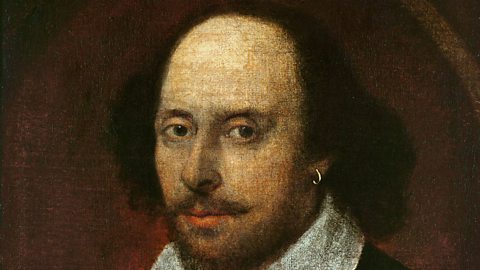
Shakespeare Lives marks the 400th anniversary of the death of William Shakespeare.
Shakespeare on the BBC. collection
Find out how to watch, listen to and learn about William Shakespeare's works across the BBC.
Classic Stories. audio
A classic story in English: William Shakespeare's Much Ado About Nothing.
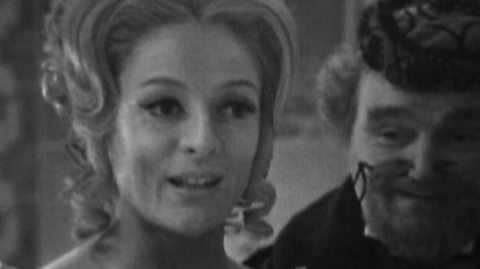
Much Ado About Nothing starring Maggie Smith (1967) video
Watch an extract from the earliest UK TV broadcast of Shakespeare's Much Ado About Nothing, starring Maggie Smith.
Shakespeare's life, work and legacy. collection
A collection of interactive articles exploring the life, work and legacy of the Bard.
More on Much Ado About Nothing
Find out more by working through a topic
- count4 of 5
- count5 of 5

- count1 of 5
- count2 of 5