The controlled assessment
The controlled assessment theme for Unit 3: The Study of Shakespeare changes every year. Current themes can be found on the CCEA website. Recent examples of themes for study have included forgiveness, ambition, and power – the topic will be general enough to apply to a wide range of Shakespeare plays.
The choice of play and the specific wording of the question you will answer is up to your class teacher.
Questions can be left fairly open regarding the theme, such as:
- Examine the way Shakespeare presents the theme of loyalty in Much Ado About Nothing.
Alternatively, the theme may be explored through a more specific focus, for example:
- Whose relationship is more loving: Claudio and Hero’s, or Beatrice and Benedick’s?
The following essay questions are examples that not only touch on relevant themes/potential controlled assessment topics, but also try to frame the focus in a way that makes for an interesting argument in your essay.
Consider how you might answer the following theme-based questions about Much Ado About Nothing:
- Is deceit always a destructive force in Much Ado About Nothing?
- How does Shakespeare use language structure and word-play to comment on events in Much Ado About Nothing?
- Examine how Shakespeare presents friendship in Much Ado About Nothing.
- In what ways does perception differ from reality in Much Ado About Nothing, and what are the consequences of these differences?
- In what ways are the characters victims of social norms in Much Ado About Nothing?
- Analyse how Shakespeare presents masculinity in Much Ado About Nothing with reference to the characters of Benedick, Claudio and Leonato.
For further information about the controlled assessment unit itself, look at The study of Shakespeare, controlled assessment guidance.
Example essay
Here are the opening paragraphs of an example essay written in answer to the question:
Whose relationship is more loving – Claudio and Hero’s, or Beatrice and Benedick’s?
Read carefully and note how the writer of the piece:
- Demonstrates their knowledge of the overall play
- Incorporates small amounts of relevant context
- Proposes an answer to the question – Beatrice and Benedick – which they then consistently support throughout the essay with relevant points and evidence
Be aware that there is no ‘correct’ answer to the question – the writer’s argument here is based on the evidence they have analysed, and would be judged on how well they seem to have argued their point and weighed up their conclusions.
Q: Whose relationship is more loving: Claudio and Hero’s, or Beatrice and Benedick’s?
A: Shakespeare’s Much Ado About Nothing is a comedy, a genre which usually contained a wedding at the end. In this play, the wedding is intended to be between returned soldier Claudio and Hero, the daughter of the Governor of Messina, but is joined by a second couple intending to wed: Benedick, another soldier, and Beatrice, Hero’s cousin. These two couples represent two very different ideas of love – Claudio and Hero are more traditional and conform to society’s accepted methods of courtship, while Beatrice and Benedick embody a ‘love‑hate’ relationship that goes against society’s ideals in some ways. The events which take place in the course of the play may lead both couples to marriage, but arguably it is Beatrice and Benedick, the unconventional couple, who display a more genuinely loving relationship.
While Claudio and Hero have met before, he is struck by her beauty when they meet again in Act 1, Scene 1; he uses the metaphor of a “jewel” to compare her to something precious and valuable, and declares his intention to pursue her based only on having seen her. This remote infatuation was a feature of courtly love, in which a male suitor would idealise and revere the beauty of a woman from afar without actually knowing her. In keeping with tradition, Claudio then allows the prince, Don Pedro, to ‘woo’ Hero for him rather than speaking to her himself; this complied with social protocol but could not be said to indicate a genuinely loving relationship based on getting to know the other person.
At the time, marriage was considered more of a contract between families than a structure based on love, and was meant to enable people of noble status to maintain their families’ wealth and social standing. Claudio is a suitable husband for Hero in this respect, being sufficiently high‑born and well‑regarded to justify the relationship, but his will to marry her is based on little more than her appearance, suggesting this is not a truly loving relationship.
Benedick and Beatrice have also met before; they are not only known for the “merry war” of wits between them in which they openly mock and insult each other, but it is suggested they also previously had some kind of relationship. Beatrice says “I know you of old” to Benedick in Act 1, Scene 1, and there seems to be a good deal of familiarity between them alongside their apparent mutual contempt. They certainly do not idealise one another; this would suggest that when they do get together towards the end of the play, their relationship is more grounded in reality. They are greatly aware of each others’ flaws but have found they care for each other anyway, suggesting a more loving and respectful relationship than one based on remote courtship and familial permission to marry.
When Benedick has realised his feelings, he approaches Beatrice himself without holding back, telling her outright: “I do love nothing in the world so well as you – is not that strange?” This clear communication would seem to be the basis for a more loving relationship than that of Claudio and Hero, who have barely spoken to each other when their marriage is agreed.
This essay could then go on to:
- Analyse the patriarchal gender roles imposed on women at the time of the play, showing how Hero conforms to the ideal of an Elizabethan woman but rarely speaks of her feelings, and how she would be expected to comply with her father’s wishes and marry a man he thought suitable rather than someone she was attracted to. This could be contrasted with Beatrice, who feels free to speak her mind and rejects the idea of marriage outright.
- Contrast the behaviours of Claudio and Benedick towards the women they claim to love. Claudio admires Hero from afar, does not woo her himself, is easily convinced of her infidelity and publicly shames her. Benedick, on the other hand, decides he cannot let ‘lovestruck’ Beatrice suffer when he hears of her ‘feelings’, takes her side over that of his friends and shows other measures of care and concern.
- Examine the quickness with which both Beatrice and Benedick go from ‘hating’ each other to seemingly falling in love, suggesting they perhaps had feelings for one another all along. This should include analysis of their less insulting references to each other in the play – for example, Benedick implying in Act 1, Scene 1 that Beatrice is more beautiful than Hero. It should also mention their previous unspecified romantic relationship, in which Beatrice claimed she gave him “a double heart for his single one”, perhaps meaning that she cared more about him than he about her.
- Look at a possible counterargument – for example, that Beatrice and Benedick are merely tricked by their friends and it is unrealistic to think this could lead to real love – and think of ways to argue against it, such as pointing out their previous relationship and suggesting the trickery rekindled feelings that were already present.
Further study
The study of Shakespeare, controlled assessment guidance. activity
Unit 3 of the CCEA GCSE English Literature qualification is a controlled assessment unit based on the study of a play by William Shakespeare.

Shakespeare Lives. collection
Shakespeare Lives marks the 400th anniversary of the death of William Shakespeare.

Shakespeare on the BBC. collection
Find out how to watch, listen to and learn about William Shakespeare's works across the BBC.
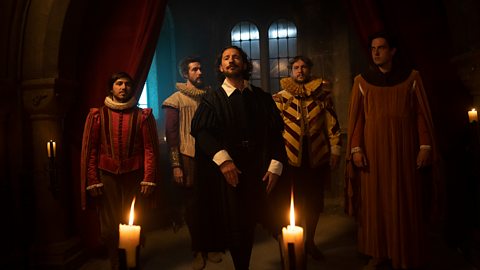
Classic Stories. audio
A classic story in English: William Shakespeare's Much Ado About Nothing.
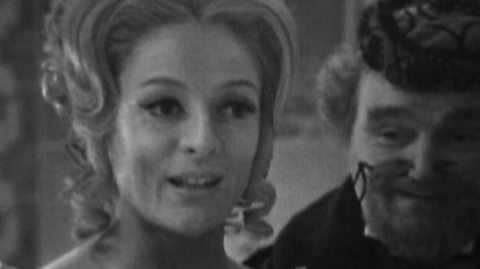
Much Ado About Nothing starring Maggie Smith (1967) video
Watch an extract from the earliest UK TV broadcast of Shakespeare's Much Ado About Nothing, starring Maggie Smith.
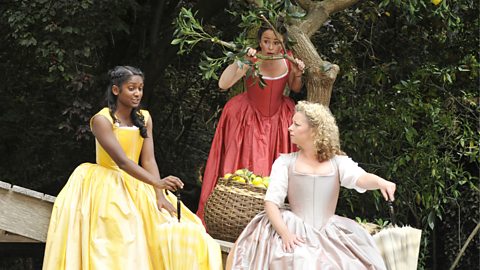
Shakespeare's life, work and legacy. collection
A collection of interactive articles exploring the life, work and legacy of the Bard.

More on Much Ado About Nothing
Find out more by working through a topic
- count1 of 5
- count2 of 5
- count3 of 5
- count4 of 5