Causes of social and economic inequality
Quick version
- Long-term unemployment is a major driver of inequality.
- Benefits are often too low to lift recipients above the poverty line.
- Despite minimum wage laws, certain sectors work pay wages that are insufficient to live above the poverty line.
- A higher Real Living Wage would help workers in low-income jobs better meet basic needs.
- Higher qualifications are typically linked to better-paying jobs.
- The Scottish Attainment Challenge (SAC) and Pupil Equity Fund (PEF) work to improve educational outcomes giving students a stronger foundation to break the cycle of poverty.
Learn in more depth
Keep going to learn:
- The causes of social and economic inequality
- The consequences of long-term unemployment
- What is low income level?
- How low educational attainment levels affect income
- How is the Scottish Government addressing educational attainment?
Then test how much you have learned.
What causes social and economic inequality?
There are many causes of social and economic inequality such as unemployment, low pay, lack of education, homelessness and social class.
Long-term unemployment
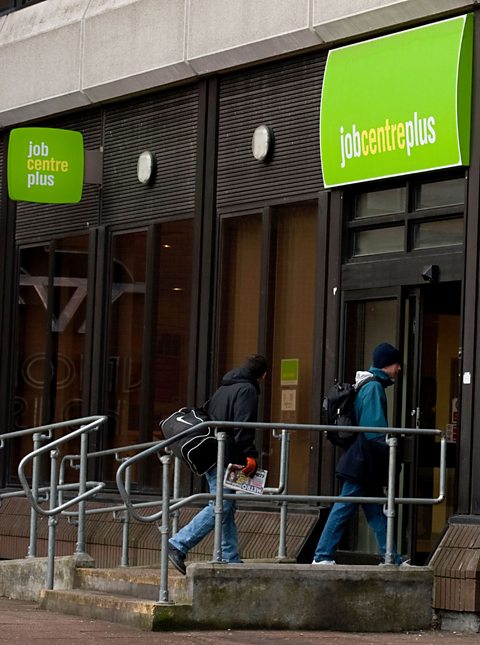
One cause of social and economic inequality is long-term unemployment.
To be counted as unemployed in the UK, a person must be capable of work, actively seeking work and available to work. Unemployed people register online or they can call Jobcentre Plus.
A person who lives on benefits will most likely have a low income.
The 2026-27 Universal Credit monthly allowances:
- single person under 25 years - £338.58
- those over 25 years - £424.90
- joint claimants both aged under 25 - £528.34
- joint claimants both aged 25 and over - £666.97
(Source: House of Commons Library)
Although unemployed people may be entitled to other support such as Council Tax rebate, benefit payments are very low compared to what anti-poverty campaign groups such as the Joseph Rowntree Foundation (JRF) would argue is needed for someone to avoid living in poverty.
If someone is unemployed long term, perhaps for over 12 months, they may find that they experience multiple problems. For example, long term unemployment can affect a person's mental health, confidence and self-esteem. It can also lead to debt, an unhealthy diet and poor physical health.
Low income level
The National Living Wage (NLW) is the minimum pay workers must receive by law. The current rate, since April 2026, is £12.71 per hour.
Workers who are under the age of 21 are entitled to the National Minimum Wage (NMW). The wage rate per hour depends on their age and if they are an apprentice.
(Source: Gov.uk)
| Age | Rate from April 2025 | Rate from April 2026 |
|---|---|---|
| 21 and over | £12.21 | £12.71 |
| 18 - 20 | £10.00 | £10.85 |
| Under 18 | £7.55 | £8.00 |
| Apprentice | £7.55 | £8.00 |
(Source: Gov.uk)
 Image source, DGLimages / Getty Images
Despite the NLW/NMW, many jobs such as catering, cleaning and care sector jobs, are low paid. People working in these types of jobs on the NLW/NMW often don’t earn enough money to make ends meet.
They are said to experience “in-work poverty” as their income is not high enough to lift them out of poverty.
The real Living Wage is based on what it actually costs to live. In June 2026, the real Living Wage was £13.45. It is a voluntary rate with more than 16,000 businesses in the UK choose to pay it.
In some ways, it’s harder to be low paid than unemployed, as the person may not be entitled to the same benefits the unemployed are. One in seven referrals to Trussell Trust foodbanks are for people who are in employment – mostly part time.
Image source, DGLimages / Getty ImagesLow educational attainment
 Image source, JOHN BRACEGIRDLE / Alamy
 Educational qualifications are one of the main ways in which people can gain well-paid employment.
In Scotland, like most countries, higher levels of education usually lead to higher wage levels. As the economy becomes more technologically based, the well-paid jobs in society are increasingly only open to those with relevant skills and good qualifications.
On the other hand, those with few or no educational qualifications or skills often find themselves struggling to access well-paid jobs or employment.
According to a UK Government report, university graduates earned £10,500 per year more than those who didn’t go to university in 2023.
Image source, JOHN BRACEGIRDLE / Alamy How is the Scottish Government addressing educational attainment?
Scottish Attainment Challenge (SAC)
In 2015, the Scottish Government launched the Scottish Attainment Challenge (SAC).
This was a multi-million-pound initiative designed to help close the gap found between the educational achievements of children in wealthier areas and those in more deprived areas.
In 2022, the SAC was refreshed with plans to provide additional funding to 2025-26.
Pupil Equity Fund (PEF)
The Scottish Government funds as part of the SAC several education support initiatives, including the Pupil Equity Fund (PEF). PEF support is designed to ensure pupils from the most deprived backgrounds do not face barriers to their learning because of cost.
Across Scotland, PEF has been used to support breakfast clubs, provide money for equipment or allow pupils to attend out-of-school events that would normally cost them to attend.
Quiz
Recap what you have learned
Unemployment and benefits:
- Unemployment is a key factor in inequality, especially when it’s long-term.
- People on benefits often receive very low incomes, not enough to lift them above the poverty line.
- Long-term unemployment can lead to issues like poor mental health and debt.
Low income and in-work poverty:
- Many jobs pay too little for workers to escape poverty, especially in fields like catering, caring and the cleaning sector.
- Many low-paid workers experience in-work poverty and sometimes need to use food banks. Campaigns have called for a higher Real Living Wage to address this.
Educational attainment:
- Higher education is often linked to higher earnings, but those with fewer qualifications struggle to access well-paid jobs.
- In Scotland, the government introduced initiatives like the Scottish Attainment Challenge (SAC) and Pupil Equity Fund (PEF) to help improve educational outcomes for students from deprived backgrounds, aiming to break the cycle of poverty through education support like breakfast clubs and equipment funding.
More on Inequality
Find out more by working through a topic
- count4 of 9

- count6 of 9
- count7 of 9