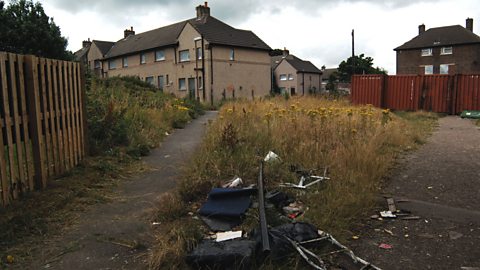
What is UK and Scottish Government welfare support?
Quick version
In Scotland, social security benefits are split between reserved (the UK Parliament) and devolved (Scottish Parliament) systems.
Reserved benefits are paid via the Department for Work and Pensions and include:
- Child Benefit
- Universal Credit (UC)
- Jobseeker’s Allowance
- State Pension
- Housing Benefit
Devolved benefits are paid by Social Security Scotland and include:
- Scottish Child Payment
- Best Start Grant
- NHS
- Pension Age Disability Payment
- Carer Support Payment
Learn in more depth
Keep going to learn:
- What are social security benefits and who provides them?
- Different Scottish and UK approaches to social security benefits
- Other ways people are supported in Scotland and the UK
Then test how much you have learned.
Social security benefits
In Scotland, social security benefits are paid by either the Department for Work and Pensions or Social Security Scotland.
Department of Work and Pensions (DWP)
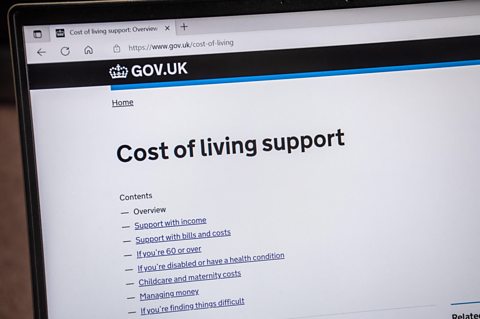 Image source, Gillian Pullinger / Alamy
 Child Benefit:
- A weekly benefit of £27.05 (first child) or £17.90 (additional child).
- Paid to the person responsible for that child.
- Children may also qualify for Child Benefit if they are under 20 and they stay in approved education or training.
Universal Credit (UC):
- A payment to help with living costs including food, heating and housing.
- Available to some people if they are on a low income.
- UC is £338.58 per month for a single person under 25 years and £424.90 per month for a single person over 25 years. - People living as couples and both are under 25 would receive £528.34.
- Those living as a couple where either is over 25 would receive £666.97.
Jobseekers Allowance:
- A benefit to support people who are out of work and actively searching for employment.
- It pays up to £95.55 per week for those aged 25 and above, and £75.65 per week for those under 25.
- Payments are available for up to 182 days (around six months).
State Pension (or New State Pension):
- A weekly payment of £241.30 to those who have reached retirement age (2026/27).
- Pensioners (and other groups) may also qualify for additional support such as Pension Credit – a top-up benefit where a pensioner’s total income falls below a certain level.
There are a wide range of other benefits available to those in need in society. The UK Government reported it would likely spend £333.7 billion on social protection in 2025/26.
All rates 2025/26 unless stated.
Image source, Gillian Pullinger / Alamy Social Security Scotland
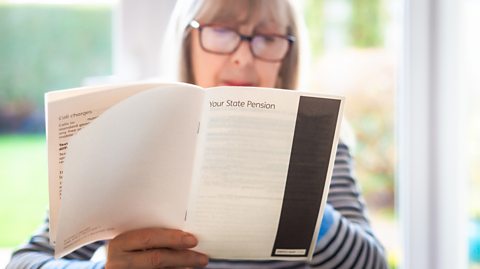 Image source, coldsnowstorm / Getty Images
The Scotland Act 2016, means the Scottish Government is able to make additional social security payments via Social Security Scotland.
Benefits for young people and families include (all rates for 2025/2026):
- Scottish Child Payment:
- a weekly payment of £28.20 to help towards the costs of looking after each child under 16 for families who get certain benefits.
- A range of Best Start grants e.g. Pregnancy and Baby Payment:
- a one off payment of up to £796.65 for a first child and £398.35 for a second or later child
- Bereavement Support Payment:
- financial support to those who qualify when someone dies in the family.
Other Social Security Scotland benefits include:
- disability benefits (Adult Disability Payment and Child Disability Payment)
- carer benefits (Carer Support Payment and Young Carer Grant)
- heating benefits (Child Winter Heating Payment and Winter Heating Payment.
The Scottish Welfare Fund provides financial support in non-repayable grants to people who are vulnerable and facing an emergency, disaster, or difficulty living independently.
There are two funds:
- Crisis Grants which helps with unexpected emergencies.
- Community Care Grants which provides financial support for people who care for others.
Finally, young people under the age of 22 years and people over 60 years are entitled to free bus travel in Scotland.
Image source, coldsnowstorm / Getty ImagesUK and Scottish approaches to social security benefits
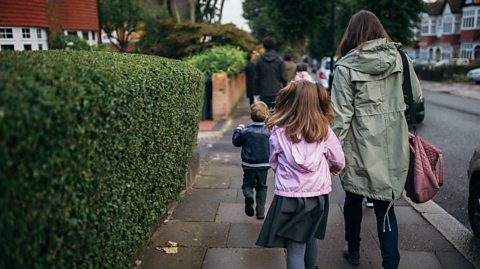 Image source, supersizer / Getty Images
From April 2026, the Labour government introduced welfare reforms designed to encourage more people into employment by reducing incentives that can discourage work.
The changes include expanded voluntary employment support and a lower Universal Credit health element (payment) for new claimants, except those with severe lifelong conditions or terminal illnesses.
The two-child limit on Universal Credit, introduced in 2017, was ended on April 6, 2026. According to the Institute for Fiscal Studies, this will pull 540,000 children over the absolute poverty line. This would be at an eventual cost of £2.5 billion per year.
Governments can take measures besides welfare to help people who are facing financial issues. In summer 2026, Prime Minister Andy Burnham has introduced a number of measures that aim to ease cost of living pressures. These include new ‘easy to cancel’ subscription rules to protect consumers from paying for subscriptions they do not use, and reducing or capping the price of single bus fares in England to £2 from January 2027.
(Source: Gov.uk)
In Scotland, the SNP government has aimed to reduce social inequality, for example with the Scottish Child Payment introduced in 2021. This helps low-income families by providing a weekly payment (of £28.20 as of April 2026) for each child under 16 years. The Scottish Government introduced free bus travel schemes for older adults aged 60 and over, and eligible disabled individuals (since 2006) and young people under 22 (since January 2022).
There is a debate on what has been called the “welfare trap”. This is where people who are unemployed are encouraged to take up work but find that their income is lower if they move off benefits and into paid employment.
Critics of the welfare trap would like to see higher minimum rates of pay to ensure everyone taking up paid employment is better off in work.
Image source, supersizer / Getty ImagesNational Health Service (NHS)
One of the most important ways in which people are supported in the UK is through the National Health Service (NHS).
With a comprehensive range of services covering all aspects of health, the NHS is largely paid for from taxation and National Insurance.
Founded in 1948, the NHS continues to provide care for most people in the UK although there is a private healthcare sector in the UK. One in seven people in the UK used the private sector for healthcare for themselves or a household member in 2025.
(Source: YouGov)
Health is a devolved issue. In Scotland, healthcare is provided through NHS Scotland.
There are several differences between health and social care in Scotland and England (and Wales and Northern Ireland can be different again).
- Prescriptions are 100% free for everyone in Scotland
- NHS England charges a standard fee per item (except for some groups)
- Scotland provides free personal and nursing care for older people (based on a personal assessment)
- Personal and nursing care is means-tested in England, ie people who have a certain level of income or wealth pay for some or all of their costs.
The debate over the NHS
In 2024/25 the UK Government spent ££242 billion on health.
The Scottish Government spent £20.6 billion on health and social care in 2024/25. This was 37.5% of the overall Scottish budget.
However, with an ageing and growing population plus the increasing cost of attracting and retaining staff, healthcare funding repeatedly falls short of healthcare demand. In recent years, NHS waiting lists and waiting times for treatments have grown.
A range of NHS staff have also taken industrial action (strikes) over pay and conditions.
(Source: Office for National Statistics)
Housing
Decent, affordable housing is a basic requirement for everyone. As with healthcare and education, the Scottish government aims to reduce social inequality through investment in social housing (housing to support people who can’t afford to rent or buy a home on the open market).
In 2025/26, the Scottish Government allocated £768 million in the Affordable Housing Supply Programme to improve social housing in Scotland including building new houses and improving existing housing.
The 2026/27 Draft Scottish Budget includes an additional £158 million for the Affordable Housing Supply Programme, bringing the total investment to £926 million.
This forms part of a broader commitment of up to £4.9 billion over the next four years, including a record £4.1 billion in public sector funding, aimed at delivering 36,000 affordable homes.
(Source: Scottish Government)
Education
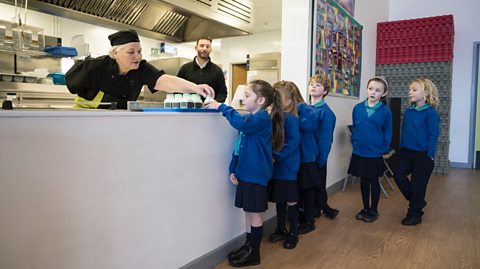 Image source, Johnny Greig / Getty Images
 There is also a range of support within schools to reduce social inequality. This support includes free school meals and school clothing grants.
Young people who stay in school beyond 16 years of age may be entitled to financial support through the Educational Maintenance Allowance (EMA).
Many schools also receive additional Scottish Government funding to reduce the impact of poverty on the school day i.e. to provide free financial support for school visits or to pay for cooking in Home Economics. This additional money for schools is known as Pupil Equity Funding or PEF.
Image source, Johnny Greig / Getty Images Scottish Attainment Challenge 2022 to 2026
The Scottish Attainment Challenge (SAC) is a programme designed to reduce the attainment gap between pupils from lower-income households and their peers.
The programme has received £1.75 billion in funding and was developed in partnership with the Convention of Scottish Local Authorities (COSLA).
The SAC includes:
- Pupil Equity Funding (PEF), £130 million allocated directly to headteachers across 97% of schools
- Strategic Equity Funding (SEF), £43 million distributed to all 32 local authorities based on the number of children from low-income households
- Care Experienced Children and Young People (CECYP) funding for those in, or with experience of, care
- National programmes supporting initiatives such as youth work and mentoring
In 2026/27, the Scottish Attainment Challenge (SAC) will receive up to £200 million for a further year, providing continued certainty of support for schools and local authorities.
(Source: Scottish Government)
Opportunities for All
Under Opportunities for All, every 16 to 19 year old in Scotland will be offered a learning or training place in education or a Modern Apprenticeship if they are not already in a job.
In 2025/26 the Scottish Government pledged to invest up to £198 million to provide around 25,500 new Modern Apprenticeships and support over 39,000 people already in training. It will also fund 5,000 new Foundation Apprenticeships and more than 1,200 new Graduate Apprenticeships.
The Education Maintenance Allowance provides financial support to those from lower income backgrounds to stay on at school or to take part in other personal development activities, such as employability programmes or Community Learning and development.
The £30 weekly payment to a young person is actioned by local authorities and colleges on behalf of the Scottish Government and is subject to and attendance and an agreed learning plan.
(Source: Scottish Government)
The Early Years Framework
It is now widely accepted that the first three years of a child's life are critical to its life-long development.
Therefore the government now tries to intervene early on with families where children are living in poverty and/or have parents with drug, alcohol or emotional issues.
The Scottish government approach focuses on the Early Years Framework.
A statutory framework that sets out the required standards for how those working directly to care for and educate children on a daily basis.
This policy is an attempt to veer away from a reactive, crisis management approach towards prevention, early identification and early intervention in the lives of vulnerable children.
Baby box
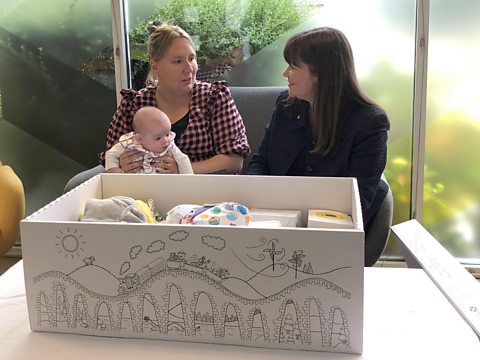 Image source, PA Images / Alamy
 Every newborn born in Scotland is entitled to a baby box which is full of essentials. The box also has a mattress, and sheets and can become a safe sleep space for a baby.
The box includes items such as: clothes, thermometers for the baby and the bath, books, and a comforter. Over 90% of parents who received one said it was working well.
Image source, PA Images / Alamy Quiz
Recap what you have learned
Some social security benefits are paid out by the UK government through the Department for Works and Pensions (DWP), whilst Scotland also provides additional benefits through Social Security Scotland.
Scotland’s approach centres on reducing social inequality, offering benefits which include:
- Scottish Child Payment
- Best Start Grant
- Pension Age Disability Payment
- Carer Support Payment
The UK’s approach has a focus on encouraging employment as a way out of poverty.
The UK's Department for Work and Pensions (DWP), support includes:
- Child Benefit
- Universal Credit (UC)
- Jobseeker’s Allowance
- State Pension
Additional support in Scotland includes:
- Healthcare (NHS): Largely funded by taxes, the NHS provides comprehensive healthcare but faces increasing funding challenges.
- Housing: Social housing to help improve living conditions and reduce inequality.
- Education: Offering support for low-income students which includes free meals, clothing grants, and Pupil Equity Funding for schools.
- Opportunities for All: Offers learning or training opportunities for 16- to 19-year-olds in Scotland.
- Early Years Framework: With a focus on early intervention for children from vulnerable families.
- The Baby Box which is provided to all newborns in Scotland to support early care and includes basic essentials for baby.
More on Inequality
Find out more by working through a topic
- count8 of 9

- count9 of 9
- count1 of 9