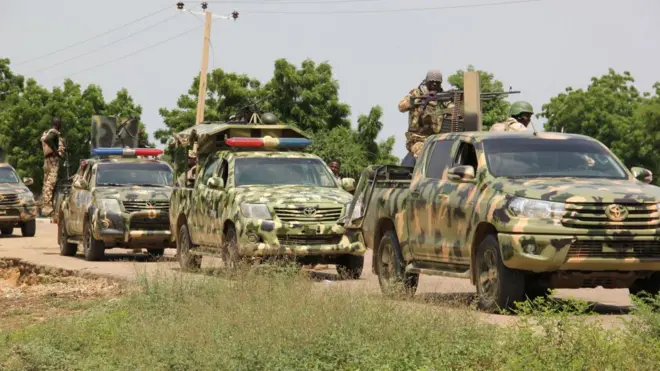
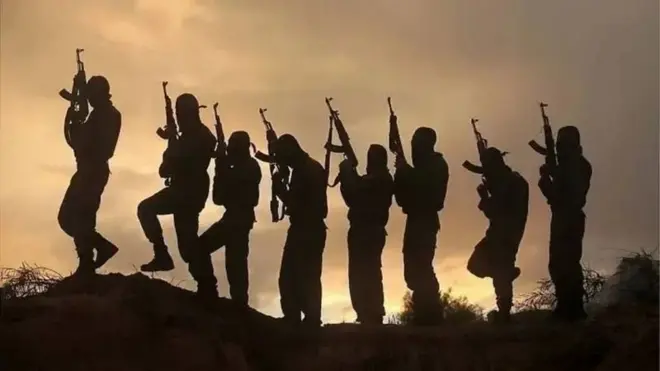
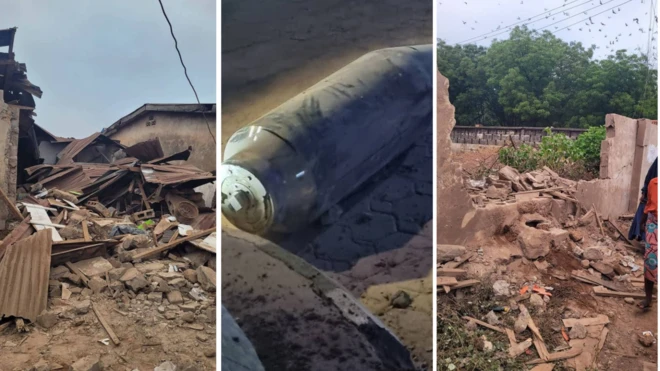
Wetin withdrawal of US sojas from Nigeria mean, and wetin go happun next?
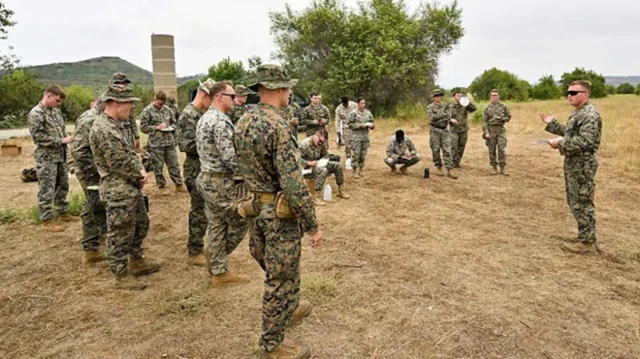
Wia dis foto come from, Getty Images
Di United States don withdraw most of di sojas wey dem send come Nigeria for one joint operation to fight terrorism for di Lake Chad basin, but dem say security partnership between di two kontris go still continue.
Earlier dis year, di United States announce say dem go deploy about 200 sojas come Nigeria to support di kontri fight against insurgents through training, intelligence sharing and military cooperation, while dem still make am clear say dia sojas no go join direct fighting.
As e dey tok to journalists on Thursday, di Commander of di United States Air Forces for Africa, General Dagvin Anderson, tok say di two kontris go continue to share intelligence and support operations against IS fighters.
E tok say di operation wey dem carry out for di Lake Chad region help scata IS networks beyond Nigeria, and e strengthen global efforts to fight di group.
Why US sojas dey comot for Nigeria?
Dis move dey come afta US President Donald Trump recently tok say di United States don address wetin e describe as di killings of Christians for Nigeria.
For im own side, General Anderson tok say, "We don withdraw most of di sojas wey we deploy specifically for dis mission, but we still dey continue di cooperation wey Nigeria request to make sure say intelligence sharing continue and say we get di understanding wey we need to carry out dis difficult operations."
Dis announcement dey come afta months of stronger military cooperation between di two kontris.
Nigerian and US officials tok say intelligence sharing help Nigerian sojas kill one of di top global IS leaders and more dan 200 jihadist fighters during joint air and ground operations for northeastern Nigeria.
General Anderson tok say di IS leadership for Nigeria don suffer serious damage, and claim say di group leadership structure for di kontri and dia global communication networks don scata, and reduce dia ability to communicate and carry out operations well.
E also add say di campaign don make more IS fighters surrender for northeastern Nigeria.
'Abu-Bilal al-Minuki killing na major achievement' - Analyst
Dr Audu Bulama Bukarti, security analyst on African affairs, tell BBC say e no believe say anybodi fit tok say di deployment of di sojas really worth am from Nigeria side.
E tok say, "Honestly, I tink say di sojas for stay much longer for Nigeria bicos dem tok say dem come help Nigeria fight Boko Haram. But as far as we know, di main tin wey dem do for di fight against Boko Haram na only one major operation, wey be di killing of Abu-Bilal al-Minuki togeda wit some of im close associates."
"Di killing of dose Boko Haram members na one major achievement and e be serious setback for di group," e tok.
Bukarti tok say, "We expect say dose American sojas go continue to carry out dis kain operations until Boko Haram don weak well bifor dem withdraw."
E tok say, "Honestly, from Nigeria side, you fit tok say e no completely worth am. But if dem bin remain until Boko Haram and di bandits don weak well, den you fit tok say e worth am."
"But from di American side, e worth am bicos from di time wey dem announce say dem dey come, we tok say na mainly political move by dia president to serve im own interest," e tok.
Di security expert tok say, "Now wey di American sojas dey leave Nigeria, wetin suppose happun be say di United States and Nigeria Western allies suppose sell Nigeria di equipment wey e need to fight terrorism. Also, if dem get any expertise wey Nigeria no get, dem suppose help."
Timeline of key achievements since US sojas enta Nigeria
Di operational lifecycle of di joint US-Nigeria counterterrorism deployment end for July 2026, marking well-organised, data-driven campaign against insurgent networks.
Most of di more dan 200 militants wey die happun during one major counterterrorism offensive wey start on May 15, 2026, for di North-East.
Dis joint operation include fast Special Forces raids and later airstrikes. By mid-May, local figures confam at least 175 militants dead, and di number later pass 200 as di operations end.
Di full timeline of di joint military movements, operations and strategic achievements:
10 June 2026 (Di 200+ militant milestone): US Africa Command (Africom) and Nigeria Defence Headquarters (DHQ) officially release figures wey confam say di wider multi-month offensive successfully kpai more dan 200 ISIS/ISWAP fighters and several key regional commanders, wit zero casualties on dia own side.
15 May 2026 (Operation Dawn Raid): Dem launch one carefully planned joint Special Forces operation for di Lake Chad Basin. Using advanced US tracking intelligence, di teams attack several high-value compounds, killing Abu-Bilal al-Minuki, di global second-in-command of ISIS.
16 February 2026 (Deployment Phase II): Anoda batch of about 100 tactical personnel arrive, bringing di total number of US military trainers and advisers for di North-East and North-West to 200.
3 February 2026 (Deployment Phase I): One advance advisory team of US military personnel land for Nigeria afta both kontris sign mutual security agreement. Dem come under non-combat mission to improve Nigeria surveillance and drone operations.
25 December 2025 (Initial Air Strike): US and Nigerian forces carry out precision airstrikes against two terrorist hideouts inside Bauni Forest for Tangaza Local Govment Area of Sokoto State. Di strike mark one major expansion of real-time combat intelligence sharing.