What are synonyms and antonyms?
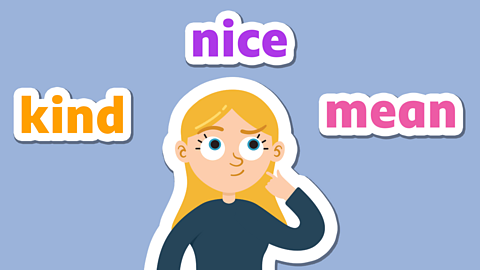
This page has been put together to help you practise and revisit some of the brilliant skills you’ve learned all through primary school.
It’s a great way to boost your confidence in English and get you ready for the exciting next step into Year 8!
Synonyms are words that have the same or similar meaning, while antonyms are words with opposite meanings.
By the end of this page, you’ll be ready to:
- identify synonyms and antonyms
- use them to make writing better and clearer
- learn new words to help with creative writing
Why are they important?
Using synonyms can make writing more interesting and help avoid repeating the same words.
Antonyms help show contrast and create variety in sentences.
Synonyms: choosing the right word
A synonym does not always mean exactly the same thing.
Many synonyms are similar but can have slightly different meanings.
Examples:
- A synonym for big is large.
- A synonym for smart is clever.
Using a range of synonyms helps to avoid repetition and makes writing more engaging.
Choosing the best word
In an English test you might be asked to choose the best synonym for a word within a sentence.
Example of extremely cold weather
The weather was ________.
cold
chilly
freezing
Freezing is the best choice if the sentence describes extremely cold weather.
This shows how meaning changes depending on the context.
Vocabulary for better writing
Some words are overused. Choosing better, more descriptive ones can make writing clearer and more interesting.
Look at the examples below. Can you think of any more?
| Common words | More ambitious synonyms |
|---|---|
| big | enormous, vast, gigantic, immense |
| nice | pleasant, delightful, enjoyable, lovely |
| said | whispered, replied, declared, shouted, muttered |
| went | travelled, rushed, wandered, marched |
Word Bank Challenge:
Rewrite each sentence using a stronger word from the bank:
- The man said he was tired.
- They went to the park.
- It was a nice day.
Caution: not all synonyms can be swapped
Although words may be related, they do not always fit every sentence.
Example:
- shouted and whispered both describe speaking, but they show very different tones.
Choose the best synonym
Select the word that best fits the sentence:
“Be quiet,” she __________ so nobody else could hear.
- shouted
- whispered
- yelled
“Be quiet,” she whispered so nobody else could hear.
Whispered is the correct choice because of the context.
Activity: Label the words - synonyms or antonyms
Top tip

Always read the whole sentence before choosing a synonym or antonym.
Ask yourself: Does this word fit the meaning, tone and context?
Quiz time!
Brain boost
Think about these questions to stretch your thinking and sharpen your skills!
Why do you think writers use synonyms instead of repeating the same word?
Can you think of an antonym for the word “happy” and use it in a sentence?
How can learning synonyms and antonyms help you become a better communicator?
Have a chat about your answers with a parent, teacher or your class.
More on Practise and revise KS2 English
Find out more by working through a topic
- count11 of 13
- count12 of 13
- count13 of 13
- count1 of 13