What is a writer's intention?
This page has been put together to help you practise and revisit some of the brilliant skills you’ve learned all through primary school.
It’s a great way to boost your confidence in English and get you ready for the exciting next step into Year 8!

A writer’s intention (sometimes called writer’s purpose) explains why a text has been written.
Writers usually write to entertain, inform, persuade or express feelings.
In a comprehension question you might be asked to identify a writer’s intention and to justify their choice using clues from the text.
As you move through this page, you’ll learn how to:
- understand the writer’s purpose
- read more thoughtfully and understand the message behind the words
The four main types of writer’s intention
Writers usually write for one of four main purposes.
Sometimes a text may include more than one purpose.
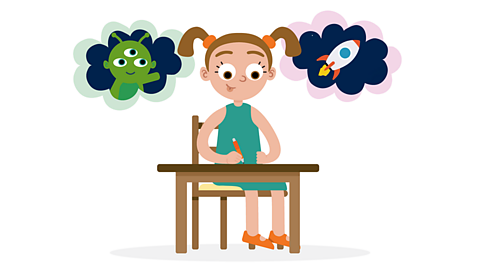
1. To entertain
Texts written to entertain aim to amuse, interest or engage the reader.
Common text types:
- stories
- novels
- poems
- plays
- songs
Language clues:
- humorous or dramatic language
- descriptive details
- dialogue

2. To inform
Texts written to inform aim to give the reader facts or information.
Common text types:
- newspaper articles
- non-fiction books
- instructions
- reports
Language clues:
- facts and statistics
- neutral or formal tone
- headings and sub headings

3. To persuade
Texts written to persuade try to change the reader’s opinion or encourage action.
Common text types:
- advertisements
- leaflets
- speeches
- letters of complaint
Language features to look for:
- rhetorical questions (for example, why wouldn’t you join?)
- emotive language
- direct address (you)
- calls to action (sign up today)

4. To express feelings
Texts written to express feelings share personal thoughts, emotions or experiences.
Common text types:
- diaries
- autobiographies
- personal letters
Language clues:
- first person writing (I, my)
- emotional or reflective language
Language feature clues
Language features give clues about the writer’s intention. The table below lists some of these features.
| Intention | Language features to look for |
|---|---|
| Entertain | description, dialogue, humour |
| Inform | facts, dates, clear explanations |
| Persuade | rhetorical questions, emotive language, commands |
| Express feelings | personal pronouns, emotions |
Mixed purpose texts
Many texts do more than one job, and you may be asked to identify:
the main (dominant) purpose
a secondary purpose
For example:
A leaflet explaining how to recycle correctly and encouraging people to recycle more.
Here the main purpose is to inform and the secondary purpose is to persuade.
Why does a writer’s intention matter?
Understanding a writer’s intention helps you to:
work out what the writer is hinting at or not saying directly
explain why the writer has chosen to write something
pick the best answer in multiple‑choice questions more confidently
Top tip
Ask yourself:
What is the writer trying to make me think, feel or do?
Which words or features helped me decide?
Practice: Identify the writer’s intention

Top tip
Always match the language features to the intention - not just the text type.
Quiz time!
Brain boost
Think about these questions to stretch your thinking and sharpen your skills!
Why do you think it’s useful to know the writer’s intention when reading a text?
Can you think of a text you read recently and explain what the writer’s purpose was?
How does knowing the writer’s intention help you respond to the text more effectively?
Have a chat about your answers with a parent, teacher or your class.
More on Practise and revise KS2 English
Find out more by working through a topic
- count13 of 13
- count1 of 13
- count2 of 13
- count3 of 13