Introduction
This page has been put together to help you practise and revisit some of the brilliant skills you’ve learned all through primary school.
It’s a great way to boost your confidence in English and get you ready for the exciting next step into Year 8!
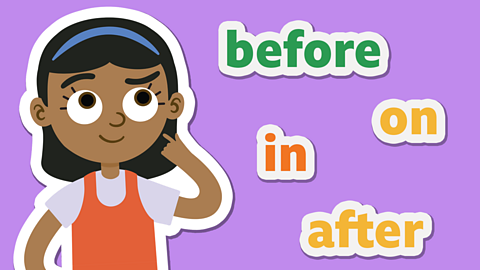
A preposition is a word that shows the position of one object in relation to another.
Power through this page and you’ll be ready to:
identify prepositions in sentences
use prepositions to describe positions accurately
apply prepositions to make writing more descriptive
What is a preposition?
Prepositions help us describe where things are, making our sentences clearer and more detailed.
For example, if you were writing about a book and a chair you might say:
- the book is under the chair
- or the book is on the chair
- or the book is beside the chair
Under, on and beside are all prepositions as they tell us where the book is in relation to the chair.
You can remember that prepositions are about positions by finding the word ‘position’ inside ‘preposition’.
Examples of prepositions
The schoolbag is under the table.
Under is the preposition because it is telling us about the position of the schoolbag in relation to the table.
Grandpa was sitting beside the blazing stove.
Beside is the preposition because it is telling us about the position of grandpa in relation to the stove.
A long queue formed outside the Lego store.
Outside is the preposition because it is telling us about the position of the queue in relation to the store.
Sometimes prepositions come in pairs.
Here are just a few examples of preposition pairs that often go together to show movement or direction:
1. up and down
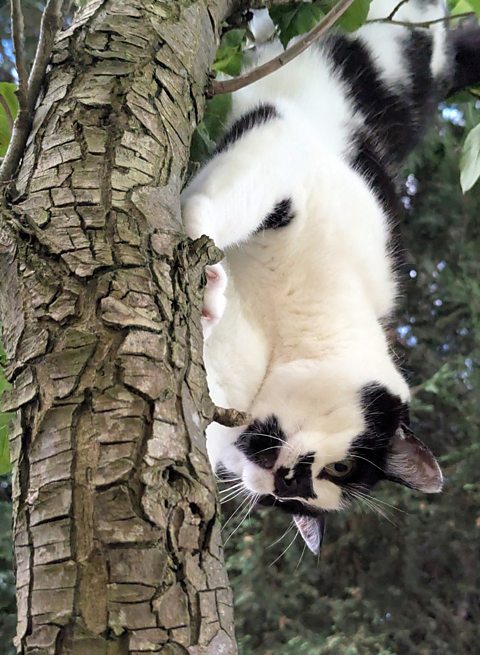
The cat ran up the tree and then climbed down again.
(Shows opposite directions.)
2. to and from
We walked to the park and from school.
(Shows going somewhere and coming back.)
3. over and under
The dog jumped over the log and crawled under the table.
(Shows position.)
Quiz: Mastering prepositions
Highlight the preposition
Quiz time!
Brain boost
Think about these questions to stretch your thinking and sharpen your skills!
Why do you think prepositions are important when giving directions or describing a scene?
Can you describe where you are sitting right now using at least two prepositions?
How could using prepositions make a story more interesting for the reader?
Have a chat about your answers with a parent, teacher or your class.
More on Practise and revise KS2 English
Find out more by working through a topic
- count8 of 13
- count9 of 13
- count10 of 13
- count11 of 13