Character overview
The numerous characters in A Midsummer Night’s Dream can be divided into three main groups:
Courtly (Athens)
These characters belong to the noble court in Athens.
- Theseus, Duke of Athens
- Hippolyta, Queen of the Amazons
- Egeus, Hermia’s father
- Hermia, daughter of Egeus, in love with Lysander
- Helena, in love with Demetrius
- Lysander, in love with Hermia
- Demetrius, originally in love with Hermia
- Philostrate, Master of Revels
Forest / fairies
- Oberon, King of the Fairies
- Titania, Queen of the Fairies
- Puck (Robin Goodfellow), mischievous fairy and Oberon’s servant
- Other fairies: Pease-blossom, Cobweb, Moth, Mustard-seed
Mechanicals (the Athenian workers/actors)
- Nick Bottom, a weaver
- Peter Quince, a carpenter
- Snug, a joiner; Flute, a bellows-mender; Snout, a tinker; Starveling, a tailor
Hermia
Hermia is a strong willed and passionate young Athenian who refuses to obey her father’s demand that she marry Demetrius, because she genuinely loves Lysander. Her determination is clear from the start, as she bravely risks the threat of death or becoming a nun rather than give up her chosen partner. Hermia’s decision to flee into the forest shows her courage and independence, and highlights the theme of love’s challenges. Her loyalty to Lysander never wavers, even when the love potion causes him to abandon her temporarily. Although she becomes upset and jealous during the confusion, this only makes her appear more human and relatable. Ultimately, Hermia represents steadfast love, resilience and the struggle for personal freedom in a restrictive society.
Words to describe Hermia
- Determined
- Loyal
- Courageous
- Passionate
- Independent
- Assertive
- Headstrong
- Emotional
- Devoted
- Resilient
Key quotations for Hermia
Hermia asserting her right to choose love
“I would my father look’d but with my eyes.”
(Act 1, Scene 1)
This shows her independence and her belief that love should be based on personal choice, not parental control.
Hermia expressing fear and vulnerability in the forest
“Help me, Lysander, help me! Do thy best / To pluck this crawling serpent from my breast.”
(Act 2, Scene 2)
Her nightmare reveals her anxiety about losing Lysander and highlights the emotional pressure she faces.
Hermia defending her honour during the quarrel with Helena
“I am not yet so low / But that my nails can reach unto thine eyes.”(Act 3, Scene 2)
This fierce outburst shows her pride, spirit, and refusal to be insulted.
Helena
Helena in A Midsummer Night’s Dream is driven by intense, unreturned love for Demetrius. Her feelings make her insecure, and she often compares herself unfavourably to Hermia. She believes she is less attractive and less worthy, which explains why she chases Demetrius even when he treats her cruelly. Her willingness to “follow him like a dog” shows how love has damaged her self‑esteem.
Despite her vulnerability, Helena is also determined and loyal. She reveals Hermia’s plan to elope because she hopes it will bring her closer to Demetrius, showing how desperation clouds her judgement. When both men suddenly claim to love her, she assumes they are mocking her, proving how deeply her confidence has been shaken.
Helena brings both humour and emotional depth to the play. She represents the confusion, irrationality and pain of love, making her a sympathetic and relatable character for audiences.
Words to describe Helena
- Lovesick
- Insecure
- Determined
- Loyal
- Desperate
- Comedic
- Misunderstood
- Emotional
- Self‑deprecating
- Honest
Key quotations for Helena
Helena expressing her insecurity and self‑doubt
“I am as ugly as a bear.”
(Act 2, Scene 2)
This line captures her low self‑esteem and her belief that Demetrius’s rejection reflects her own supposed flaws.
Helena showing her unwavering devotion to Demetrius
“I am your spaniel; and, Demetrius, / The more you beat me, I will fawn on you.”
(Act 2, Scene 1)
Her willingness to endure humiliation reveals both her loyalty and the unhealthy imbalance in their relationship.
Helena accusing the others of mocking her
“Lo, she is one of this confederacy!”
(Act 3, Scene 2)
Here, Helena believes Hermia, Lysander, and Demetrius have joined together to laugh at her, highlighting her vulnerability and the emotional chaos caused by the love potion.
Demetrius
Demetrius is one of the four young lovers whose shifting loyalties shape much of the play’s comedy and conflict. At first, he is determined to marry Hermia, relying on Athenian law and her father’s approval rather than genuine affection. His treatment of Helena in the forest can seem cruel, as he rejects her devotion and even threatens her, revealing his stubbornness and sense of entitlement.
When Puck applies the love potion, Demetrius suddenly returns Helena’s love. Although this creates a harmonious ending, it raises questions about how authentic his feelings are, since they are magically induced. His transformation emphasises Shakespeare’s interest in love as unpredictable, irrational and easily manipulated.
Demetrius ultimately represents the instability of desire and the play’s wider message that love rarely follows logic. His behaviour invites discussion about control, choice and the powerful external forces that shape human relationships.
Words to describe Demetrius
- Stubborn
- Entitled
- Hot‑tempered
- Inconsistent
- Dismissive
- Passionate
- Impulsive
- Possessive
- Transformable
- Devoted
Key quotations for Demetrius
Demetrius rejecting Helena’s devotion
“Tempt not too much the hatred of my spirit; / For I am sick when I do look on thee.”
(Act 2, Scene 1)
This shows his cruelty and impatience, highlighting the imbalance in their relationship.
Demetrius insisting on his right to Hermia
“Relent, sweet Hermia; and, Lysander, yield / Thy crazed title to my certain right.”
(Act 1, Scene 1)
Here he presents himself as entitled and confident, believing he deserves Hermia’s love.
Demetrius after the love potion takes effect
“My love to Hermia, / Melted as the snow.”
(Act 4, Scene 1)
This line captures the suddenness of his magically altered feelings and the play’s theme of love’s instability.
Lysander
Lysander is presented as a loyal, romantic and determined young lover whose actions help drive the play’s central conflict. He is deeply committed to Hermia and is willing to defy Athenian law to be with her, showing courage and idealism. His plan to flee into the forest demonstrates both his resourcefulness and his impulsiveness, as he underestimates the chaos that the magical world can create.
When Puck mistakenly enchants him, Lysander’s sudden shift of affection to Helena highlights how fragile and changeable love can appear under external influence. This transformation creates dramatic irony and reinforces the play’s exploration of love as unpredictable and sometimes irrational.
By the end, Lysander’s restored devotion to Hermia reaffirms his true nature as constant and sincere. His journey through confusion, enchantment and resolution reflects Shakespeare’s wider themes of desire, illusion and the transformative power of the imagination.
Words to describe Lysander
- Romantic
- Loyal
- Idealistic
- Determined
- Impulsive
- Courageous
- Resourceful
- Passionate
- Changeable (under the love potion)
- Sincere
Key quotations for Lysander
Lysander challenging the idea that love should be easy
“The course of true love never did run smooth.”
(Act 1, Scene 1)
This famous line captures his romantic idealism and his awareness of the obstacles he and Hermia face.
Lysander reassuring Hermia of his devotion
“I swear to thee by Cupid’s strongest bow…”
(Act 1, Scene 1)
His poetic vow shows his sincerity and determination to stay loyal to Hermia despite external pressures.
Lysander under the influence of the love potion
“Not Hermia but Helena I love.”
(Act 2, Scene 2)
This sudden reversal highlights the play’s theme of love’s instability and the chaos caused by magical interference.
Oberon
Oberon, the King of the Fairies, is a powerful and commanding figure whose actions shape much of the play’s magical chaos and eventual harmony. His quarrel with Titania over the changeling boy reveals his possessive and authoritative nature, as he is determined to assert control within their relationship. Oberon’s decision to use the love potion on Titania shows both his cunning and his willingness to manipulate others to achieve his aims.
However, Oberon is not purely selfish. When he witnesses Helena’s mistreatment, he intervenes to help her, suggesting a more compassionate side. His instructions to Puck, though well‑intentioned, lead to confusion among the lovers, highlighting how even good intentions can create disorder when combined with magical power.
By the end, Oberon restores balance, lifting the enchantments and reconciling with Titania. His character embodies the play’s themes of power, transformation and the unpredictable nature of love.
Words to describe Oberon
- Authoritative
- Powerful
- Possessive
- Manipulative
- Commanding
- Strategic
- Proud
- Vengeful
- Magical
- Restorative
Key quotations for Oberon
Oberon revealing his anger toward Titania
“Ill met by moonlight, proud Titania.”
(Act 2, Scene 1)
This opening line of their quarrel shows his pride, authority, and frustration.
Oberon showing compassion for Helena
“I know a bank where the wild thyme blows…”
(Act 2, Scene 1)
This famous speech introduces the love potion plan. Although he intends to help Helena, it also reveals his willingness to use magic to control others.
Oberon restoring harmony at the end
“Now thou and I are new in amity.”
(Act 4, Scene 1)
Here he reconciles with Titania, signalling the return of balance to the fairy world.
Titania
Titania, Queen of the Fairies, is a powerful and dignified figure whose conflict with Oberon sets much of the play’s magical disruption in motion. Her refusal to surrender the changeling boy shows her independence and strong moral conviction, suggesting she values loyalty and compassion over obedience. Titania’s authority is clear in the way her fairies attend to her and in her description of how her quarrel with Oberon has thrown nature into disorder.
When she is enchanted with the love potion and falls for Bottom in his transformed state, Titania becomes part of the play’s comic exploration of love’s irrationality. This episode highlights how even the most commanding characters can be made vulnerable by forces beyond their control.
Once the spell is lifted, Titania reconciles with Oberon, restoring harmony to the fairy world. Her journey reflects themes of power, pride, transformation and the unpredictable nature of desire.
Words to describe Titania
- Powerful
- Regal
- Independent
- Compassionate
- Proud
- Dignified
- Stubborn
- Enchanted
- Vulnerable
- Transformed
Key quotations for Titania
Titania asserting her independence from Oberon
“I have forsworn his bed and company.”
(Act 2, Scene 1)
This shows her determination, pride, and refusal to submit to Oberon’s demands.
Titania describing the natural chaos caused by their quarrel
“The seasons alter: hoary‑headed frosts / Fall in the fresh lap of the crimson rose.”
(Act 2, Scene 1)
Her poetic imagery highlights her power and the wider consequences of conflict in the fairy world.
Titania enchanted and doting on Bottom
“Mine ear is much enamour’d of thy note.”
(Act 3, Scene 1)
This captures the comic contrast between her regal dignity and the absurdity of her magically induced love.
Puck
Puck, also known as Robin Goodfellow, is the mischievous spirit at the heart of the play’s magical world. As Oberon’s servant, he carries out his master’s commands with energy and humour, often adding his own playful twists. His love of pranks and chaos makes him both entertaining and unpredictable, especially when he mistakenly enchants the wrong Athenian man. This error creates confusion among the lovers and drives much of the play’s comedy.
Despite his mischief, Puck is not malicious. He enjoys watching human behaviour and treats the lovers’ struggles as part of a light‑hearted game. His quick thinking helps resolve the problems he creates, and he restores order by correcting the enchantments.
Puck’s final speech invites the audience to see the play as a dream, reinforcing his role as a guide between reality and fantasy. He embodies themes of transformation, illusion and the unpredictable nature of magic.
Words to describe Puck
- Mischievous
- Playful
- Chaotic
- Energetic
- Unpredictable
- Clever
- Loyal
- Impish
- Observant
- Magical
Key quotations for Puck
Puck introducing himself and his mischievous nature
“I am that merry wanderer of the night.”
(Act 2, Scene 1)
This line captures his playful identity and his role as a roaming trickster.
Puck admitting to the chaos he has caused
“Lord, what fools these mortals be!”
(Act 3, Scene 2)
One of his most famous lines, showing his amusement at human behaviour and the confusion he helps create.
Puck closing the play and addressing the audience
“If we shadows have offended, / Think but this, and all is mended…”
(Act 5, Scene 1)
His epilogue reinforces his role as a bridge between the magical world and the audience, softening the play’s mischief with charm.
Bottom
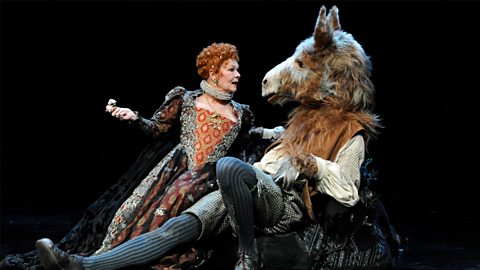
Bottom is one of the play’s most memorable comic characters, known for his confidence, enthusiasm and complete lack of self‑awareness. As a weaver and a member of the mechanicals, he approaches the play‑within‑a‑play with exaggerated ambition, believing himself capable of performing every role. His eagerness and overconfidence make him amusing rather than irritating, and Shakespeare uses him to gently mock amateur performers.
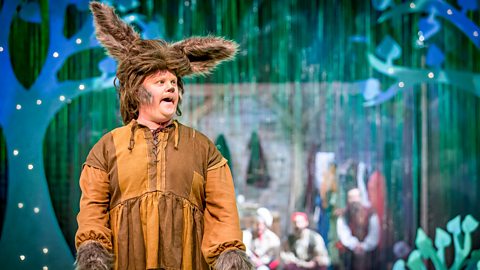
When Puck transforms his head into that of a donkey, Bottom remains oblivious, accepting the fairies’ attention as something he naturally deserves. Titania’s magically induced love for him creates one of the play’s funniest contrasts: her poetic devotion set against his plain, literal responses. This episode highlights the theme of illusion, showing how easily appearances can deceive.
Bottom’s return to normality and his pride in his “dream” reinforce his role as a joyful, harmless figure. He represents imagination, theatrical silliness and the delight Shakespeare finds in human folly.
Words to describe Bottom
- Boastful
- Enthusiastic
- Overconfident
- Comical
- Naïve
- Good‑natured
- Imaginative
- Oblivious
- Theatrical
- Endearing
Key quotations for Bottom
Bottom showing his enthusiasm and overconfidence
“Let me play the lion too.”
(Act 1, Scene 2)
This captures his eagerness to take every role and his comic lack of self‑awareness.
Bottom reacting calmly to his transformation
“Reason and love keep little company together nowadays.”
(Act 3, Scene 1)
Even with a donkey’s head, he delivers this witty observation, highlighting the play’s theme of love’s irrationality.
Bottom reflecting on his enchanted experience
“I have had a most rare vision.”
(Act 4, Scene 1)
His wonder at the night’s events shows his imaginative nature and reinforces the dreamlike quality of the play.
Test your knowledge of the characters in A Midsummer Night's Dream
Further study
The study of Shakespeare, controlled assessment guidance. activity
Unit 3 of the CCEA GCSE English Literature qualification is a controlled assessment unit based on the study of a play by William Shakespeare.
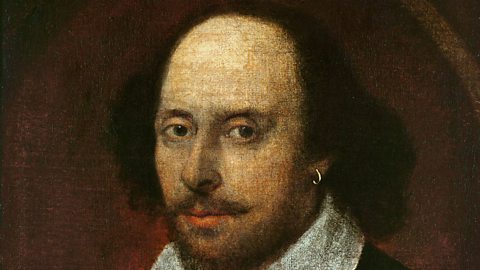
Shakespeare Unlocked - A Midsummer Night’s Dream. collection
Three key scenes from A Midsummer Night's Dream are performed and explored by actors and directors in workshops.
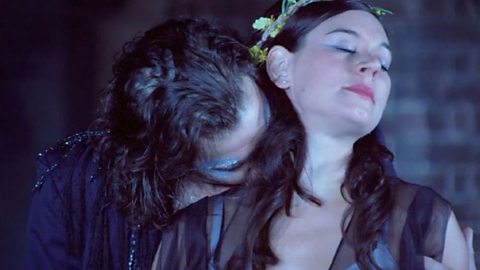
In Our Time. audio
Melvyn Bragg and guests discuss the ideas behind Shakespeare's comedy with its intertwining plots of royal marriage, crossed lovers, quarrelling fairies and rude mechanicals.
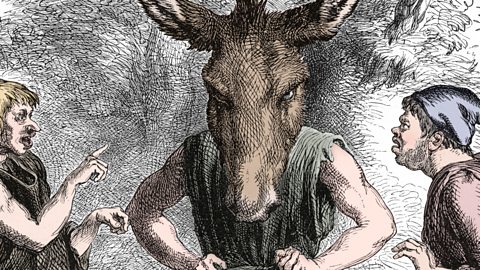
A Midsummer Night's Dream performed
A Midsummer Night's Dream. video
Classic Shakespeare play adapted for television by Russell T Davies.

KS3 English: A Midsummer Night's Dream by William Shakespeare. collection
Shakespeare's romantic comedy A Midsummer Night's Dream is animated in 8 episodes for KS2 and KS3 pupils.
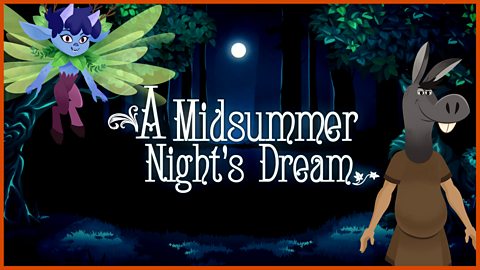
CBeebies: A Midsummer Night's Dream. video
Fairies, magic, celebration and comical confusion! Join Swashbuckle's Cook and Line as they help William Shakespeare put together a magical production of A Midsummer Night's Dream.
More on A Midsummer Night’s Dream
Find out more by working through a topic
- count3 of 5

- count4 of 5

- count5 of 5
- count1 of 5