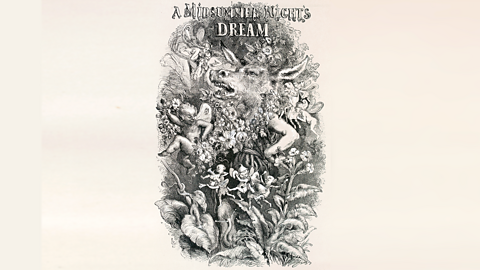
Summary of A Midsummer Night's Dream
In a nutshell: the play turns love upside down to show how irrational, changeable, and magical it can be – before restoring order, harmony, and celebration.
Shakespeare’s comedy opens in Athens where Theseus, Duke of Athens, is preparing to marry Hippolyta. An Athenian nobleman, Egeus, demands that his daughter Hermia marry Demetrius, but Hermia is in love with Lysander. By Athenian law, disobeying her father could mean life in a convent – or death. Given time to “consider,” Hermia chooses love: she and Lysander plan to run away and marry at Lysander’s aunt’s house. They confide in Helena, Hermia’s friend, who still loves Demetrius even though he abandoned her. Hoping to win him back, Helena tells Demetrius – and all four lovers head into the woods that night.
The woods are no ordinary woods. A group of Athenian craftsmen (often called the Mechanicals) are there rehearsing a comic A type of drama in which characters undergo suffering or calamity and which usually ends with a death. A sad or catastrophic event causing suffering or death., Pyramus and Thisbe, to perform at the Duke’s wedding. Meanwhile, the fairy king and queen, Oberon and Titania, are quarrelling over a beautiful Indian boy whom Titania refuses to give up. To teach Titania a lesson and restore harmony, Oberon sends his mischievous servant Puck to fetch a magical flower. Its juice, dropped on sleeping eyes, makes a person fall in love with the first creature they see on waking.
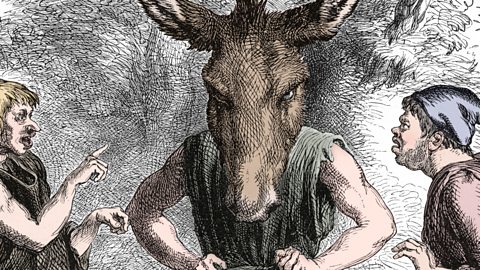
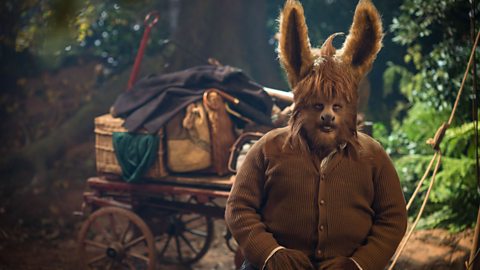
Oberon charms Titania as she sleeps; at the same time, Puck blunders among the mortals. Mistaking his target, he puts the potion on Lysander’s eyes instead of Demetrius’s. Lysander wakes to Helena and immediately ditches Hermia. Trying to fix things, Oberon then has Puck charm Demetrius too – so both men love Helena, which she thinks is a cruel joke. The once-loyal friends Hermia and Helena fall out, and the men nearly duel. To stop the chaos, Puck uses fog and tricks to separate and exhaust them, then restores Lysander’s love for Hermia. Elsewhere, Puck transforms the weaver Nick Bottom by giving him the head of an ass; Titania wakes, sees Bottom and dotes on him absurdly until Oberon gets the Indian boy and lifts the spell.
At dawn, Theseus and Hippolyta find the lovers asleep in the forest. Hearing their new pairings – Demetrius now genuinely loves Helena, Lysander loves Hermia – Theseus overrules Egeus and orders a triple wedding. Back in Athens, the Mechanicals perform their hilariously bungled play, delighting the court. That night, the fairies bless the marriages, and Puck ends by asking the audience to think of the whole play as a dream if anything offended.
A Midsummer Night's Dream plot overview
- Athens: Duke Theseus prepares to marry Hippolyta, planning days of celebrations.
- Conflict: Egeus demands his daughter Hermia marry Demetrius, but Hermia loves Lysander; Athenian law threatens her with a convent or death if she refuses.
- Elopement plan: Hermia and Lysander decide to run away to marry; they tell Helena, who still loves Demetrius.
- Pursuit to the woods: Hoping to win Demetrius back, Helena tells him the plan; all four lovers head into the enchanted forest.
- Fairy quarrel: Oberon and Titania, king and queen of the fairies, argue over a beautiful Indian boy; Oberon sends Puck for a love potion.
- First mistake: Puck accidentally charms Lysander (not Demetrius); Lysander wakes, sees Helena and falls in love with her, abandoning Hermia.
- Chaos doubles: To fix it, Oberon has Puck charm Demetrius too – now both men love Helena; the girls fall out, and the boys nearly duel.
- Set right (almost): Puck confuses the rivals in a fog, tires them out, and restores Lysander’s love for Hermia.
- Ass-head comedy: Nearby, the amateur actors (Mechanicals) rehearse; Puck gives Bottom an ass’s head; Titania, enchanted, dotes on him until Oberon gets the boy and lifts the spell.
- Happy ending: At dawn, Theseus finds the lovers and approves the pairings; a triple wedding follows, the Mechanicals perform Pyramus and Thisbe – a comic tragedy – and Puck ends by asking us to imagine it was all a dream.
Test your knowledge of the plot of A Midsummer Night's Dream
Further study
The study of Shakespeare, controlled assessment guidance. activity
Unit 3 of the CCEA GCSE English Literature qualification is a controlled assessment unit based on the study of a play by William Shakespeare.
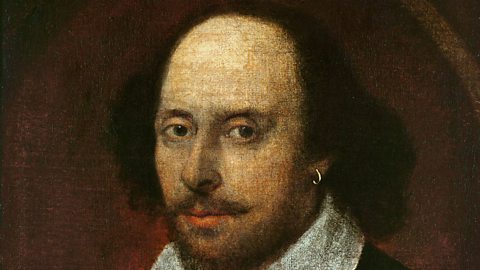
Shakespeare Unlocked - A Midsummer Night’s Dream. collection
Three key scenes from A Midsummer Night's Dream are performed and explored by actors and directors in workshops.
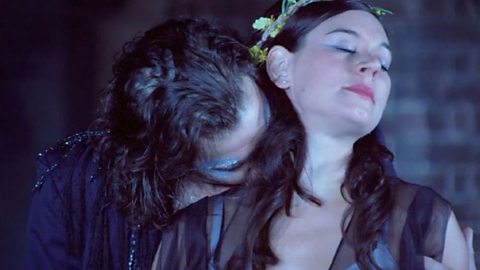
In Our Time. audio
Melvyn Bragg and guests discuss the ideas behind Shakespeare's comedy with its intertwining plots of royal marriage, crossed lovers, quarrelling fairies and rude mechanicals.
A Midsummer Night's Dream performed
A Midsummer Night's Dream. video
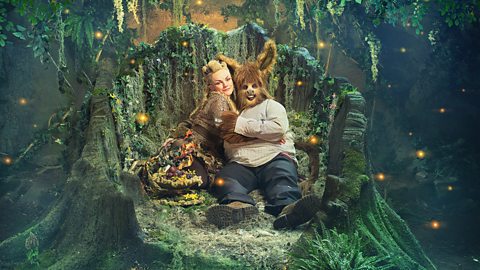
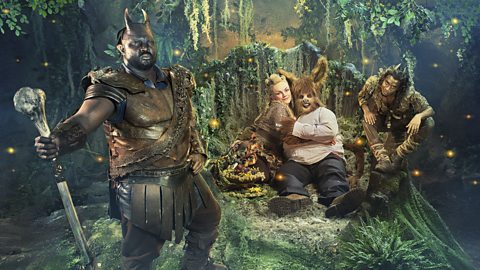
Classic Shakespeare play adapted for television by Russell T Davies.
KS3 English: A Midsummer Night's Dream by William Shakespeare. collection
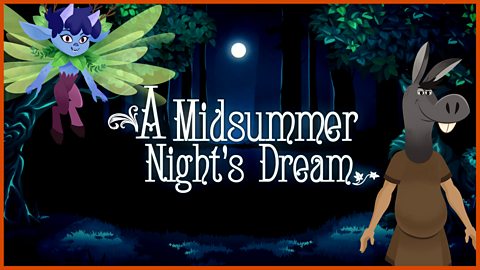
Shakespeare's romantic comedy A Midsummer Night's Dream is animated in 8 episodes for KS2 and KS3 pupils.
CBeebies: A Midsummer Night's Dream. video
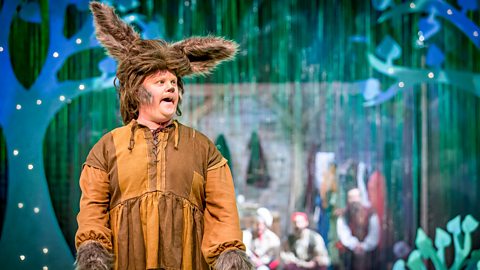
Fairies, magic, celebration and comical confusion! Join Swashbuckle's Cook and Line as they help William Shakespeare put together a magical production of A Midsummer Night's Dream.
More on A Midsummer Night’s Dream
Find out more by working through a topic
- count2 of 5
- count3 of 5
- count4 of 5
- count5 of 5