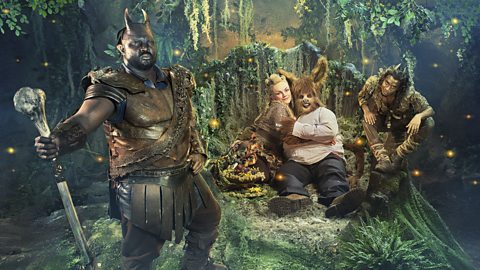
Applicable context for Shakespeare's A Midsummer Night's Dream

Context is important but don’t use too much!
A few small and relevant references used to support your points about the play are far better than huge chunks of unrelated information – even if the information is interesting.
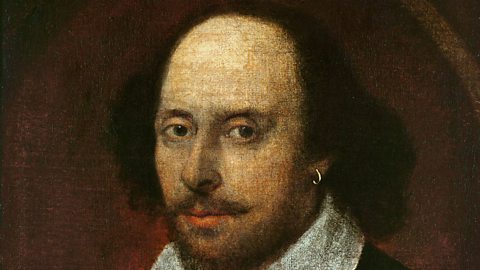
Biography of Shakespeare
Shakespeare lived from 1564 to 1616.
He attended grammar school, which was a privilege at the time. There he studied classical literature, which influenced the play – especially the figures of Theseus and Hippolyta.
Social context
Gender
The play was written around 1595-96 during the Elizabethan period. Society had strict gender roles and most authority rested with men, reflected in characters such as Egeus and Demetrius.
However, Shakespeare also presents strong and independent women. Hermia challenges her father’s wishes and Titania defies Oberon. These portrayals may hint at the influence of Queen Elizabeth I, a powerful female ruler.
Class
Elizabethan society was hierarchical.
The play includes noble characters – Theseus, Hippolyta, Egeus, Hermia, Helena, Lysander and Demetrius – who represent authority and social order.
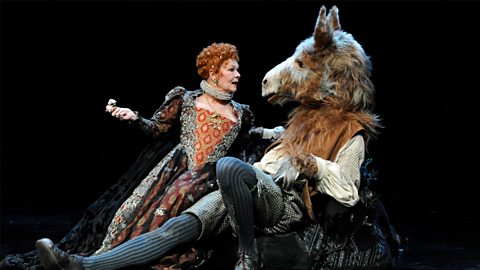
It also features working‑class characters, known as ‘the Mechanicals’: Bottom, Quince, Flute, Snug, Snout and Starveling. Their scenes add humour and give a different perspective on events.
A third group is the world of the fairies – Oberon, Titania and Puck – which reflects Elizabethan beliefs in the supernatural and the enchanted forest.
Marriage
Marriage was usually a social contract rather than a romantic choice. Hermia’s conflict with her father, who wants her to marry Demetrius instead of Lysander, shows this clearly.
Elizabethan comedies often end in marriage. This play concludes with three weddings, restoring social order after the chaos of the forest.
Historical context
Queen Elizabeth I
Elizabeth I’s long reign brought stability but also uncertainty about the future because she had no heir. This background helps explain why Elizabethan audiences valued the restoration of order at the end of the play.
The Great Chain of Being
People believed everything in the universe had a fixed place in a hierarchy.
This idea appears in the play when characters leave the confusion of the forest and return to their rightful roles in Athens.
Empire
The British Empire was expanding. Theseus and Hippolyta’s marriage can be seen as a symbol of conquest, as she was captured and brought to Athens.
The play includes references to distant places, trade routes and the “Indian boy”, suggesting early ideas about colonial expansion and exotic cultures.
Festival of Midsummer
The title refers to the midsummer festival on 24 June, a mix of Christian and pagan traditions involving dancing, torches, drinking and blessings. Midsummer’s Eve was linked with mischief, roaming spirits and temporary upheaval – all themes that appear in the play.
Literary and theatrical context
Genre
A Midsummer Night’s Dream is a comedy. Shakespeare’s comedies move from confusion to clarity and from disorder to harmony. They usually end with reconciliation or marriage, which audiences at the time found satisfying.
In this play, the structure reflects a form close to a genre of drama characterized by a, turning upside down of social hierarchy, gender roles, and conventions. It is closely tied to holiday celebrations., as the narrative moves from midsummer chaos to a joyful return to order. Later mentions of this idea appear as festive comedy only.
Literary influences
Shakespeare draws on Greek mythology, medieval romance and English folklore.
Theatre
The play includes a play‑within‑a‑play performed by the Mechanicals. This is an example of When a play reminds you it is a play. It tells the audience they are watching a performance, rather than trying to create a completely believable “real world”., where the drama draws attention to itself as a performance. Puck breaking the The space that separates performers and audience. If it is ‘broken’, a character acknowledges the audience and may speak to them.at the end is another example of this technique.
Theatre was hugely popular, attended by people from all social classes.
Elizabethan playhouses, such as the Globe, were open‑air with limited scenery. Writers relied on vivid language to create setting, seen in the forest imagery:
“The winds, piping to us in vain,
As in revenge, have sucked up from the sea
Contagious fogs.”
Shakespeare also blends verse and Ordinary language both spoken or written; different from poetry (which does not reflect everyday speech patterns). in the play. Later uses of the word appear as prose only.
Actors
Women were not permitted on stage, so female roles were played by young boys. This added to the comic potential and playful confusion in the Mechanicals’ performance.
Further study
The study of Shakespeare, controlled assessment guidance. activity
Unit 3 of the CCEA GCSE English Literature qualification is a controlled assessment unit based on the study of a play by William Shakespeare.
Shakespeare Unlocked - A Midsummer Night’s Dream. collection
Three key scenes from A Midsummer Night's Dream are performed and explored by actors and directors in workshops.
In Our Time. audio
Melvyn Bragg and guests discuss the ideas behind Shakespeare's comedy with its intertwining plots of royal marriage, crossed lovers, quarrelling fairies and rude mechanicals.
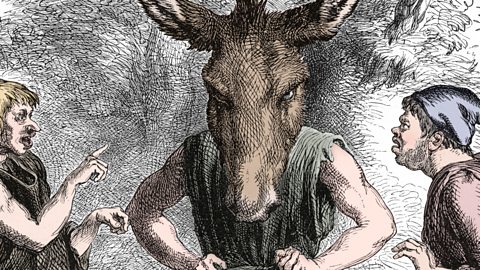
A Midsummer Night's Dream performed
A Midsummer Night's Dream. video
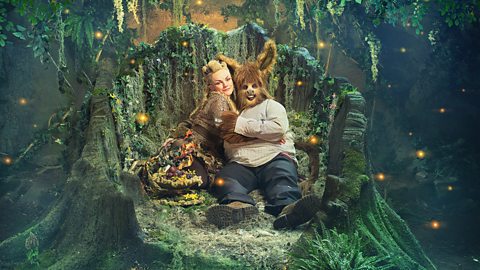
Classic Shakespeare play adapted for television by Russell T Davies.
KS3 English: A Midsummer Night's Dream by William Shakespeare. collection
Shakespeare's romantic comedy A Midsummer Night's Dream is animated in 8 episodes for KS2 and KS3 pupils.
CBeebies: A Midsummer Night's Dream. video
Fairies, magic, celebration and comical confusion! Join Swashbuckle's Cook and Line as they help William Shakespeare put together a magical production of A Midsummer Night's Dream.
More on A Midsummer Night’s Dream
Find out more by working through a topic
- count5 of 5
- count1 of 5
- count2 of 5
- count3 of 5