Themes in Paddy Clarke Ha Ha Ha
A theme is an idea that runs through a text. A text may have one theme or many.
Roddy Doyle touches on many themes in this novel. The main ones are:
- Growing up
- A sense or attitude of acting in a way that is seen traditionally masculine.
- Family relationships
- Irish working class life
- Religion
- Education
This novel is a window on working class life. Social commentary and realism are presented throughout. We see how Paddy’s family copes on very little money. Like when Sinbad loses his shoe, his mother is furious – they can’t afford new shoes.
Then there’s Paddy’s friends Liam and Aidan; their house is falling apart because their father can’t afford to replace everyday items. Paddy’s clothes are often hand-me-downs and, when he grows too big for his trousers, he is worried his dad will just tell him to make do. Even when the boys play football, it’s with a partly burst ball!
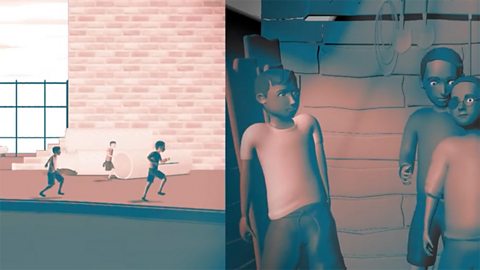
Then there are contrasting themes of childhood and adulthood. The adult world is presented as routine and unadventurous, but the book also takes us into the inner world of children. Here the boys engage in adventurous and innocent fun, like running through the nettles as a dare. But other events seem alien to us, and even sadistic.
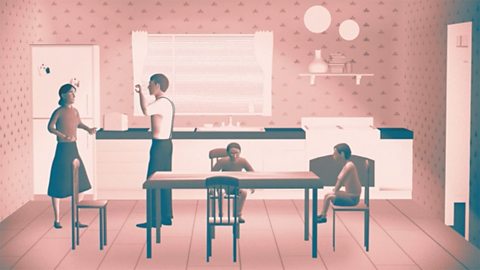
Machismo is shown through the children being mostly male and inhabiting a tough culture. There’s a sense of survival of the fittest, and not everyone can cope with this. Despite some moments of tenderness, the theme of family relationships is presented as difficult and Paddy is often in trouble. He is frequently cruel to Sinbad and he’s increasingly affected by his parent’s arguments.
Although religion is taken for granted in Paddy’s family, he experiences a distinctly Catholic upbringing, attending Mass and receiving Communion. He is fascinated by death. “Vikings went to Valhalla when they died… we went to heaven, unless we went to hell.”
Violence surrounds Paddy, even on the news with the war in Vietnam. In some respects, Paddy simply copies the violence he sees committed by adults. Paddy and his friends are also fascinated by the destructive power of fire: “We were always lighting fires…”
Doyle’s writing is rich in Irish culture. Paddy’s father sings Irish ballads with him and Doyle has the characters speaking with Irish accents and using colloquialisms. His conversations feel natural, like real people talking, with the use of dashes to show dialogue, instead of speech punctuation.
Doyle uses a stream of consciousness for Paddy’s description of how the boys play ‘Grand National’. Liam breaks his teeth, but in the boys’ unforgiving world, “it was no one’s fault except his own.” Doyle captures, in his breakneck description of the game, the childish desire to run and be carefree.
When Paddy is injured, his understated way of telling us the facts conveys a graphic intensity: “My foot was wet. My shoe was full of blood.”
Meanwhile, Sinbad is a tragic character and Doyle uses pathos to help us connect with him. As the story progresses, Paddy’s worries for his parents grow. Doyle uses a simile when he describes how: “Their fights were like a train that kept getting stuck at the corner tracks and you had to lean over and push it or straighten it.”
Growing up
The novel takes us into the inner world of children. As a A 'coming of age' story, describing a character’s emotional growth as they move from childhood to adulthood., it traces some of the events in Paddy’s life which see him growing into maturity.
Although the novel does not cover a long period of time, it traces the breakdown of his parents’ marriage and his fall out with his friendship group. Both of these events teach Paddy something and he ends the novel a more mature individual, despite being still only a child in years.
Because of the fast paced A narrative technique that captures a character’s continuous, unedited flow of internal thoughts, feelings, and memories exactly as they occur in their mind and short rapid sentences, the The language or dialect spoken by the ordinary people of a country or region.Narrative is another word for story. voice that Doyle uses in Paddy Clarke Ha Ha Ha demands to be heard. In writing the book Doyle gives a voice to children, who are sometimes ignored.
Part of the growth process in this novel is Paddy’s realisation that both children and adults can be difficult. Paddy is often let down or left disappointed by them.
This is represented for example in the behaviour of his teachers, and in how Paddy has to manage his way round his father’s mood swings: “Da sitting down, asking us how school was - that meant the fight was over.”
Paddy is resigned to this disappointment: “Fathers are like that”. Doyle shows that these epiphanies are part of growing up.
Many of the events are recognisable parts of an average childhood. The boys engage in adventurous and innocent fun, such as running through the nettles as a dare.
Other events seem alien to us and even sadistic. Because Paddy is a child, at times he may be an unreliable narrator; we are never sure if Paddy’s view of the world is brutally honest and accurate or exaggerated.
The swear game, the games made up from books Paddy has read and the football matches are all typical activities for children.
Being frightened by Voyage to the Bottom of the Sea while really wanting to watch it again is something most adults can recognise from their childhood.
In contrast to this world of adventure the adult world is routine and unexciting. Paddy even knows exactly what family meals they will have on set days of the week.
The adult world is sometimes a mystery to Paddy. His mother suffers from depression, but Paddy can only describe it as, “She didn’t get up one morning.”
The stories of Mr O’Connell howling at the moon seem amusing and ridiculous to Paddy, despite being a sign to the adult reader of Mr O’Connell’s grief about the loss of his wife.
The innocence of Paddy’s childish voice adds A plea or argument designed to evoke an emotional response. to these accounts as we realise that growing up is about becoming more familiar with the hardships of life.
Mr Clarke punishes Paddy with a belt, something that would be considered unacceptable today. But this could also be seen in the context of his father’s desire for Paddy to grow up knowing what is right and wrong.
The adult world crashes into Paddy’s world when he overhears his dad hit Mrs Clarke. The incident creates even more uncertainty for Paddy.
Machismo
A sense or attitude of acting in a way that is seen traditionally masculine. is shown through the children being mostly male and inhabiting a tough culture. There seems to be a sense of ‘survival of the fittest’ and not all the children can cope with this competition for status – Sinbad, for example.
However, through Doyle’s writing style and child narrator this is a realistic portrayal of a group of boys this age.
The boys have their own gang with its own set of rules and hierarchy. When combined with the violence and cruelty often present in their activities, the novel is at times reminiscent of Lord of the Flies, by William Golding. Lord of the Flies is a novel about a group of boys stranded on a desert island after an airplane crash. It was written in 1954 – years before Paddy Clarke Ha Ha Ha is set – but it is interesting to note the similarities in how young boys act and react when they are in groups without adult supervision.
Much of the boys’ fun and games involves inflicting pain on each other. At times this can seem like a way of asserting dominance. In one of their frequent contests to show domination, they dare each other not to blink when smoke is pouring into their eyes.
When the boys burn Sinbad’s lips, Paddy is more concerned that he lost face in front of the boys as he could not force his brother to open his mouth. He says: “This was terrible; in front of the others, I couldn’t sort out my little brother.”
The idea of being superior to others is important to them. Kevin for example seems to have been accepted as the alpha male (dominant leader) of the group and the others tend to bow to his authority.
Masculinity – and more specifically machismo – is an important quality in the group. Strength is therefore key. It is a sign of the boys’ immaturity that this is often asserted through violence and cruelty.
Sport is seen to be a more manly pursuit than school work and reading. Even Mr Hennessey is respected for his playground sporting prowess and the sticker in his car: “Live Longer, Play Handball”.
Paddy and his friends are also fascinated by the destructive power of fire: “We were always lighting fires.” This is something associated with man’s primal instinct and therefore a more uncivilised time. It perhaps suggests that young boys – before they become socialised by society into adults – are more like uncivilised man of the past.
Paddy is named after his father, and there are some signs that they share a manly bond – unlike the more sensitive Sinbad who is closer to his mother. There is certainly more The words said by a character in a story or play. between Paddy and his father than between Mr Clarke and Sinbad.
There is also violence in this home, suggesting that perhaps young boys – with their interest in violence and destruction – copy their male role models. For example, Mr Clarke hits Paddy with a belt for shoplifting. Also, Paddy’s account of Mr Clarke’s treatment of his wife – “he made his hand open and close like a beak, the fingers stiff, right into her face” – is one of a stronger adult being violent to a more vulnerable one.
Perhaps Doyle is showing that masculinity and how we define it is something that is passed down through generations.
Violence surrounds Paddy, even on the news with the war in Vietnam and the Arab-Israeli conflict.
Another disturbing aspect of the gang’s brutality is their seemingly arbitrary cruelty to animals. Paddy and the boys do not flinch at inflicting pain on other creatures: “I killed a rat with a hurley … It was great though”.
Are Paddy’s actions the early signs of a child who will grow up to be disturbed and violent? This is possible, but we often see Paddy’s sensitive and kind side too, and by the end of the novel, Paddy seems to have become increasingly aware of Kevin’s ability to be cruel and controlling. This recognition perhaps shows us that Paddy knows the difference between right and wrong and is beginning to grow up.
Note how the portrayal of the women in the novel is in stark contrast to the portrayal of men. Mrs Clarke is often emotional and maternal. She cares for the children and is often reduced to a role of female domesticity. For example, she is very angry about Paddy’s shoplifting but it is his father who is tasked with hitting him with the belt.
Note also the rare mentions of other female characters, such as Liam and Aidan’s aunt who is a kindly woman and Mr O’Connell’s girlfriend Margaret who makes them proper dinners.
Family relationships
Despite frequent moments of tenderness and humour, family relationships in the novel are often presented as difficult.
While there is a lot of warmth and intimacy in the Clarke family at the start of the novel, Doyle Hint at something that will happen later and have greater significance. the impending breakdown in the parents’ marriage early on.
In a totally unrelated account of his red hot water bottle, Paddy ominously ponders: “Sometimes when nothing happened it was really getting ready to happen.”
On the day trip to Dollymount, the family seem united and they share some touching and fun moments. But during the trip Paddy senses there is a distance growing between his father and mother when he says, “She wasn’t enjoying herself”.
Their relationship becomes progressively worse as Paddy’s narrative develops, and he is increasingly affected by his parents’ arguments. In one description he rocks back and forth, seemingly to comfort himself when he hears his parents arguing.
Paddy is also very aware of the family tensions in the lives of the numerous characters in his neighbourhood. The first family we are introduced to is that of Liam and Aidan O’Connell, and the first thing we hear about them is that their mother is dead.
Although Paddy and Kevin discuss how “cool” it would be to have a dead mother, it rapidly becomes clear that their family circumstances are difficult. We find out that their father is not coping. He drinks too much and neglects to look after his sons.
The boys have crisp sandwiches for lunch, which seems to Paddy very exciting compared to the cheese and ham ones his mother packs for him. However, later on when Paddy’s parents are experiencing difficulties of their own, Paddy himself is given money for crisp sandwiches. As the novel progresses, Paddy’s situation begins to parallel more and more that of the O’Connell family.
On the first page we find out about Mr Hennessey’s sensitive response to Liam when he soils his trousers - later on the teacher shows the same sensitivity to Paddy when he falls asleep due to the exhaustion of staying up all night because of his parents’ fighting.
As well as the conflict between Paddy’s parents, there is also sibling conflict between Paddy and Sinbad.
Paddy is frequently cruel to Sinbad, giving him a “dead leg” at one stage. During the attack with the lighter fuel Paddy states: “I just wanted to hurt him”.
However – as the novel progresses and the troubles between Mr and Mrs Clarke intensify – Paddy begins to see Sinbad in a new light. When Paddy realises that his friends don’t really care about him he says: “I realised something funny; I wanted to be with Sinbad.”
Sinbad is the only one who really knows what Paddy is going through at home, and as he grows up Paddy becomes more sympathetic to and more appreciative of his brother.
Irish working class life
Social commentary and A literary movement and style that aims to present life as it really is, focusing on ordinary people, everyday settings and plausible events. are presented throughout, making the novel a window into Irish working class life.
Paddy’s family cope on very little money, something many families experienced then and still experience today.
We see this at the beginning of the novel when Sinbad loses his shoe. He is punished by his mother as the family cannot afford replacements easily.
When Paddy is sent to the shops for ice cream, he has to use credit and “was to tell Mister Fitz to put it on ma’s list”. This shows that Paddy’s family are frequently short of money when they have to buy things.
Paddy’s clothes are often hand-me-downs, and when he grows too big for his trousers he is worried that his dad will just tell him to make do. Even when the boys play football, it’s with a partly burst ball.
While Paddy’s family are obviously not affluent they do seem to have more than some other families. For example, Mr Clarke buys a car and takes them on a day trip.
In contrast to this Liam and Aidan’s house is falling apart because their father cannot afford to replace everyday items.
Paddy refers to the boys from Corporation houses as “Slum scum”. This is a term he had heard being used, and it indicates that they come from poorer, rougher backgrounds.
Doyle portrays many characters from different backgrounds. Through Paddy’s narration he gives a voice to a working class child, a section of the population that often goes unheard.
Doyle’s use of language adds to the realism of the novel, enhancing its reflection of Irish working class life.
Paddy’s narration and the dialogue with other characters mimic the Everyday language. and dialect used by real people in the Dublin area where the novel is set.
The conversations feel natural, like real people talking. The use of dashes instead of speech marks to show dialogue adds to this – the direct speech seems to be part of what Paddy is recounting to us and doesn’t break up his narrative.
Religion
Paddy – like most Irish children at the time – experiences a distinctly Catholic upbringing and education. He attends Mass and receives Communion.
Ireland in the late 1960s was a Catholic society where even the laws of the state were influenced by Catholicism. Contraception was illegal in Ireland when the novel was set. Perhaps this explains the Clarkes’ growing family despite their failing relationship.
Although Paddy’s parents’ marriage breaks down by the end of the novel, they would not have been legally allowed to get divorced until 1996 – 28 years after the novel is set.
Paddy sometimes refers to other characters in terms of their religion. When he says “He was a Protestant, a proddy”, it shows us that he – and people at that time and place – classified and stereotyped others depending on their religion.
Paddy believes in God and prays to Him. But it is possible that – like many children and perhaps adults too – this is born out of a sense of tradition and duty rather than real faith.
Education
As Paddy spends so much of his life at school we get a realistic glimpse into the Irish education system – although there have of course been many changes since the 1960s.
As a former teacher Doyle is passionate about the need for children – especially those from disadvantaged backgrounds – to receive a good education.
In the novel he shows that while there are obviously some teachers and adults trying to educate Paddy, nobody really encourages his natural ability. This is shown by his curiosity, his reading for pleasure and information, and the intelligent way he often thinks about things.
The worry is that he will not reach the potential shown during the period when he stays up studying in an attempt to stop his parents fighting.
Doyle is highlighting the issue of the inequality in the lives of young people, and how many children have fewer opportunities in life just because of where they grow up and how much money their parents have.
Paddy seems to learn more at home or by himself than he does at school, and when he is learning something constructive he stays out of trouble. He is genuinely interested in the world around him. In his home setting Paddy asks questions about the Arab-Israeli conflict and the Vietnam War, he also discusses World War Two and Irish history.
He reads various factual books, about Geronimo for example. He reads the Just William series for pleasure. He also attends a local library and his father shows an interest in his book choices.
However, we see Paddy learning very little in school. At times the classroom seems more an exercise in crowd control rather than a place for learning. Some lessons are interesting, but others feel like simple babysitting of the boys. We can’t help thinking that Paddy’s education dooms him.
Test yourself
Further study
Witness History: Roddy Doyle writes Paddy Clarke Ha Ha Ha. audio
Roddy tells Ben Henderson about his inspiration for Paddy Clarke, balancing work and fatherhood, and winning the Booker Prize.
Only Artists: Roddy Doyle meets Antony Gormley. audio
The Irish author of many acclaimed novels including the Booker Prize winning Paddy Clarke Ha Ha Ha, meets the British sculptor famed for works such as the Angel of the North and Another Place.
Bookclub: Roddy Doyle. audio
Roddy Doyle discusses Paddy Clarke Ha Ha Ha with James Naughtie (and readers), including how he attempted to access his own childhood memories to inform the novel.

More on Paddy Clarke Ha Ha Ha
Find out more by working through a topic
- count1 of 5
- count2 of 5