Example questions
Use these questions to hone your knowledge of Paddy Clarke Ha Ha Ha, and to practise using your notes and analysis in organised paragraphs that focus on how particular characters, themes or ideas are shown in the novel. There is an example answer in the following section to demonstrate how you can do this.
- How does Doyle explore the theme of friendship in Paddy Clarke Ha Ha Ha?
- In what ways do community and family matter in Paddy Clarke Ha Ha Ha?
- In what ways is violence a part of everyday life for the characters in Paddy Clarke Ha Ha Ha?
- Examine how far Paddy is presented as a reckless character in Paddy Clarke Ha Ha Ha.
- To what extent is Mrs Clarke presented as a good mother in Paddy Clarke Ha Ha Ha?
- How does Doyle present childhood in Paddy Clarke Ha Ha Ha?
- To what extent do adults show understanding towards children in Paddy Clarke Ha Ha Ha?
Example answer
Below is a demonstration of how to use your revision material to answer an example essay question. The answer below is not a full essay, but only an extract of a longer answer showing some of the points that could be made.
Q: How does Doyle present childhood in Paddy Clarke Ha Ha Ha?
A: Paddy Clarke, the protagonist of Paddy Clarke Ha Ha Ha, grows up in the 1960s in a seemingly closed off area of Dublin that seems more like a small town than part of a capital city. Doyle presents Paddy’s childhood in a number of ways – as something fun and frightening, full of caring but also violence, and as something that diminishes in innocence as Paddy grows in maturity. Doyle uses first person narrative perspective to convey Paddy’s personal observations but also uses stream of consciousness, story fragments and non sequiturs to give the sense of a child’s perspective, with limited understanding or attention and a somewhat unfiltered but simple way of relating his world to the reader. The fact the novel is a bildungsroman means that it traces Paddy as he grows up, showing how he moves from a more innocent state of childhood into a more mature understanding. This suggests that Doyle presents childhood as a temporary state, capturing a moment of transition in the young protagonist’s life. Through the breakdown of his parents’ marriage and his falling out with his friends, he becomes more mature and in some ways he leaves his childhood behind – becoming the ‘man of the house’ after his father leaves, for example.
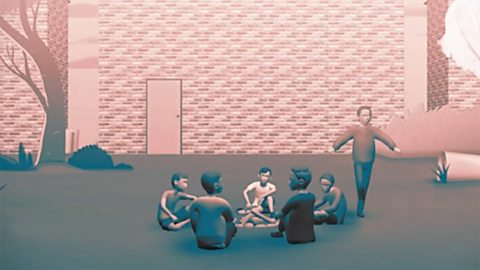
Paddy’s world consists of his home life, school and his friends, and each of these shows a different side of childhood. At home he is cared for as well as his family can afford, with supportive parents and a sibling who doesn’t cause him trouble. Typically for a child, Paddy does not realise any of this. He muses about how it would be “cool” to have a dead mother instead of the one who feeds and cares for him, and he does not hesitate to be cruel to his brother Sinbad when the opportunity arises. When the boys burn Sinbad’s lips, Paddy is more concerned that he lost face in front of his friends as he could not force his brother to open his mouth: “This was terrible; in front of the others, I couldn’t sort out my little brother.” This shows childhood can be easily taken for granted because children are too inexperienced and self-centred to realise the sacrifices made for them or the real impact of their actions on others. It is only as the novel progresses and he starts to lose the home life he had that he understands more of how good it was.
This essay could go on to make the following points, backed up by evidence from the novel and analysis/interpretation of that evidence:
- Paddy’s childhood is sad and powerless, as shown in his inability to stop his parents from fighting; the foreshadowing of their split, when he considers how “Sometimes when nothing happened it was really getting ready to happen”, shows he is aware of the tension and senses what is coming yet can do nothing about it.
- Paddy’s childhood is full of fun, as shown in his various antics with the boys – but these pursuits are often reckless or damaging, showing childhood has freedom but no responsibility of any kind, positive or negative.
- Paddy’s childhood is full of violence, from the ways he acts with his friends to his father and teachers giving physical punishments. The link between what is done to Paddy and other children as punishment and how they then behave themselves could be examined, as could changing attitudes towards violence against children from the time the novel is set until now.
Further study
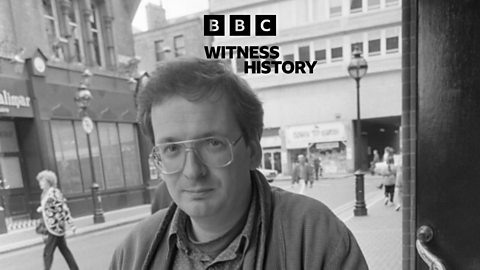
Witness History: Roddy Doyle writes Paddy Clarke Ha Ha Ha. audio
Roddy tells Ben Henderson about his inspiration for Paddy Clarke, balancing work and fatherhood, and winning the Booker Prize.
Only Artists: Roddy Doyle meets Antony Gormley. audio
The Irish author of many acclaimed novels including the Booker Prize winning Paddy Clarke Ha Ha Ha, meets the British sculptor famed for works such as the Angel of the North and Another Place.
Bookclub: Roddy Doyle. audio
Roddy Doyle discusses Paddy Clarke Ha Ha Ha with James Naughtie (and readers), including how he attempted to access his own childhood memories to inform the novel.

More on Paddy Clarke Ha Ha Ha
Find out more by working through a topic
- count1 of 5
- count2 of 5
- count3 of 5