Applicable context
Roddy Doyle – like Paddy Clarke – started life in Dublin in 1958. He too was brought up north of Dublin in a working class suburb. This could suggest that Paddy Clarke Ha Ha Ha might be seen as a semi-autobiographical work as it is likely Doyle used many of his own experiences when writing the novel.
Doyle became a teacher and was still working in a school when he wrote his first four novels, though he became a full-time writer after he won the Booker Prize for Paddy Clarke Ha Ha Ha. Doyle is passionate about the need for children – especially those from disadvantaged backgrounds – to receive a good education. In the novel he shows that while there are obviously some teachers and adults trying to educate Paddy, nobody really encourages his natural ability.
Roddy Doyle’s books tell the story of everyday life in the recent history of Ireland. He is known mainly for his famous Barrytown Trilogy. This is made up of The Commitments (1987), The Snapper (1990) and The Van (1991). These novels are all set in Barrytown, the same fictional suburb in Dublin where Paddy lives. Therefore – although the area is fictional – Doyle had previously created many stories of people living in this area in other works. Paddy Clarke Ha Ha Ha is just another example from one of many where he uses Barrytown to focus on individual people and situations from what could be any working class Irish community.
During the 1980s, many artists believed that by creating work describing the ‘real’ world they could inspire people to want to change it for the better. Doyle’s novel is one of social realism, showing snapshots of what real everyday life was like. Sometimes when we think of Ireland at this time in history we only focus on The time of unrest and violence in Northern Ireland between 1969 and 1998. but Doyle’s work reminds us that there is much more to the country. His writing describes the good and bad of everyday life in some working class communities. Alongside the warmth and adventure that Paddy feels and sees in his community, there are also incidents of violence, poverty and child neglect. Doyle shows us these through Paddy’s voice.
Some people have criticised Doyle for what they see as his negative or stereotypical depiction of Irish life, and some critics believe that the amount of ‘bad language’ in his books is unrealistic. However, Doyle does not write as an outsider looking in on working class life. He is from the communities he chooses to write about. His colourful dialogue, vivid descriptions and cultural references all give the novel realism.
The plot of Paddy Clarke Ha Ha Ha
The A character whose name is in the title of a book or play. Paddy Clarke lives with his mother and father, his brother Sinbad and his two younger sisters. Paddy and Sinbad fight a lot but, in general, the family seem happy.
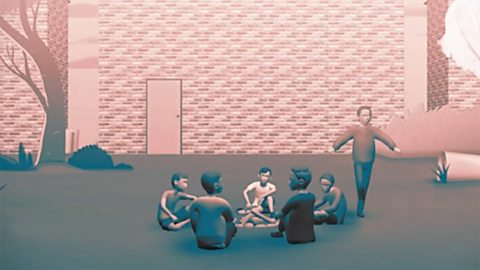
- We meet Paddy’s gang through a variety of mischievous scrapes – stealing from building sites for example.
- Paddy’s friend Kevin seems to be the leader of the group.
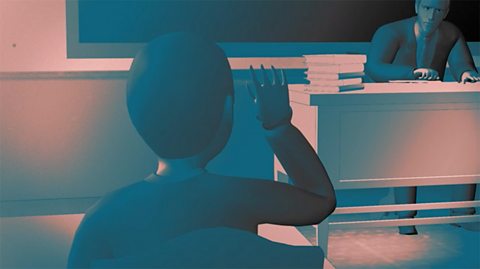
- Paddy is a bright, curious boy, despite the routine learning in Mr Hennessey’s class. He enjoys watching comedy films in the school hall.
- Paddy has memories of his youth and happy times with his parents but, as the novel progresses, Mr and Mrs Clarke begin arguing more and more.
- The Corporation houses are being built nearby – there is a feeling that things are changing in the area.
- Mr and Mrs Clarke’s fighting becomes noticeably more frequent and violent.
- Paddy begins to stay up to do more school work in the hope he can stop them. Consequently, he makes progress at school.
- Paddy’s father comes home drunk – something Paddy has never seen before. As things get worse in the house, Paddy tries to be kinder to Sinbad.
- Paddy becomes fascinated with Charles Leavy, a streetwise boy from the Corporation houses. In an attempt to befriend him, Paddy truants and smokes.
- Paddy fights with Kevin and falls out with him. Paddy’s gang turn against him.
- Paddy’s father leaves and Paddy becomes “the man of the house”.
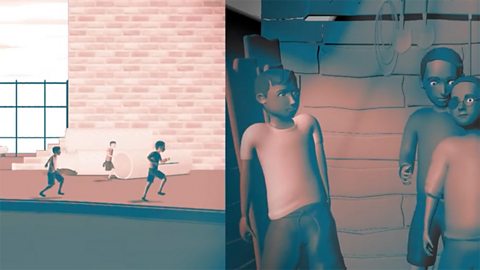
Watch: Plot summary
A year in the life of 10-year-old Paddy Clarke as he deals with his family, school and friends in the fictional Barrytown area of Dublin in the late 1960s
Paddy Clarke is 10 years old, reckless and full of energy.
He’s a member of a mischievous gang who we meet stealing from a building site.
Paddy recounts events in his childhood at speed. He describes one after another, almost at random.
In a shocking scene of bullying, the gang force Paddy’s little brother Sinbad, a sensitive boy (which the other boys see as a weakness), to hold lighter fuel in his mouth whilst Liam ignites it. Sinbad is permanently scarred.
Paddy talks about the games his gang plays at the seaside. The referee is Kevin – the leader of the gang who controls the other boys.
Paddy describes the set-up in Liam and Aidan O’Connell’s household, where the widowed Mr O’Connell has moved his girlfriend in.
At home Mr Clarke – “Da” – whose moods are often unpredictable, is encouraging and loving towards Paddy. But he can be grumpy and short tempered too. His physical attacks on his wife finally condemn his character.
Mrs Clarke – “Ma” – is warm and maternal. But she raises the children with a firm hand and Paddy is sometimes wary of her.
Paddy is keen to learn, but his teacher, Mr Hennessey, is lazy and sarcastic.
Paddy tells his parents he wants to be a missionary priest, but that just causes another argument.
The impulsive Mr Clarke buys a new car: “…he was mad sometimes, brilliant mad.”
The family goes on a picnic, but the weather is awful and Paddy senses tension: “Ma and Da said nothing…”
Paddy notices his parents arguing again. Mr Clarke gestures angrily towards his wife: “He made his hand open and close like a beak, the fingers stiff, right into her face.”
Back to the gang – Kevin is in charge of a game where they give themselves swearword names, but the boys are growing tired of him: “He wouldn’t take his turn.”
Paddy is increasingly aware that his parents’ relationship is in trouble. He rocks back and forth to comfort himself.
The boys go shoplifting. Paddy’s mother spots her son stealing, and his father punishes him with a belt.
Paddy starts a fight with Sean, but Sean fights back and Charles Leavy joins the attack: “The pain knocked me sideways.” Paddy is upset that none of his gang protected him.
Paddy hears Mr Clarke hit Mrs Clarke: “The first time I heard it I recognised it but I didn’t know what it was.”
His parents’ marriage is deteriorating further: “they were fighting all the time now.”
Paddy tries to discuss the TV news with his father, but his father mocks him and their relationship seems to be falling apart.
His father comes home drunk.
It seems that nothing can be as it was in the Clarke household: “She looked thinner. He looked older.”
Paddy tries to be kinder to Sinbad.
His mum and dad have a night without arguing.
Paddy fights with Kevin and falls out with him. Paddy’s gang turns against him.
Paddy’s father leaves, and Paddy is “the man of the house now.”
Test yourself
Further study
Witness History: Roddy Doyle writes Paddy Clarke Ha Ha Ha. audio
Roddy tells Ben Henderson about his inspiration for Paddy Clarke, balancing work and fatherhood, and winning the Booker Prize.
Only Artists: Roddy Doyle meets Antony Gormley. audio
The Irish author of many acclaimed novels including the Booker Prize winning Paddy Clarke Ha Ha Ha, meets the British sculptor famed for works such as the Angel of the North and Another Place.
Bookclub: Roddy Doyle. audio
Roddy Doyle discusses Paddy Clarke Ha Ha Ha with James Naughtie (and readers), including how he attempted to access his own childhood memories to inform the novel.

More on Paddy Clarke Ha Ha Ha
Find out more by working through a topic
- count2 of 5
- count3 of 5