Summary

  1. Deal not 'fully negotiated yet', Trump confirms as Iran media says agreement can still be cancelledpublished at 20:06 BST

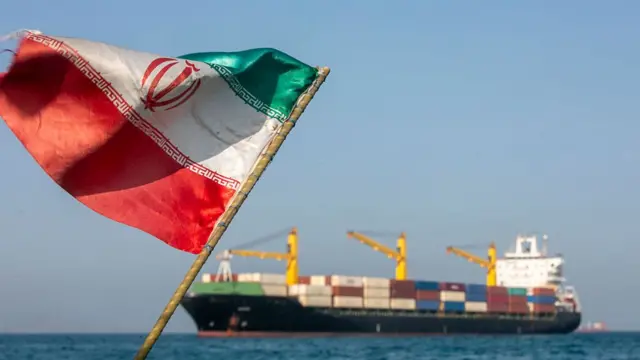
    A commercial ship carrying containers across the Strait of Hormuz sailing on water, as an Iranian flag waves in the foregroundImage source, Getty Images
    Image caption,

    Donald Trump has said a deal with Iran would include the full reopening of the Strait of Hormuz

    The day started with hints that we could hear more about a US-Iran deal after President Donald Trump yesterday said that one has been "largely negotiated".

    The US and Israel have described the document as a "memorandum of understanding" - with reports suggesting this is an initial agreement that would allow for further talks on aspects still in dispute.

    US media is reporting that nothing is expected to be signed today and Trump has confirmed a deal is not "fully negotiated yet" despite details having emerged about what could be included in a potential one.

    Trump tempered expectations for an imminent deal, writing on Truth Social that "both sides must take their time and get it right" while reiterating that Tehran "must understand" it cannot develop a nuclear weapon.

    Hours later, Iran's semi-official Tasnim news agency accused the US of "obstruction", saying that an agreement could still be "cancelled".

    In the US, Republicans are split about whether to support the reported contents of the deal. Trump appeared to address criticism, saying that "nobody has seen" the agreement - adding: "I don't make bad deals."

    Meanwhile, Hezbollah chief Naim Qassem urged the Lebanese government to abandon direct talks with Israel, saying disarming was "unacceptable", according to the military wing of the armed group.

    Lebanon and Israel are expected to hold a new round of peace talks in Washington early next month but a senior Israeli official told the BBC that Netanyahu insisted Israel will "maintain freedom of action against threats in all arenas", including Lebanon.

    We are pausing our live coverage shortly but you can read the full story here.
  2. Trump: 'I don't make bad deals'published at 19:31 BST

    We can now bring you US president's full statement that he posted on Truth Social:

    "If I make a deal with Iran, it will be a good and proper one, not like the one made by Obama, which gave Iran massive amounts of CASH, and a clear and open path to a Nuclear Weapon.

    "Our deal is the exact opposite, but nobody has seen it, or knows what it is.

    "It isn’t even fully negotiated yet.

    "So don’t listen to the losers, who are critical about something they know nothing about.

    "Unlike those before me who should have solved this problem many years ago, I don’t make bad deals! President DJT"

  3. Deal with Iran not 'fully negotiated yet' - Trumppublished at 19:28 BST

    Donald Trump says in a post on Truth Social that the deal with Iran is not "fully negotiated yet".

    He says if he makes a deal with Iran it will be "good and proper". We will bring you the full statement shortly.

  4. What Trump has said on a deal with Iran this month - a timelinepublished at 19:02 BST

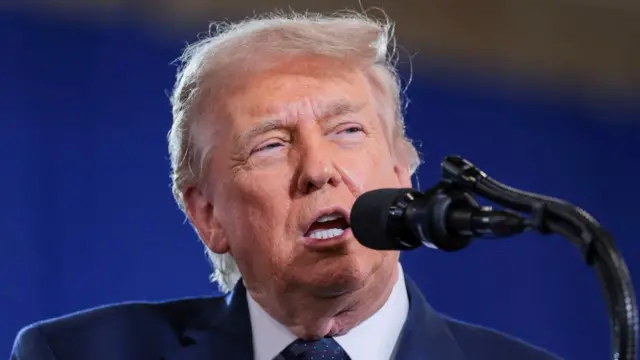
    Donald Trump speaking into a microphoneImage source, Reuters

    5 May: President Trump suspends a project to guide ships through the Strait of Hormuz, claiming progress had been made towards a final agreement with Iran.

    6 May: He says that an Iran deal is a "big assumption" and if it is not agreed, bombing at "a much higher level and intensity than it was before" would resume.

    10 May: Iran lays out its demands to end the war and reopen the Strait of Hormuz, reportedly including an immediate end to the war on all fronts, a halt to the US naval blockade of Iranian ports and guarantees of no further attacks on Iran. Trump criticises the proposal, calling it "TOTALLY UNACCEPTABLE".

    11 May: Trump tells reporters that Iranian leaders are "very dishonourable people" and accuses Iran of going back on an agreement to allow the US to remove its supply of enriched uranium. He insists that Iran would "never have a nuclear weapon".

    15 May: Trump says he would accept a 20-year suspension by Iran of its nuclear programme, in what appears to be confirmation of a shift in position away from a demand for a total end to it. Previously he had called on Iran to permanently cease enriching uranium.

    18 May: Trump says he has called off a military attack on Iran planned for the following day at the request of Gulf states as "serious negotiations are now taking place". He says on Truth Social: "NO NUCLEAR WEAPONS FOR IRAN!"

    23 May: Trump announces on Truth Social that an agreement has been "largely negotiated" and that "final aspects" were being discussed and would be announced shortly. He adds that the agreement would include the re-opening of the Strait.

    Today: He says the blockade of Iran's ports will remain "in full force and effect until an agreement is reached, certified, and signed". He adds that while the US' relationship with Iran is becoming "much more professional", Tehran "must understand, however, that they cannot develop or procure a Nuclear Weapon or Bomb".

  5. Iranian media says agreement could still be cancelled due to US 'obstruction'published at 18:35 BST

    Iran's semi-official news agency Tasnim reports that the US is obstructing some clauses of a potential agreement, including on releasing Iran's frozen assets.

    It says that this means there is "still a possibility" that the agreement may be "cancelled".

    Earlier, President Trump said negotiations towards a deal were "constructive" but that both sides "must take their time and get it right".

  6. No US-Iran deal expected to be signed today - US mediapublished at 18:13 BST

    US news outlet CNN is reporting that no US-Iran agreement is expected to be signed today, citing a senior administration official, who is quoted as saying that details of the agreement are still being negotiated.

    Another official tells the network that Iran has committed in principle to reopening the Strait of Hormuz and disposing of its stockpile of enriched uranium.

    The BBC's US partner CBS News is also reporting that the Iranians have in principle agreed to dispose of the uranium, citing a senior official source.

    Meanwhile, Axios reporter Barak Ravid also cites a senior Trump official as saying a deal is not expected to be signed today due to ongoing back and forth over certain parts of it, adding that it will take several days for this to go through all the approvals.

    "Our understanding is that Supreme Leader Mojtaba Khamenei approved the broad template of the agreement, but whether this will turn into a final agreement is still an open question," the official tells Ravid.

  7. Hezbollah chief says disarming is 'unacceptable'published at 17:53 BST

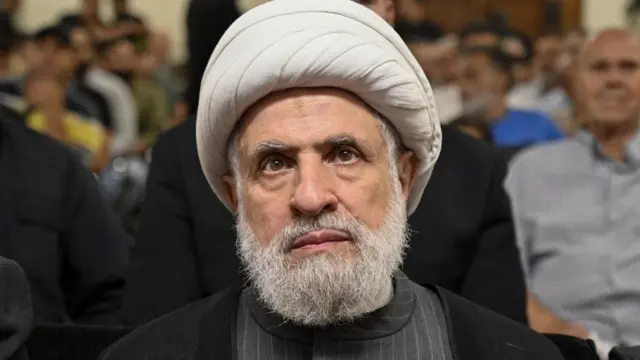
    Hezbollah chief Sheikh Naim QassemImage source, EPA-EFE/REX/Shutterstock

    Hezbollah chief Naim Qassem has urged the Lebanese government to abandon direct talks with Israel.

    The Islamic Resistance - the military wing of Hezbollah - posted on its media channel on Telegram, quoting Qassem as saying that disarming Hezbollah is "unacceptable" and amounted to "annihilation".

    The group later quoted Qassem as saying that direct negotiations are "unacceptable" and represent a "victory" for Israel.

    It comes as Lebanon prepares for a new round of talks with Israel in Washington early next month.

  8. Peace talks progress as Trump says both US and Iran 'must get it right'published at 17:39 BST

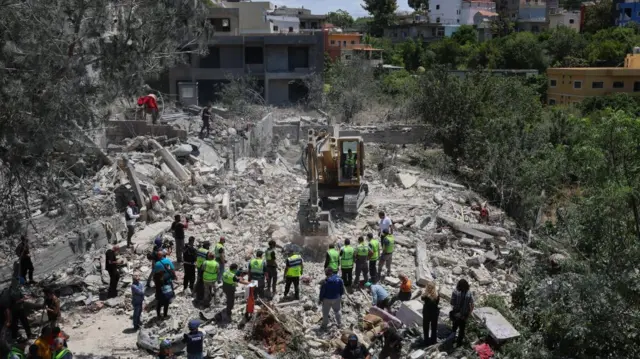
    Rescue workers looking on at the rubble-filled site of buildings after they have been hit by Israeli strikesImage source, EPA
    Image caption,

    Lebanese rescue workers search through rubble for killed and injured people after an Israeli airstrike earlier this week

    If you're just joining us, President Trump has said on Truth Social that negotiations towards a deal with Iran are "constructive" but that "both sides must take their time and get it right".

    He added that Iran "must understand" that it cannot develop a nuclear weapon and said he had informed US negotiators "not to rush into a deal" - read the full statement here.

    No official agreement has yet been confirmed, but Trump said last night that a deal was "largely negotiated". Details have been emerging today about what could be included - you can read more on what might be in the deal in our earlier post.

    Israeli Prime Minister Benjamin Netanyahu earliersaid that any final agreement with Iran "must remove the nuclear threat", adding that his policy remains that "Iran will not have nuclear weapons".

    A senior Israeli official told the BBC that Netanyahu also insisted Israel will "maintain freedom of action against threats in all arenas", including Lebanon.

    Lebanon and Israel have continued to report attacks since a ceasefire was agreed in April, and today the Israeli Defence Forces (IDF) ordered the evacuations of ten villages in the southern part of the country.

    Stay with us as we continue to bring you the key developments.

  9. Republicans split on whether to support Trump's possible deal with Iranpublished at 17:12 BST

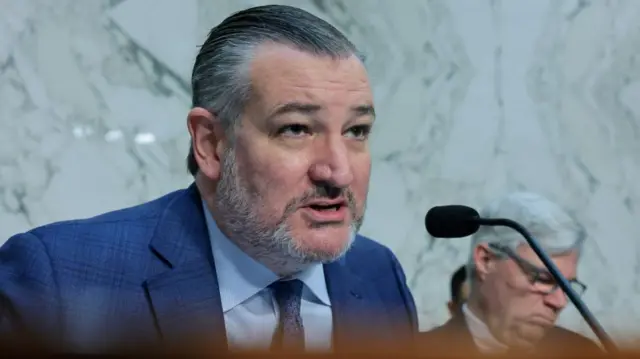
    Ted Cruz speaking into a microphoneImage source, Reuters
    Image caption,

    Senator Ted Cruz said he was "deeply concerned" about reports of a deal

    On the other side of the political sphere, Republicans are voicing their opinions in response to reports of a possible deal with Iran - but they are split on whether to support it.

    Senator Ted Cruz has said he is "deeply concerned" about the reported contents of the deal.

    Writing on X, Cruz says Trump was "right" to strike Iran, but it would be a "disastrous mistake" if the result is an Iranian regime "receiving billions of dollars, being able to enrich uranium & develop nuclear weapons, and having effective control over the Strait of Hormuz".

    • As a reminder, no agreement has been reached and we do not know exactly what could be included in a potential deal.

    Congressman Thomas Massie has told NBC it's probably a "pretty good deal" if Senators Lindsey Graham and Ted Cruz are "crashing out on it". Massie last year introduced a war powers resolution that would have prohibited the US from taking military action against Iran without Congressional approval.

    Senator Thom Tillis says developments on a potential deal don't "make sense", questioning why there were suggestions "we may accept the nuclear material remaining in Iran" despite Secretary of Defence Pete Hegseth saying weeks ago that "they had obliterated Iran's defences, and it was just a matter of time before we had the nuclear material".

    Senate majority whip John Barrasso is more positive, saying Trump "forced Iran to the table through a position of American strength", but acknowledges that details of any potential deal are unknown.

  10. Democrat believes Congress could curtail Trump's actions in Iranpublished at 16:50 BST

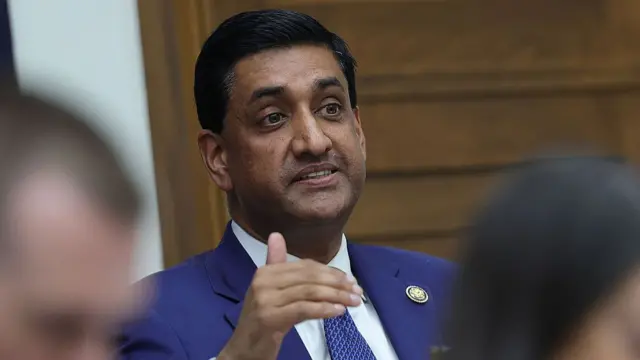
    Democratic Congressman Ro Khanna in a dark blue suit, white shirt and patterned blue tie speaking. There's a wooden door behind him to his leftImage source, Getty Images

    In the US, Democratic Congressman Ro Khanna earlier told NBC News’ Meet the Press he believes there are now enough votes to pass a war powers resolution through the US Congress.

    • For context: US House Republican leadership on Thursday cancelled a vote that would have have forced Trump to withdraw from Iran after it had become clear that Republicans likely did not have the votes to defeat the legislation.

    “There’s a lot of Republicans who believe the war should end,” Khanna says. “They’ve talked to farmers who say the price of nitrogen, ammonia, urea are through the roof because of the blockades and control of the Strait of Hormuz.”

    Khanna also said constituents were struggling with high petrol prices.

    “This is putting pressure on Trump to get a negotiation, and it’s why Congress matters,” Khanna said. “Even when we don’t get a vote through, we do put pressure on the president, hopefully this war ends.”

  11. What could be in the deal? And who is disagreeing on what?published at 16:30 BST

    Tara Mewawalla
    Live reporter

    No official agreement has been reached between the US and Iran but President Trump said yesterday that it has been "largely negotiated". Iran's foreign ministry said that US and Iranian positions had been converging in the last week.

    Here is the latest on what we've heard about a potential deal so far:

    Strait of Hormuz

    • Trump said the deal would include the reopening of the Strait of Hormuz
    • Iran's semi-official Tasnim news agency said that traffic through the strait would return to pre-war levels within 30 days - but that it would "not return to its pre-war status"
    • US Secretary of State Marco Rubio said that progress over the past 48 hours could result in a "completely open strait... without tolls"

    Nuclear

    • Trump said Iran "must understand" it cannot "develop or procure" nuclear weapons. Israel's Benjamin Netanyahu later added that any final deal with Iran will need to "remove the nuclear threat" - a process he says would include the removal of "enriched nuclear material" from Iran
    • Tasnim said Iran has made no commitments in the draft resolution to hand over any of its nuclear material, despite western media reports to the contrary. It says talks on this issue are postponed until "after the possible end of the war"
    • However, citing a US official, news site Axios reported that the deal involves draft commitments from Iran never to pursue nuclear weapons, and to negotiate over its enriched uranium
    • The New York Times also reports that the proposal includes an apparent commitment from Tehran to give up its stockpile of highly enriched uranium, citing two US officials. The BBC has not been able to independently verify either of these reports
    • The state-run Islamic Republic News Agency (IRNA) said the Iranian president was "ready to assure the world" that the country is not seeking nuclear weapons

    US-Iran relations

    • Citing a US official, Axios reports that the deal involves a 60-day ceasefire extension, with US forces staying in the region for that period and only withdrawing once a final deal is reached
    • It also reports that the deal includes the US lifting its blockade on Iranian ports, issuing some sanction waivers on Iranian oil and the US to negotiate on lifting sanctions and unfreezing Iranian funds
    • Another Iranian news outlet, the Islamic Revolutionary Guard Corps (IRGC)-linked Fars, says some sticking points remain, related to frozen Iranian assets and sanctions on oil and related substances
  12. 'Israel will maintain freedom of action against threats in all arenas' - senior officialpublished at 16:15 BST

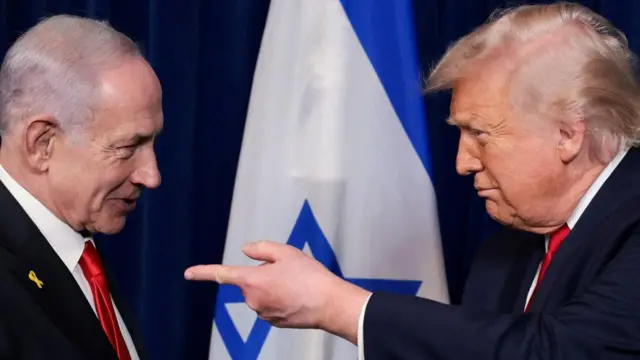
    President Trump pointing at Prime Minister Netanyahu in front of an Israeli flagImage source, Reuters
    Image caption,

    An Israeli official told the BBC Prime Minister Netanyahu and President Trump had spoken last night

    More from Israel, where a senior Israeli official tells the BBC that Benjamin Netanyahu reiterated to Trump that Israel will "maintain freedom of action against threats in all arenas", including Lebanon.

    The US is updating Israel on the negotiations for a memorandum of understanding "to open the Strait of Hormuz and enter into negotiations for a final agreement on the points that are in dispute", they say.

    The official adds: "President Trump made it clear that he will stand firm in the negotiations on his consistent demand for dismantling the Iranian nuclear program and removing all enriched uranium from its territory, and that he will not sign a final agreement without accepting these conditions."

    The official's comments where echoed by Netanyahu himself in the last few minutes. He says that no final deal with Iran will be possible until the nuclear threat is removed.

  13. 'Any final agreement must remove nuclear threat' - Israeli prime ministerpublished at 16:03 BST

    Benjamin Netanyahu says he's spoken with Donald Trump last night to discuss the latest developments in the talks with Iran.

    Writing on X a few minutes ago, Netanyahu says he and the US president have agreed that "any final agreement with Iran must remove the nuclear threat".

    He says that this process includes the removal of "enriched nuclear material" from Iran as well as the dismantling of Tehran's nuclear enrichment facilities.

    "My policy, like President Trump's remains unchanged: Iran will not have nuclear weapons."

  14. What do we know about Iran's nuclear programme?published at 15:41 BST

    Iran's nuclear programme remains a key factor in any potential agreement between Tehran and Washington.

    In his latest post on Truth Social, President Trump has said Iran "must understand" it cannot "develop or procure a nuclear weapon or bomb".

    Iran has repeatedly stated its nuclear programme is for civilian purposes only. However, many countries, in addition to the International Atomic Energy Agency (IAEA), are not convinced.

    Previous nuclear deal

    In 2018, during Trump's first administration, the US pulled out of the existing nuclear deal with Iran and reinstated economic sanctions.

    In retaliation, Iran installed thousands of advanced centrifuges to enrich uranium, something which had been banned by the deal.

    US strikes against nuclear sites

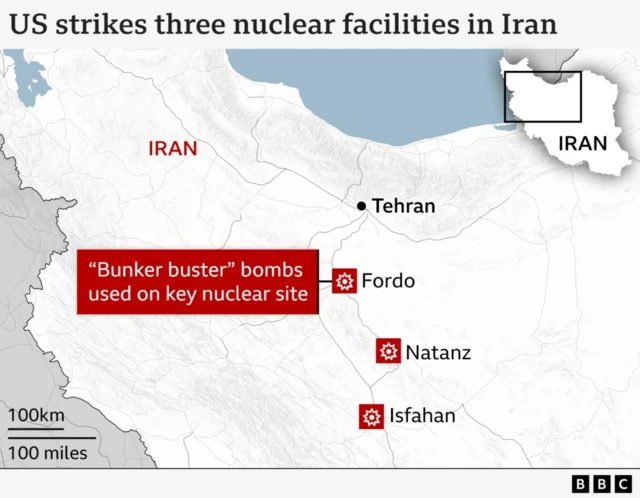
    Then, in June 2025, the US bombed three key nuclear sites in Iran - Fordo, Natanz and Isfahan - which Trump said "completely and totally obliterated" Iran's nuclear enrichment facilities.

    However, the Pentagon's initial assessment of the attacks indicate it did not destroy Iran's nuclear programme, but likely only set it back by months.

    US-Iran war

    Since the outbreak of the US-Israeli war with Iran on 28 February, the elimination of Iran's nuclear programme has been an often-repeated motivation by US officials.

    Earlier today, Secretary of State Marco Rubio reiterated the US position that "Iran can never possess a nuclear weapon".

    However, Iranian state media has denied reports than Iran has agreed to hand over its nuclear material and stated Iran's nuclear programme is not covered by the ongoing negotiations.

    Map showing the locations of US strikes against Iranian nuclear targets Fordo, Natanz and Isfahan in June 2025
    Image caption,

    The US struck three Iranian nuclear sites in June 2025

  15. Iran 'must understand' it cannot develop a nuclear weapon - Trumppublished at 15:25 BST

    We can now bring you the full statement that President Donald Trump posted to Truth Social.

    "One of the worst deals ever made by our Country was the Iran Nuclear Deal, put forth and signed into existence by Barack Hussein Obama and the rank amateurs of the Obama Administration.

    "It was a direct path to Iran developing a Nuclear Weapon. Not so with the transaction currently being negotiated with Iran by the Trump Administration - THE EXACT OPPOSITE, in fact!

    "The negotiations are proceeding in an orderly and constructive manner, and I have informed my representatives not to rush into a deal in that time is on our side.

    "The Blockade will remain in full force and effect until an agreement is reached, certified, and signed. Both sides must take their time and get it right.

    "There can be no mistakes! Our relationship with Iran is becoming a much more professional and productive one. They must understand, however, that they cannot develop or procure a Nuclear Weapon or Bomb.

    "I would like to thank, thus far, all of the countries of the Middle East for their support and cooperation, which will be further enhanced and strengthened by their joining the Nations of the historic Abraham Accords and, who knows, perhaps the Islamic Republic of Iran would like to join, as well!

    "Thank you for your attention to this matter. President DONALD J. TRUMP"

  16. Trump says he has told negotiators 'not to rush into a deal'published at 15:15 BST
    Breaking

    Writing on Truth Social, President Donald Trump says "negotiations are proceeding in an orderly and constructive manner" and that he has informed the US team "not to rush into a deal", adding that "time is on our side".

    The US blockade on Iranian ports will remain until an agreement is reached, he says.

    We will bring you the full statement shortly.

  17. Speaker Johnson says proposal allows 60 days to 'get all the details done'published at 15:00 BST

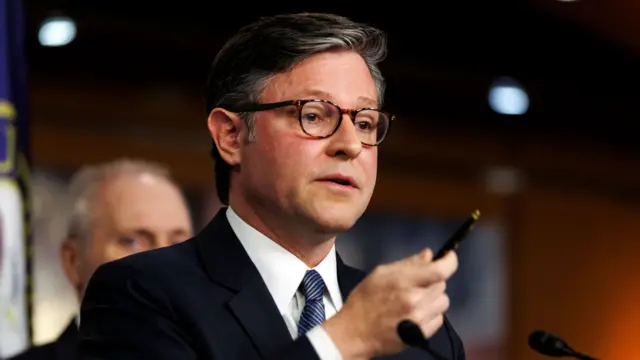
    Speaker of the House Mike Johnson in a black suit, white shirt and striped tie holds up a pen as he answers questions from reportersImage source, EPA

    House Speaker Mike Johnson has been talking about the potential Iran deal with Fox News. He says he's very confident it will stop Iran having nuclear weapons.

    "I talked with him [President Trump] late last night. He’s as resolute as he’s been from the beginning," Johnson says.

    The highest-ranking Republican in the House of Representatives says the current proposal being worked on by the US and Iran will "allow 60 days to get all the details done".

    He says Trump’s number one condition is Iran can’t have a nuclear weapon.

    “We’ll take care of the nuclear dust,” he adds.

  18. Democratic congressman: 'Until you have a deal, you have no deal'published at 14:43 BST

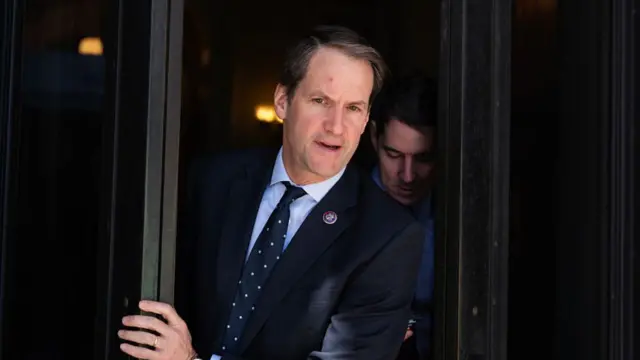
    Congressman Jim Himes in a dark suit as he walks out past revolving doors of a buildingImage source, Getty Images

    With few details at this point, US lawmakers have started to weigh in on potential progress between the US and Iran.

    Democratic Congressman Jim Himes has pressed for more details during an interview with CNN.

    "Until you have a deal, you have no deal. What you have here is a framework," Himes says. He adds that "if the leaked details are correct, yes the Iranians are going to get to ship oil".

    "Apparently this deal may involve immediate sanctions relief," Himes says. "It's hard to arrive at any conclusion other than the fact that because of the political toxicity of this war, President Trump has just surrendered."

  19. What about Lebanon?published at 14:29 BST

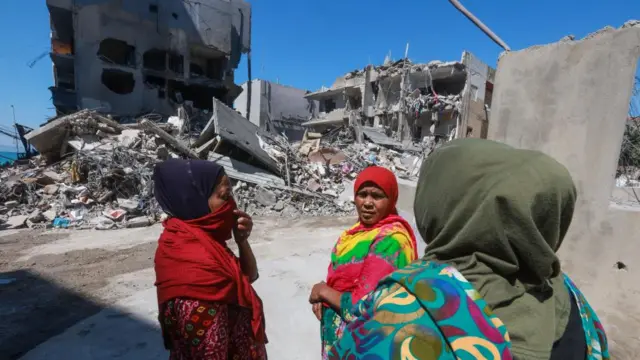
    Three women gathered near the sit of a strike in southern Lebanon. Rubble of buildings can be seen behind themImage source, Reuters
    Image caption,

    Women gather at the site of an overnight Israeli strike in the southern city of Tyre in Lebanon this weekend

    Despite a ceaserfire between Israel and Lebanon having been agreed and extended, the death toll in Lebanon carries on climbing.

    Lebanon was drawn into the war on 2 March, when the Iran-backed group Hezbollah fired rockets at Israeli positions, after Iran's supreme leader was killed in a joint US-Israeli strike. Israel then launched a military operation targeting southern and central Beirut and parts of southern and eastern Lebanon.

    Israel's defence minister has since said that he plans to keep control over a swathe of territory in Lebanon even after the war is over - read more here.

    What is the death toll?

    • As of Friday, Lebanon's health ministry said Israeli attacks had killed 3,111 people, and wounded over 9,400
    • More than a million people - roughly one in every six in the country - have been displaced from their homes, according to the United Nations refugee agency UNHCR
    • The Israeli military reports 21 of its soldiers have been killed in or near Lebanon since 2 March

    What about the ceasefire?

    Lebanon and Israel agreed a 10-day ceasefire that took effect at midnight local time on 16 April. Donald Trump then said this was extended on 23 April. It was then extended again on 15 May, by 45 days.

    Both Israel and Hezbollah have continued to exchange fire since the ceasefire first came into force, and both have accused each other of ceasefire violations.

    Earlier, the Israel Defence Forces ordered the evacuation of ten villages in southern Lebanon.

  20. IDF orders evacuation of ten villages in Lebanonpublished at 14:02 BST

    The Israel Defence Forces (IDF) is issuing "urgent" warnings to residents in ten villages in southern Lebanon.

    In a post on X, IDF Arab spokesperson Avichay Adraee says that, "in light of Hezbollah's violation of the ceasefire agreement", the IDF is "compelled to act forcefully against them".

    • As a reminder, Lebanon and Israel agreed on 15 May to extend their truce by 45 days, with the two sides set to resume negotiations at the beginning of June

    Adraee orders people in the area to evacuate their homes and move at least 1,000 metres away from the villages and towns to open areas.

    Both Israel and Hezbollah have continued to exchange fire since the US-brokered ceasefire came into force last month.