Summary

  1. 'I should not have appointed Mandelson': MPs grill PM over appointmentpublished at 18:57 BST

    Rachel Flynn
    Live reporter

    Media caption,

    Watch: Starmer faces MPs as Mandelson row drags on

    Keir Starmer once again came under fire this afternoon for his appointment of Lord Mandelson to the highest diplomatic position, as UK ambassador to the US.

    Those 213 days Mandelson was in office have left the PM with a serious headache. Fellow Labour MP - and Foreign Affairs Select Committee Chair - Emily Thornberry accuses the PM's team of putting Mandelson's appointment over security considerations.

    Starmer rejects this - he says a "deliberate decision" was taken to withhold information about Mandelson's vetting from him, despite multiple opportunities to do so.

    He repeated throughout the session that had he known Mandelson's security vetting by the United Kingdom Security Vetting (UKSV) was denied, he would not have been appointed.

    As for Olly Robbins - former top Foreign Secretary official - Stamer says Robbins "took the view this process did not allow him to disclose to me the recommendation of UKSV".

    While friends of Robbins say an Act legally prevented him from passing on the information, Starmer says although information provided to the review must be protected, the recommendation itself does not.

    That will undoubtedly be discussed as Robbins faces MPs at the Foreign Affairs Committee tomorrow morning.

    We're ending our live coverage shortly, but we'll be back early for Robbins' turn to provide answers. For the top lines from today's statement you can read our news story.

  2. BBC Verify

    When should Mandelson’s vetting have been carried out?published at 18:38 BST

    By Tamara Kovacevic

    It’s now known that security vetting was carried out after Mandelson's appointment was announced by the prime minister. He told MPs this afternoon: “For a direct ministerial appointment, it was usual for security vetting to happen after the appointment but before starting in post. This was the process in place at the time.”

    He then went on to quote Chris Wormald, formerly the UK's top civil servant, who said in a letter in October last year, external “the usual ambassadorial appointments process was followed” which “included the National Security Vetting process” after Mandelson’s appointment was announced.

    He added: “The National Security Vetting process […] will usually happen after a job offer and before an individual takes up post.”

    However, government documents show that in November 2024, external - a month before Mandelson’s appointment - then-Cabinet Secretary Simon Case told Starmer that if he wanted to make a political appointment “you should give us the name of the person you would like to appoint and we will develop a plan for them to acquire the necessary security clearances and do due diligence on any potential Conflicts of Interest or other issues of which you should be aware before confirming your choice".

    Hannah Keenan from the Institute for Government think tank says that since the Mandelson case, the government has changed the system so that vetting now needs to be carried out before announcements are made in similar cases.

  3. Here's how other parties responded to Starmer's addresspublished at 18:21 BST

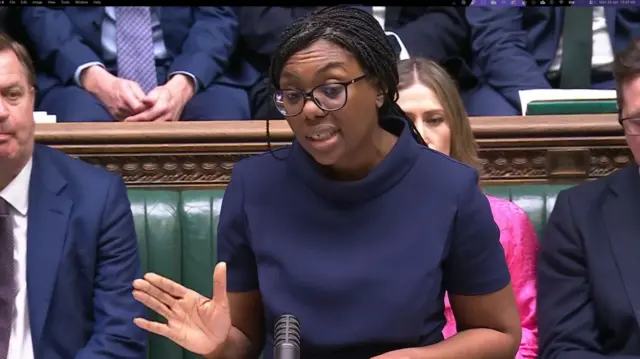
    Kemi Badenoch speaking in the House of CommonsImage source, House of Commons

    We've heard from a range of political parties in response to Starmer's address.

    Conservative leader Kemi Badenoch asked Starmer six questions and accused him of breaching the ministerial code by not correcting the record at the earliest opportunity. In response, Starmer said that proper process was followed - and reiterated that nobody in No 10 was informed about the UK security vetting agency's recommendation.

    Meanwhile, Lib Dems leader Ed Davey accused Starmer of blaming his officials rather than taking responsibility for appointing Mandelson. Davey also repeated his call for Starmer to resign.

    That was echoed by Green Party MP Ellie Chowns, who asked Starmer to take personal responsibility and resign, adding it was "staggering and unforgivable" for the PM to have appointed Mandelson.

    And the Scottish National Party's Stephen Flynn accused Starmer of ignoring Epstein victims, and asked whether the PM was gullible, incompetent, or both.

    Plaid Cymru MP Liz Saville Roberts said the PM is "hiding behind a thicket of legalese and procedure".

    We've not heard from Reform UK leader Nigel Farage - but one of his MPs Lee Anderson was asked to leave after accusing Starmer of lying.

    Media caption,

    Plaid's Liz Saville-Roberts criticises Labour record of appointments

  4. BBC Verify

    What does the law say about sharing vetting concerns?published at 18:07 BST

    By Gerry Georgieva

    The prime minister has faced several questions about what conversations he had with Olly Robbins - the top civil servant at the Foreign Office who was sacked last week after it emerged that Peter Mandelson had failed security vetting after being appointed as UK ambassador to Washington.

    Starmer, who told MPs that he had not been informed about the vetting outcome, said “when I spoke to him [Robbins] on Thursday, his view to me was that he couldn’t provide this information… because he wasn’t allowed to provide this information to me”.

    We have not heard Robbins’ account of what happened but he is due to give evidence about Mandelson’s vetting to MPs tomorrow.

    So what does the law say about civil servants disclosing vetting concerns? The Constitutional Reform and Governance Act 2010, external says that civil servants are responsible for the vetting process and that ministers don’t have the power to influence it - but it doesn’t seem to explicitly rule out sharing information.

    And the National Security Vetting privacy notice, external says: “In exceptional circumstances where a security risk has been identified", relevant information may be shared.

    Jonathan Jones from law firm Linklaters told BBC Verify that ministers could be told something about the process if it was essential such as if “the outcome was such that an individual could not be appointed to a particular post, or had to be removed from one”.

    It would be difficult though to imagine any actual details of the vetting being shared, he added.

  5. Zarah Sultana removed from the Commons by Speakerpublished at 18:00 BST

    Your Party MP Zarah Sultana is told by the Speaker to leave the chamber after calling Starmer a "bare-faced liar".

    Sultana refers to Starmer's comments that he had no knowledge of the UK security vetting agency's recommendation and points to the "public knowledge" of Mandelson's relationship with Epstein.

    "He is gaslighting the nation so let's call this out for what it is - the prime minister is a bare-faced liar [...]" she says.

    Sir Lindsay Hoyle calls for order and asks her to leave, threatening to name her otherwise.

    When she does not, a vote is taken for her to leave.

    The prime minister has said he was first told of issues with Mandelson’s vetting last week. He has described it as “staggering” he wasn’t told before.

  6. Five things Starmer told the Commons todaypublished at 17:47 BST

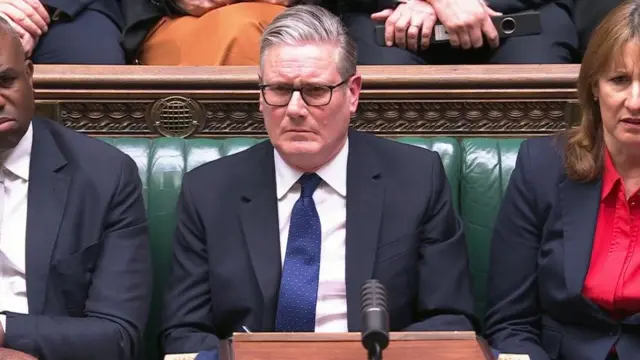
    Starmer, Lammy and Reeves looking displeased on the front bench in the House of CommonsImage source, House of Commons
    • The prime minister said he found out "for the first time" on 14 April that Foreign Office officials granted Mandelson developed vetting clearance, against the specific recommendation of the UK's security vetting agency (UKSV)
    • He said it was usual for security vetting to happen after the appointment of ambassadors, but before they started in their post. He added he since changed this process so that now an appointment can't be made until after security vetting is passed
    • He also said top civil servant Olly Robbins' defence for not telling the him about Mandelson's vetting was that the process did not allow him to do so. But the government has published legal advice this week saying it would have been OK to pass on the recommendation
    • The prime minister said he "did not mislead the House of Commons" in previous statements about the appointment process. Earlier No 10 suggested Starmer inadvertently misled Parliament over Mandelson vetting

  7. 'I did not mislead the House of Commons' - Starmerpublished at 17:34 BST

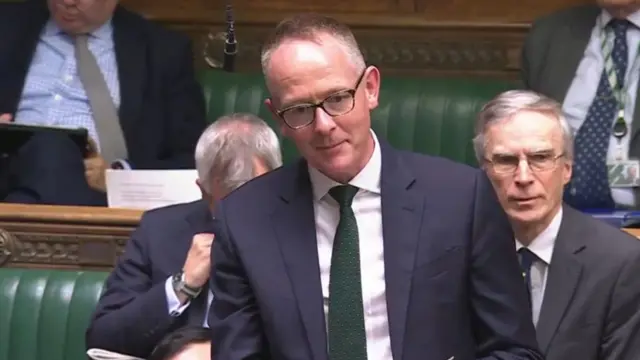
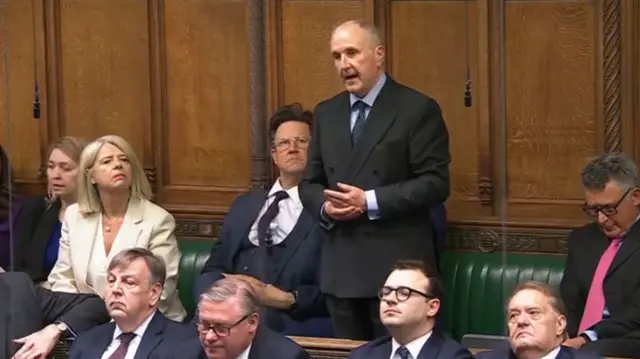
    Scottish Conservative MP John Lamont asks Starmer whether he accepts that he "inadvertently misled the House of Commons", after having said various things "that have now turned out not to be true" about Peter Mandelson's vetting process.

    "No I did not mislead the House of Commons. I accept that information that I should have had, and information that the House should have had should have been before the House, but I did not mislead the House," Starmer replies.

    Earlier No 10 suggested Starmer inadvertently misled Parliament over Mandelson vetting.

    John Lamont speaks in Parliament, wearing a blue suit and green tie.Image source, House of Commons
    Image caption,

    Scottish Conservative MP John Lamont

  8. Analysis

    Mood among Labour MPs 'bad' after initial reluctance to criticise PMpublished at 17:26 BST

    Nick Eardley
    Political correspondent

    It's striking that a number of Labour MPs - or suspended former Labour MPs - have asked tricky questions.

    In particular, Dame Emily Thornberry's suggestion that some in No 10 were so keen for Mandelson to be appointed, that overrode everything else.

    Last week some Labour MPs seemed reluctant to criticise the prime minister. But after the prime minister's statement, I'm picking up that some are frustrated.

    One has messaged to say the prime minister's performance was "abysmal" and the mood among Labour MPs was "very very bad".

  9. PM orders review into national security concerns over Mandelsonpublished at 17:22 BST
    Breaking

    Jack Fenwick
    Political correspondent

    The prime minister has ordered a review into national security concerns raised by Peter Mandelson’s time as ambassador to the US.

    Keir Starmer confirmed that Mandelson had access to the highest level of secret material during his time in Washington.

    He told MPs: “I have asked the Government Security Group in the Cabinet Office… to look at any security concerns raised during Peter Mandelson’s tenure.”

  10. Green MP calls Mandelson appointment 'unforgivable'published at 17:16 BST

    During the session Green Party MP Dr Ellie Chowns has said it is "staggering and unforgivable" that Starmer both appointed Mandelson before the vetting and that he appointed him knowing his friendship with Epstein.

    She has asked if he will he take personal responsibility and resign.

    Starmer has responded that he set out the facts of what has happened - repeating he finds it "staggering" that he wasn't given the information that he should have been.

    Media caption,

    Mandelson appointment 'unforgivable' - Green Party's Ellie Chowns

  11. Analysis

    A bruising situation for Starmer, who faced critical questions from own partypublished at 17:06 BST

    Henry Zeffman
    Chief political correspondent, reporting from the House of Commons

    I’ve been watching Starmer's statement from the press gallery above the Speaker’s chair in the House of Commons.

    Any assessment of the mood of the Commons is always just impressionistic, but my impression is that the Labour MPs present - who were audibly pretty bullish during the prime minister’s opening statement - felt much less so by the end of Kemi Badenoch’s response.

    Badenoch’s words were mostly heard in silence by the Labour benches, and silence from their troops sitting behind them can often be quite concerning for a party leader.

    It will have been bruising for the prime minister that the first few questions from Labour MPs were pretty critical, even though they came from MPs who have their own histories with Starmer.

    One other thought. Badenoch asked six questions of Starmer. That’s the same number of questions the leader of the opposition gets to ask at PMQs. Don’t be surprised if she asks them again on Wednesday.

  12. Reform MP told to leave after refusing to withdraw Starmer attackpublished at 17:01 BST

    Earlier in the session Reform MP Lee Anderson told Starmer no-one believed his explanations, and asked whether he agreed he had been lying.

    Before Starmer answered, Speaker of the House Lindsay Hoyle told Anderson "we don't use those words" and asked him to withdraw them.

    Anderson refused to, saying that Starmer "couldn't lie straight in bed", and was told to leave.

    Media caption,

    Reform's Anderson ejected from Commons for calling Starmer a liar

  13. Analysis

    Starmer divulges what Robbins used in his defence - it's a significant answerpublished at 16:56 BST
    Breaking

    Jack Fenwick
    Political correspondent

    We’ve just had what may be the most significant answer yet from the prime minister.

    Keir Starmer effectively sacked Olly Robbins last week because the senior civil servant didn’t tell him that the vetting team had recommended against giving clearance to Lord Mandelson.

    Starmer was just asked what Robbins said to him when the two men spoke before the civil servant left his job last week.

    The prime minister said: “He [Robbins] took the view this process did not allow him to disclose to me the recommendation of UKSV.”

    Friends of Robbins have claimed in recent days that the Constitutional Reform and Governance Act legally prevented him from passing on the information.

    But the government published some legal advice this week saying that while officials can’t pass details of vetting to ministers, it would have been OK to pass on the recommendation.

    That will be one of the key questions for Robbins when he faces MPs tomorrow.

  14. Starmer says he 'didn't accept' Foreign Office official's explanation over vetting callpublished at 16:51 BST

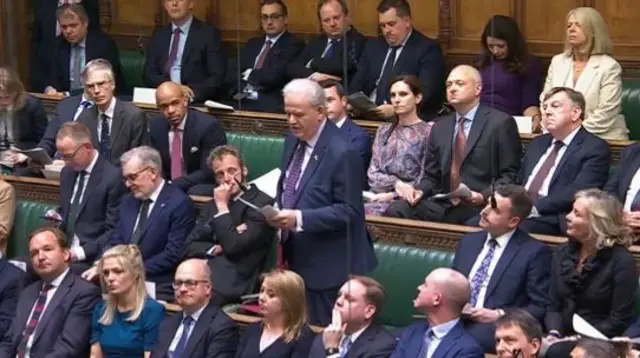
    A group of MPs sitting on green sofas while Lewis stand up and speaks, reading off paperImage source, House of Commons

    Conservative MP Sir Julian Lewis asks Starmer whether he asked former top official Olly Robbins why the Foreign Office overruled the UKSV recommendation before sacking him last week.

    "I did ask him and I didn't accept his explanation," Starmer responds.

    "That's why I sacked him."

    Robbins is due to give evidence to the Foreign Affairs Committee tomorrow.

  15. SNP member accuses Starmer of ignoring Epstein victimspublished at 16:46 BST

    The Scottish National Party's Stephen Flynn accuses Starmer of ignoring the victims of Jeffrey Epstein when appointing Mandelson as ambassador to Washington.

    He asks if Starmer is gullible, incompetent, or both.

    Starmer says that he has laid out the relevant facts surrounding the vetting, and "nobody is suggesting this information was made available to me".

    The prime minister has repeatedly apologised to Epstein's victims over Mandelson's appointment.

    Media caption,

    PM puts blame 'on the judgment of others,' says SNP's Flynn

  16. Tory MP asks if PM would've told Parliament of failed vetting had it not been in presspublished at 16:39 BST

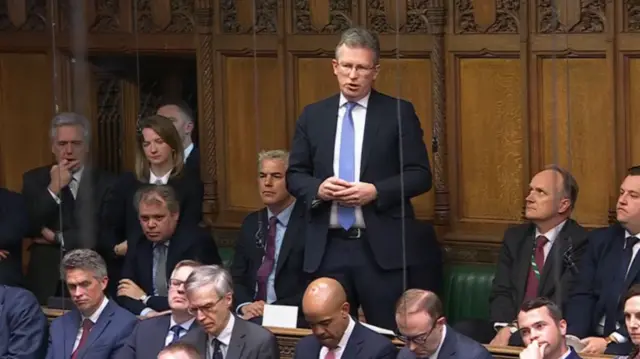
    Jeremy Wright speaks in Parliament.Image source, House of Commons

    Conservative MP Jeremy Wright, a member of the Intelligence and Security Committee, asks Starmer whether Parliament would have been told of Mandelson's national security vetting had it not been reported by the media.

    On Thursday last week, the Guardian published a story revealing that the Foreign Office overruled a decision to deny Peter Mandelson security clearance, external.

    Wright says the prime minister found out about the existence of information on Mandelson's security vetting process on Tuesday night, and yet the committee - who asked for information about vetting - heard about it from the press.

    Starmer says information would have been, and has now been, provided to the committee.

    "On Tuesday night, I found out simply that the recommendation had been made to deny clearance and yet clearance had been given. I wanted to understand who gave that clearance, on what basis and who knew about it so I could update the house," he says.

  17. Starmer says Foreign Office 'repeatedly' asked about vetting in light of media reportspublished at 16:33 BST

    Simon Hoare speaks in Parliament, wearing a suit and tie.Image source, House of Commons
    Image caption,

    Conservative MP Simon Hoare

    Among a list of questions put earlier by Kemi Badenoch was why No 10 didn't deny a story in the Independent in September that reported Mandelson had failed vetting.

    Conservative MP Simon Hoare now similarly asks whether No 10 had asked whether there was any truth to the media reports Mandelson had failed vetting.

    Starmer says that the Foreign Office was "repeatedly" asked in light of these inquiries. He says the same answer came back because a "clear decision" had been taken not to disclose the information.

    "The decision was that I wasn't to know and nobody else was to know," Starmer says. "That was wrong."

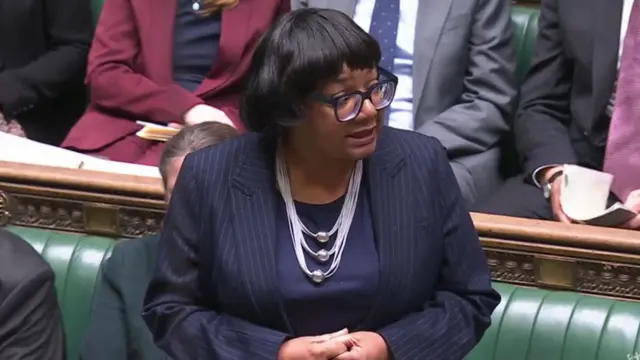
  18. Ordinary people want transparency, Independent MP Diane Abbott sayspublished at 16:28 BST

    Diane Abbott speaks in Parliament, wearing a blue pinstripe jacket.Image source, House of Commons

    Independent MP Diane Abbott now stands and underlines that ordinary people want "transparency" and to be able to have "confidence" in the words of elected politicans.

    Mandelson has a "history" she says as she points to his two previous resignations.

    It is one thing to say "nobody told me", Abbott continues, "the question is why didn't the prime minister ask?"

    Starmer responds saying he should not have appointed Mandelson and says "as soon as further revelations came to light" he did ask for a review of the process which in September assured him the process had been followed.

  19. Lib Dems leader accuses Starmer of blaming his officialspublished at 16:25 BST

    Sir Ed Davey, leader of the Liberal Democrats, says of Starmer: "He blames his officials... even on his own account, the prime minister appointed Peter Mandelson... even after he had been warned about his relationship with Jeffrey Epstein."

    Davey asks why Starmer asked "so few questions personally about the vetting process himself".

    He also asks whether he was given advice by former Cabinet Secretary Simon Case that "the necessary security clearances should be acquired before he confirmed his choice for US ambassador", and whether he followed that advice, before asking him to resign.

    Starmer responds that when he asked Case to review the process in September, when the Bloomberg emails came to light, he was told "the process was as it should have been".

    Media caption,

    Ed Davey calls for Starmer to resign over vetting scandal

  20. Analysis

    Starmer says Foreign Office didn't tell No 10 that Mandelson failed vetting - a recappublished at 16:23 BST

    Jack Fenwick
    Political correspondent

    We didn't learn much new in Starmer's initial statement in the House of Commons.

    He chose not to address whether he misled Parliament - that's after Downing Street suggested earlier in the day that the PM had indeed misled MPs, albeit inadvertently and unknowingly.

    Instead the prime minister focused on the timeline – and gave the most detailed account yet of his defence in this whole row.

    He detailed several occasions on which he believes officials of the Foreign Office had an opportunity to tell No 10 that the vetting team had recommended Mandelson not be given clearance.

    The prime minister said that officials chose not to tell anyone on the following occasions:

    • When the initial recommendation from the vetting team was submitted
    • When Mandelson was sacked after Bloomberg revealed the extent of his relationship with Jeffrey Epstein
    • When the then-Cabinet Secretary Chris Wormald conducted a review into Mandelson’s appointment
    • When Olly Robbins and Yvette Cooper gave evidence to Parliament's foreign affairs select committee
    • When the prime minister ordered a wider review into the vetting process