Summary

  • The former top official at the Foreign Office, Sir Olly Robbins, says No 10 had a "dismissive approach" to Lord Mandelson's vetting - watch live above as he gives evidence to MPs

  • He was sacked after the PM discovered Robbins did not tell him that Mandelson had failed the vetting process to be the US ambassador - timeline of events

  • Robbins tells the Foreign Affairs Select Committee there was an "atmosphere of pressure" and a "very strong expectation" from No 10 that Mandelson should be "in post and in America" as quickly as possible

  • It comes after Keir Starmer said officials made a "deliberate decision" not to tell him that Mandelson had failed security vetting

  • In a letter to the committee, Robbins says the body that conducts vetting considered Mandelson a "borderline" case and was "leaning towards recommending that clearance be denied"

  • He says he was never shown the form where the vetting team said it had "high concerns" about Mandelson

  • Robbins still believes that he and the Foreign Office made the correct decision given the information he received - the PM's position is the exact opposite, writes Henry Zeffman

  1. Not an 'ongoing dialogue' between ministers and officials over vetting, says Robbinspublished at 10:57 BST

    Following questions from Labour MP Uma Kumran, Robbins says prime ministers and other ministers are entitled to know when people fail vetting, but that there is not an "ongoing dialogue" between senior officials and ministers.

    He says such an arrangement would erode the very principle of the system, which he describes as "vetting in confidence".

    Robbins repeats that Mandelson did not fail his security vetting when asked by Kumaran about the red boxes highlighted on the former ambassador's form.

    The Labour MP also asks Robbins if he was worried about the prime minister misleading Parliament.

    "I hope I have explained, I don't think it would have been proper for me to expose the full picture," Robbins reiterates. "I believe strongly I had an obligation not to do that."

    Robbins then tells the committee that he did consider asking for the UKSV underlying documents once Mandelson had been removed from office in September. He says it was discussed on his behalf, but Robbins was told he needed a national security justification for accessing the documents.


  2. Foreign Office were asked to consider Mandelson's case 'at pace'published at 10:43 BST

    Labour MP Abtisam Mohamed asks Robbins about the "dismissiveness" he experienced from No 10 when it was being assessed whether Mandelson should be granted clearance.

    He responds by saying a letter from No 10 that the Foreign Office received said the department should take its considerations on Mandelson "at pace", but that it wanted the decision to be made in advance of the upcoming US inauguration.

    Robbins says that the process was taken in the usual way and he did not feel it was rushed, adding that the Foreign Office had asked the UKSV to put Mandelson's case at the top of the queue "rather than waiting its turn".

  3. Analysis

    Robbins asked to see Mandelson vetting documents, according to letterpublished at 10:34 BST

    Jack Fenwick
    Political correspondent

    While Olly Robbins is still answering questions, it's worth looking at another intriguing question raised by the letter he wrote to the committee.

    He says that after Mandelson was sacked as ambassador to the US, Robbins asked to see the full vetting documents.

    Robbins says there were discussions between the Foreign Office and the Cabinet Office about whether this access would be granted.

    In the end it was decided that he wouldn’t be allowed to view the documents.

    At the very least this shows that people inside the Cabinet Office were aware that Robbins was asking questions about the vetting process.

    Let’s not forget that one of the biggest criticisms levelled at the prime minister has been that he and his team were not curious enough about this whole saga.

    If officials knew that the most senior civil servant in the Foreign Office was digging around, this could add to claims that the PM’s own team should have been digging around too.

  4. Robbins directly criticises prime minister's judgement for the first timepublished at 10:32 BST

    Jack Fenwick
    Political correspondent

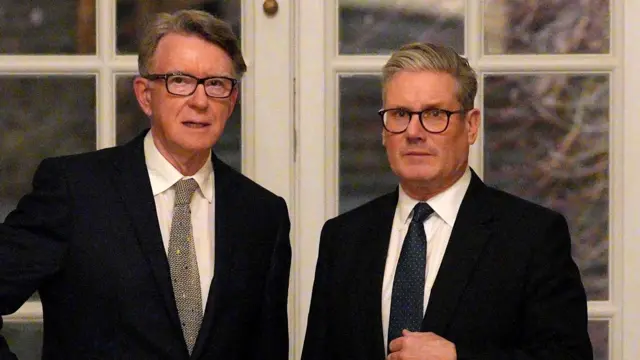
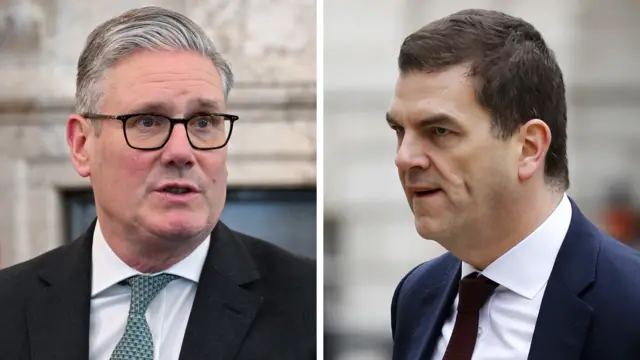
    Mandelson and StarmerImage source, PA Media

    We've spoken a lot about the vetting process which happened after Peter Mandelson was announced as the ambassador.

    But there was also a due diligence process that happened before the prime minister picked Mandelson.

    Documents related to that due diligence process have already been made public.

    We know that it threw up various reputational risks - including Mandelson's links to China and Jeffrey Epstein.

    Robbins says: "I regret that the due diligence process which threw up, as I understand it, serious reputational risks didn't colour the prime minister's judgement."

    That's a clear indication that he believes the prime minister should have decided against giving Mandelson the job before the vetting process even began.

  5. Robbins says he was told Doyle questions 'sensitive'published at 10:24 BST

    Thornberry comes on to ask about Starmer's ex-head of communications, Matthew Doyle, who came up in the session a short while ago.

    "I don't know what the origin of the suggestion was, and I don't know who exactly was behind it or how serious it was," Robbins says - but adds it was "serious enough" for No 10 to get in touch to ask for any jobs that were coming up.

    "That is the point at which I felt I needed to lay down some markers," Robbins continues.

    Conservative John Whittingdale then follows up, asking Robbins who told him not to tell the foreign secretary about the matter.

    The No 10 private office were clear "this was so sensitive" that "I should keep it to myself for now," Robbins tells the committee.

  6. Robbins claims he was asked to 'potentially' find a job for Starmer's ex-head of commspublished at 10:15 BST

    Henry Zeffman
    Chief political correspondent

    That’s one out of the left-field. Robbins has just claimed that in March 2025 he was asked by No 10 to “potentially” find a job as an ambassador for Matthew Doyle.

    At the time Doyle was the prime minister’s director of communications.

    He was subsequently given a peerage, an appointment which itself descended into scandal over Doyle’s relationship with a convicted sex offender.

    This is going to go down very badly with Labour MPs.

    Doyle, like Mandelson, has a long history as an influential figure on the right of the Labour Party. He first worked in government under Tony Blair.

    Note, too, that Robbins claims to have been told by No 10 not to discuss the prospect of a diplomatic appointment for Doyle with David Lammy, then the foreign secretary.

  7. What we know about Mandelson's vetting form - and what Robbins knew about itpublished at 10:05 BST

    Jack Fenwick
    Political correspondent

    We're getting more detail than ever about the decision to give Mandelson developed vetting.

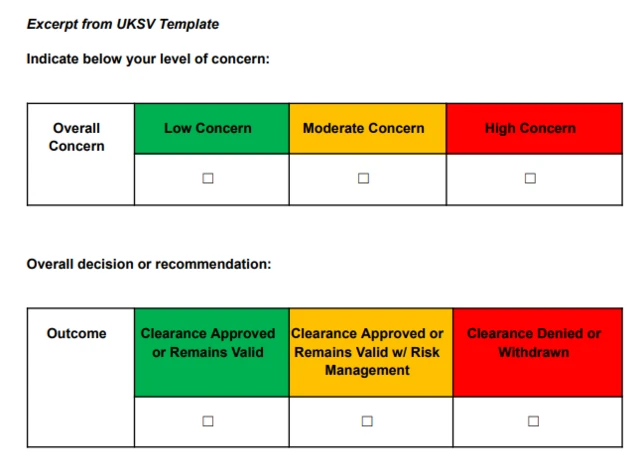
    Last week the government published a template of the form, external that UK Security Vetting (UKSV) fill out when deciding whether to recommend giving someone clearance.

    That form includes three boxes - green, amber and red - which indicate the vetting team’s recommendation.

    We are told that for Mandelson's form, the vetting team ticked the red box - indicating an explicit recommendation not to approve vetting.

    But Robbins, who is still giving evidence, says he was never given that information.

    "[I do] not recall the way in which the UKSV findings were presented to me as being that definitive", he says, adding that he was instead told "that it was borderline and they were leaning towards recommending against".

    This will raise questions about whether Robbins - the most senior civil servant at the Foreign Office at the time - was given the correct information by other officials in his department, and whether the prime minister knew what Robbins had or hadn’t seen when he decided to sack him.

    The vetting form with several boxesImage source, UK Government
    Image caption,

    An excerpt from the vetting form as published by the Cabinet Office

  8. Would have been 'difficult' for PM if Mandelson clearance deniedpublished at 10:04 BST

    Labour MP Dan Carden then asks what would the impact have been if Mandelson's clearance had been denied.

    "I think it would have been very difficult indeed," Robbins answers adding it could have been difficult for the foreign secretary and the prime minister.

    Carden points to Starmer saying the Foreign Office granted Mandelson clearance against the specific recommendation.

    He asks Robbins if he believes the PM is misunderstanding this process, to which the ex-civil servant says he can only describe the process as he understands it.

    Carden then asks if the prime minister is right to have expected to be provided with more information on the vetting process.

    In response, Robbins says this is a "dangerous misunderstanding of the necessity of confidentiality of the process".

  9. Retracting Mandelson's appointment could have caused 'issue' in UK-US relationship, says Robbinspublished at 09:56 BST

    Conservative MP John Whittingdale takes the next set of questions.

    Whittingdale asks whether retracting the appointment could have damaged US relations. In response, Robbins says that it could have "caused quite an issue in the relationship".

    Liberal Democrat MP Edward Morello then asks if it was Robbins' judgement that the mitigations for the concerns raised through the vetting process were satisfactory.

    He says he trusted the judgement of the recommendations made to him, saying they are "very clever people" and their decisions were independent of the pressure he was under.

  10. Evidence paints a picture of No 10 desperate for Mandelson to start before Trump's inaugurationpublished at 09:55 BST

    Chris Mason
    Political editor

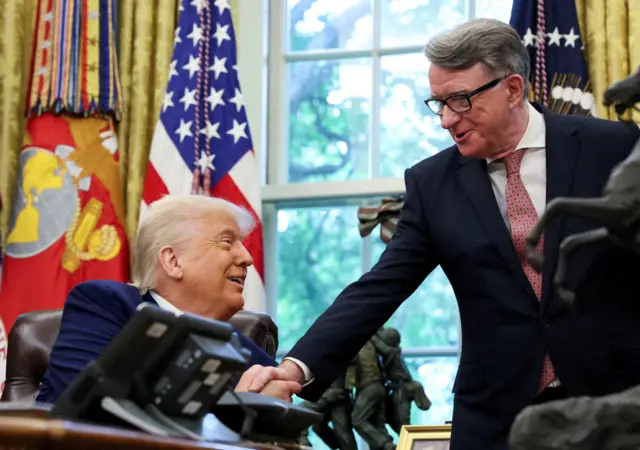
    resident Donald Trump shakes hands with Britain's ambassador to the United States, Peter Mandelson in May 2025Image source, Reuters
    Image caption,

    Trump was pictured with then-US ambassador Mandelson in the Oval Office in May 2025

    The opening 40 minutes or so of this paints a picture of Downing Street being desperate to get Lord Mandelson to Washington as soon as possible for his role as US ambassador.

    For all the concern expressed by Downing Street in recent days about vetting, Robbins describes a government keen to crack on quickly, and make sure the new ambassador was in place by the time of Donald Trump’s inauguration for his second term.

    There was a very strong expectation from No 10 that he needed to be in post and in America as quickly as humanly possible, Robbins tells MPs.

    He claims Downing Street was constantly pushing for updates on the vetting and “never [had] an interest in whether, only an interest in when” the vetting would be signed off.

  11. Starmer and Robbins' disagreement is laid barepublished at 09:46 BST

    Jack Fenwick
    Political correspondent

    Starmer and Robbins in a composite imageImage source, Tolga Akmen/AFP via Getty Images

    We've reached the part of Robbins' testimony on which he and the prime minister disagree most vehemently.

    He says he would "absolutely not" have considered telling anyone in No 10 about the vetting team's concerns surrounding Peter Mandelson.

    Robbins says that as he understands the system, any decision-making on vetting "must remain confidential".

    He's pushed quite hard by the committee chair Emily Thornberry - who has repeatedly suggested that he could have told someone that there were issues raised - even if he didn't divulge any further details.

    But Robbins says that would have amounted to him "trying to shift responsibility on to others".

    We know that No 10 takes a very different view here.

    They’ve made it clear in recent days that they believe Robbins should have informed them about the security concerns.

    In the end, this difference of opinion about how the system should have worked in the reason Robbins was sacked.

  12. Department followed process 'rigorously,' says Robbinspublished at 09:44 BST

    Robbins says his department followed the process "rigorously" - despite some individuals in No 10 believing it was not a process that ever needed to be followed.

    He also says he was "given a set of serious reflections on the risks raised by a bunch of professionals," and he "felt the Foreign Office could manage them well".

    Thornberry asks whether Robbins spoke to his line manager, Chris Wormald, about the pressures being put on his department of Mandelson's case.

    Robbins says he did not feel he had the need to make a complaint to his line manager as he felt the department had handled the case well despite the pressure.

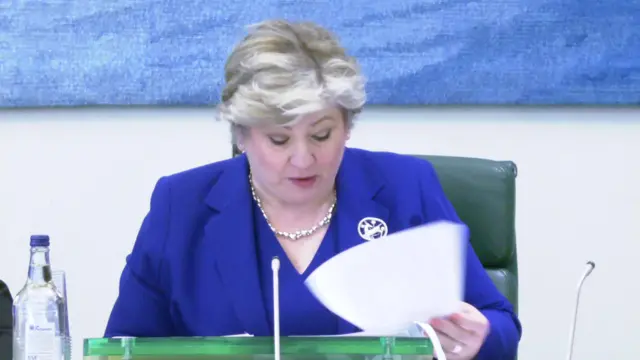
    Chair of the Foreign Affairs Committee Emily Thornberry, she is sat behind a small microphone and wearing a blue suitImage source, UK Parliament
  13. Robbins says Foreign Office made correct decision on Mandelson - Starmer thinks the exact oppositepublished at 09:41 BST

    Henry Zeffman
    Chief political correspondent

    There is quite an important nuance to Sir Olly Robbins’s argument.

    He is describing an atmosphere where No 10 expected to Lord Mandelson to receive clearance and where officials from the centre of government were putting the Foreign Office under pressure to expedite that clearance.

    However, he is adamant that that atmosphere is not why Mandelson was granted clearance.

    Robbins still believes, evidently, that he and the Foreign Office made the correct decision given the information he received and the mitigations he put in place.

    The prime minister’s position, meanwhile, is the exact opposite.

    His argument is that the Foreign Office was not under pressure, but nevertheless made the wrong decision.

  14. Robbins declines to say whether anything was flagged that wasn't publicpublished at 09:37 BST

    Robbins declines to tell the committee whether there was anything flagged in the developed vetting that was not already in the public realm.

    Amid pressing from Thornberry, he says it's important that vetting candidates know the government respects the confidence of the process, and answering that would "lead to a storm of questions".

  15. Robbins pressed on why he didn't know vetting contentspublished at 09:34 BST

    • We're still hearing from Emily Thornberry, the chair of the Foreign Office Select Committee, who is questioning the former chief civil servant of the Foreign Office about Peter Mandelson's appointment as US ambassador.

    Thornberry says she doesn't understand why Robbins does not know the contents of the UK Security Vetting (UKSV) guidance and its concerns about Mandelson - you can't consider mitigation if you don't know what the problems are, she says.

    The risks were explained, but I've not seen the "underlying documentation", he says.

    "I have never seen a UKSV document," he says, adding that for anybody to be briefed on information or findings of a UKSV process is for "wholly exceptional circumstances".

    "This is a wholly exceptional circumstance, surely?"

    "No," Robbins replies.

  16. Mandelson risks 'did not relate' to Epstein relationshippublished at 09:31 BST

    Robbins confirms he was presented with the findings of the UKSV report, but did not read them himself. He says the findings were explained to him but he was not shown any documents.

    He tells the committee the outcome of the vetting process is decided by the Foreign Office, based on UKSV findings and their own assessment of the risk.

    Robbins says he was briefed that UKSV considered Mandelson a "borderline case" and were "leaning towards" recommending that clearance be denied. But he says the Foreign Office decided that the risks identified could be "managed or mitigated".

    Robbins adds that the risks "did not relate" to Mandelson's relationship with Epstein.

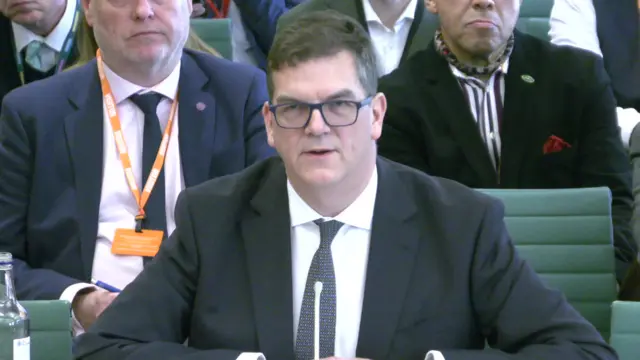
    Olly Robbins speaking to MPs on the Foreign Affairs Committee, he is wearing a dark suit and tieImage source, UK Parliament
  17. Robbins told Mandelson’s case was 'borderline', letter claimspublished at 09:29 BST
    Breaking

    Jack Fenwick
    Political correspondent

    The Foreign Affairs Committee has just published a letter from Sir Olly Robbins which contains some key information.

    Robbins says he never saw the explicit recommendation document from the vetting team not to grant Mandelson developed vetting.

    Instead he says he was briefed in person on the vetting team’s work and was told they were “leaning towards recommending that clearance be denied”.

    He claims he was told that Mandelson’s case was “borderline”, that the Foreign Office believed those risks could be “managed and mitigated” and that the concerns were not about Mandelson’s links to convicted sex offender Jeffrey Epstein.

    Robbins also says that the vetting team acknowledged that the Foreign Office “may wish to grant clearance, with appropriate risk management”.

  18. Robbins' phone will be investigated as part of the processpublished at 09:24 BST

    Thornberry presses Robbins, asking him who the source was of the pressure put on his office for Mandelson's appointment.

    Robbins responds by saying he was not willing to "scapegoat" other civil servants, but maintains the "vector" of pressure he was most conscious of was the private office of No 10.

    The chair then says that ex-Number 10 chief of staff Morgan McSweeney was a "protégé" of Mandelson and that he was "keen" on him getting the job, but Robbins repeats that he is unaware of the source of the pressure.

    He adds that there was no direct communication between him and No 10 at this time and he is aware that his phone will be investigated as part of the ongoing process.

  19. Office was under 'constant pressure'published at 09:23 BST

    Thornberry asks Robbins who the discussions surrounding Mandelson were with in the Cabinet Office.

    Robbins says that he does not know, as it happened before his arrival - but that the position taken by the Cabinet Office was that "Mandelson's status meant that vetting might be unnecessary".

    Thornberry then asks whether any pressure was put on him. Robbins says his office was under "constant pressure" and there was an "atmosphere of constant chasing".

    He says there was never any interest in "whether" Mandelson was appointed, "but only an interest in when".

  20. Analysis

    Robbins says predecessor had to be firm in arguing Mandelson should be vettedpublished at 09:21 BST

    Jack Fenwick
    Political correspondent

    A really key exchange very early on in this session.

    Olly Robbins claims that the Cabinet Office argued that there was no need to put Lord Mandelson through vetting.

    He says "there was a debate" between the Cabinet Office and the Foreign Office about whether it was needed.

    Robbins wasn't the head of the Foreign Office at that point and he says "I understand my predecessor had to be very firm" in arguing that Mandelson should be vetted.

    Asked if it was politicians or officials inside the Cabinet Office arguing against the need for vetting, he says he thinks the conversations were official-level, but he's not completely sure.

    If it does indeed turn out that the Cabinet Office - the department in which the Prime Minister works - didn't want Mandelson to be vetted - that would be politically very significant.